Catholic saint biography
St. Simeon of Jerusalem
- Commemoration:
- April 27
- Lived:
- First–early second centuries — Jerusalem
April 27 in the current Vatican calendar; February 18 in older Western calendars.
Why dates and liturgical observances can differ
Read the sources for this biography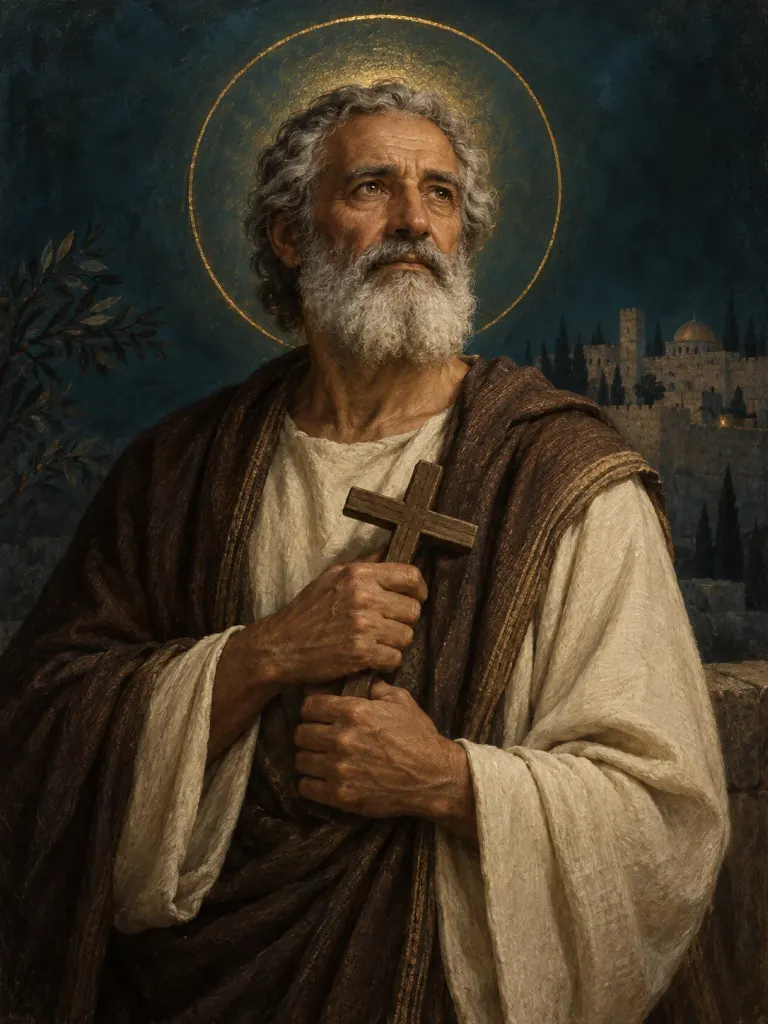
Biography
Simeon is remembered as the successor of James in the leadership of the Jerusalem Church. Early Christian historical tradition identifies him as a son of Clopas and places his ministry among the Jewish Christians who preserved the faith through the destruction and upheaval of the first century.
His leadership belongs to the generation after the apostles, when the Jerusalem community had to survive war and displacement. Church historians recount its withdrawal to Pella before the siege and its subsequent return. Simeon’s ministry is remembered within this fragile continuity of a largely Jewish Christian church.
Eusebius preserves the tradition that Simeon was executed under the emperor Trajan. This situates his witness in the early second century, although individual chronological details come through transmitted testimony. His importance rests on sustaining the community after James, not on a surviving collection of writings or recorded speeches.
The surviving record is limited and comes through later church historians rather than a contemporary personal biography. He is honored as a bishop and martyr. The current Vatican calendar places his commemoration on April 27; older Western calendars commonly used February 18. He should not be confused with Simeon who welcomed the infant Jesus in the Temple.
Context & contribution
Continuity in Jerusalem after catastrophe
Simeon’s episcopate belongs to the early Jewish Christian community of Jerusalem and its experience of the city’s destruction. The ecclesiastical history places him in succession to James. This context matters more than trying to supply a detailed personal biography that the surviving evidence does not provide.
His place in the succession also connects the apostolic generation with a community that had to continue through displacement and political upheaval. Later changes under Hadrian occurred after his lifetime and should not be folded into his own actions. A clear timeline helps distinguish his remembered ministry from the subsequent history of Jerusalem.
Explore the sources for this section
AI-assisted source comparison updated 2026-09-26. Editorial approach
From the Saint Discovery blog
Keep exploring your faith
Practical guides to prayer, the saints, and living the Catholic faith.
Why Do Catholics Pray to Saints? Intercession Explained
Why do Catholics pray to saints? Learn how intercession differs from worship, how it relates to Jesus, and a simple way to ask a saint to pray for you.
A next step with your saintRead the article Living the seasonsHow to Celebrate Your Patron Saint's Feast Day at Home
Celebrate your patron saint's feast day with prayer, a short biography, and an act of kindness. A practical plan for families, sponsors, and individuals.
A next step with your saintRead the articleFrom reading to reflection
What will you carry with you?
After reading about St. Simeon of Jerusalem, take a moment to consider:
- Make a short timeline separating Simeon’s ministry from the later rebuilding of Jerusalem under Hadrian. Why does the distinction matter?
These are reflection prompts from Saint Discovery, not quotations from the saint.
Sources and further reading
Biography source comparison recorded on . This is an AI-assisted comparison, not independent human or ecclesiastical approval.
What the recorded review covers
AI-assisted expansion using the linked historical and ecclesiastical sources; devotional traditions distinguished from documented history.
A source list helps you check an account; it does not establish that every claim is certain. Follow the biography’s qualifications about historical evidence, traditions and feast calendars.
Suggest a correction to this biography
How we research these pages and handle corrections · Directory corrections log
More lives to explore
Suggestions based on the site’s quiz themes, not a historical relationship or a measure of holiness.