Catholic saint biography
St. Severinus of Noricum
- Commemoration:
- January 8
- Lived:
- Fifth century; died c. 482 — Danube region, present-day Austria and Germany
Why dates and liturgical observances can differ
Read the sources for this biography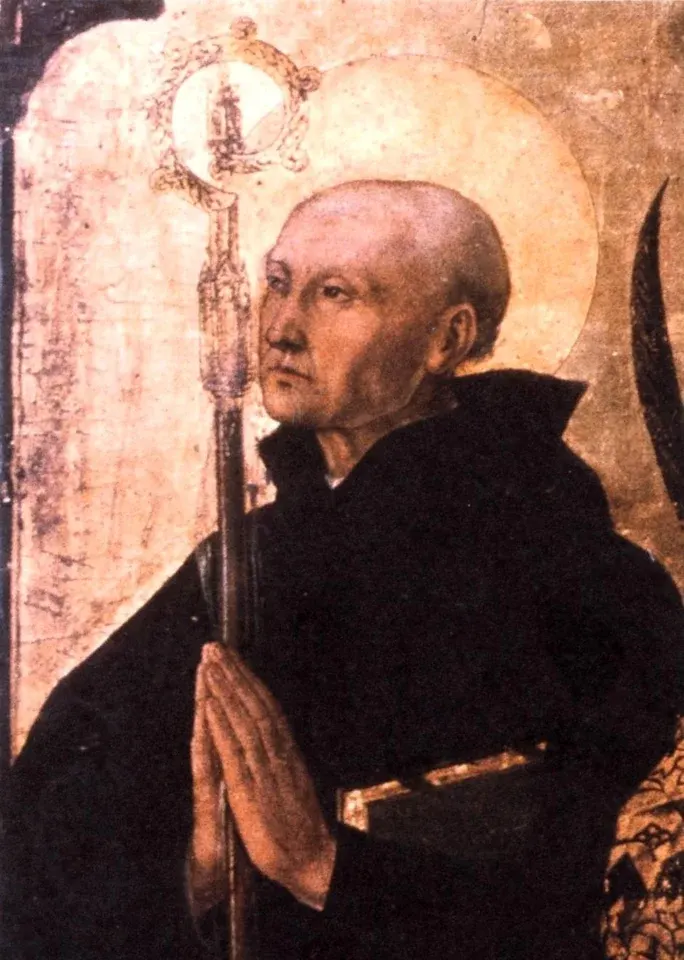
Biography
Severinus of Noricum was a monk whose ministry combined ascetic life with practical care for communities along the Danube. His precise origins are uncertain. Working amid the disruption of the late Roman frontier, he founded religious communities and helped protect people who lacked effective support.
His activity followed the death of Attila and the weakening of Roman authority. At Favianis he established a monastery, while his ministry reached settlements threatened by famine and violence. Distributing food and clothing accompanied negotiations for captives: the Vatican account recalls his persuading the ruler Gibuld to release Roman prisoners.
Protecting communities could also mean helping them leave dangerous places. He encouraged the evacuation of exposed settlements and directed people toward safer refuge. These responsibilities made religious leadership a practical resource where imperial institutions could no longer offer dependable protection.
Severinus died at Favianis on January 8, 482. His disciple Eugippius wrote his Life in 511, preserving both a spiritual portrait and important evidence about the region. It remains a devotional biography rather than a modern administrative record. The later movement of his remains to Italy extended his veneration beyond Noricum; his January 8 feast remains especially associated with Austria.
Context & contribution
A relief network supported by regular contributions
Eugippius gives a specific account of how Severinus obtained supplies for the poor. Chapter 17 of the Life describes contributions of a tenth of the harvest and letters urging communities in Noricum to participate. Clothing was also collected for distribution. His assistance depended on a recurring network of donors, messengers, and local communities.
The passage distinguishes Severinus's personal fasting from his concern that other people should have enough to eat. His austerity was not imposed as a remedy for their involuntary hunger. Although Eugippius embeds the account in stories of prophecy and divine judgment, the described mechanism of relief is concrete: regular contributions were assembled and redistributed across settlements facing hardship.
Explore the sources for this section
AI-assisted source comparison updated 2026-09-26. Editorial approach
From the Saint Discovery blog
Keep exploring your faith
Practical guides to prayer, the saints, and living the Catholic faith.
What Is the Domestic Church? John Paul II on Faith at Home
What Catholics mean by the domestic church, how John Paul II explained family life, and practical ways to begin with prayer, forgiveness and welcome.
Bring reflection into prayerRead the article Prayer & reflectionHow to Make a Spiritual Communion When You Cannot Receive
Learn how to make a spiritual communion, with a short original prayer and clear guidance on Mass, Confession, and times when you cannot receive.
Bring reflection into prayerRead the articleFrom reading to reflection
What will you carry with you?
After reading about St. Severinus of Noricum, take a moment to consider:
- Trace the steps from a household's harvest contribution to food or clothing reaching another settlement; which forms of cooperation would Severinus's network require?
These are reflection prompts from Saint Discovery, not quotations from the saint.
Sources and further reading
Biography source comparison recorded on . This is an AI-assisted comparison, not independent human or ecclesiastical approval.
What the recorded review covers
AI-assisted expansion using the linked historical and ecclesiastical sources; devotional traditions distinguished from documented history.
A source list helps you check an account; it does not establish that every claim is certain. Follow the biography’s qualifications about historical evidence, traditions and feast calendars.
Suggest a correction to this biography
How we research these pages and handle corrections · Directory corrections log
More lives to explore
Suggestions based on the site’s quiz themes, not a historical relationship or a measure of holiness.