Catholic saint biography
St. Barnabas
- Commemoration:
- June 11
- Lived:
- First century — Cyprus and the eastern Mediterranean
Why dates and liturgical observances can differ
Read the sources for this biography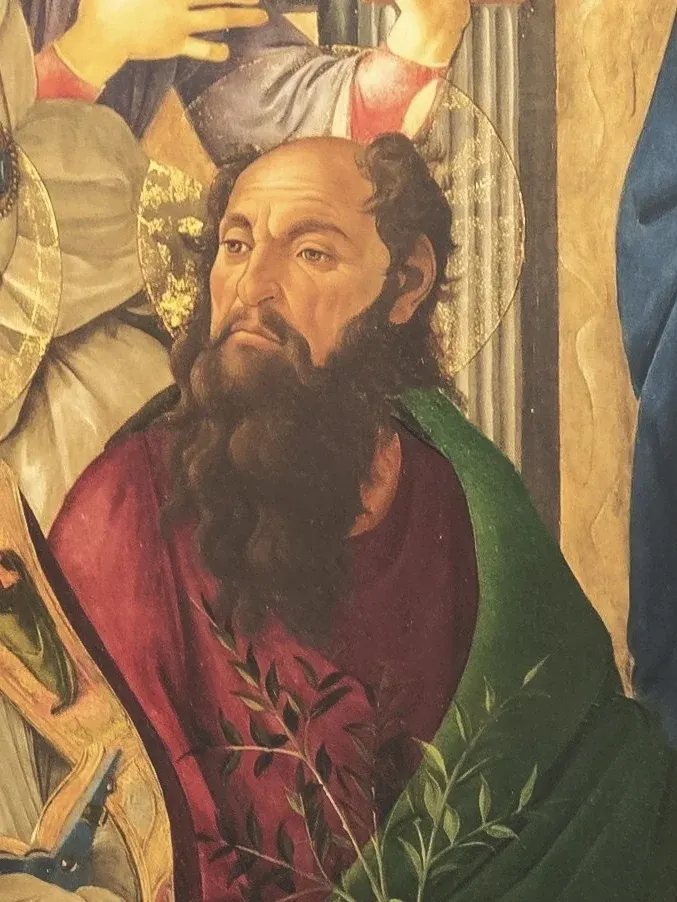
Biography
Barnabas was a Jewish Levite from Cyprus who joined the early Christian community in Jerusalem. Acts describes him selling a field to support the community. He later worked with Paul at Antioch and accompanied him on a missionary journey through Cyprus and parts of Asia Minor.
When believers in Jerusalem feared Paul because of his earlier persecution of the Church, Barnabas supported the sincerity of his conversion. Later he sought Paul at Tarsus and brought him into the work at Antioch. His gift for recognizing and encouraging another person’s vocation was consequential for the mission.
Acts remembers him as a teacher and prophet as well as a traveling missionary. His name is interpreted as son of encouragement or consolation. These details help explain why his contribution cannot be reduced to being Paul’s assistant: he exercised initiative and judgment of his own.
Their partnership included disagreement: Barnabas wanted to take John Mark on a further journey, while Paul objected. Barnabas returned to Cyprus with Mark. The New Testament provides substantial evidence for his missionary work but does not give a complete account of his later life. His June 11 feast honors a missionary collaborator whose story also shows the human challenges of shared ministry.
Context & contribution
Mission experience entered the Church's deliberations
Barnabas and Paul brought the experience of Gentile converts into the discussion at Jerusalem about circumcision. Their missionary work therefore contributed to a decision about who could belong and on what terms. Barnabas's importance includes helping the wider community listen to what had happened beyond its original setting.
Benedict XVI also reads the dispute over Mark alongside Mark's later appearance among Paul's coworkers. That later evidence prevents the disagreement from becoming the final word on their relationships. Barnabas's willingness to continue with Mark can be considered within a longer story of formation and reconciliation, while acknowledging that the New Testament does not narrate every step of the eventual repair.
Explore the sources for this section
AI-assisted source comparison updated 2026-09-26. Editorial approach
From the Saint Discovery blog
Keep exploring your faith
Practical guides to prayer, the saints, and living the Catholic faith.
Why Is St. Thérèse the Patron Saint of Missions?
Why is St. Thérèse patron saint of missions? Discover her support for missionaries and practical ways to participate in the Church's mission from home.
Sharing the faithRead the article Everyday faithWhat Is Evangelization? A Catholic Guide to Sharing the Faith
What is evangelization? Learn the Catholic meaning, the new evangelization, and practical ways to share your faith with respect, confidence, and love.
Sharing the faithRead the articleFrom reading to reflection
What will you carry with you?
After reading about St. Barnabas, take a moment to consider:
- Discuss how Barnabas's experience of new communities could inform the Jerusalem meeting. What changes when people affected by a rule become visible in deliberation?
These are reflection prompts from Saint Discovery, not quotations from the saint.
Sources and further reading
Biography source comparison recorded on . This is an AI-assisted comparison, not independent human or ecclesiastical approval.
What the recorded review covers
AI-assisted expansion checked against retrieved historical and institutional sources; traditions distinguished from documented history; not ecclesiastical approval
A source list helps you check an account; it does not establish that every claim is certain. Follow the biography’s qualifications about historical evidence, traditions and feast calendars.
Suggest a correction to this biography
How we research these pages and handle corrections · Directory corrections log
More lives to explore
Suggestions based on the site’s quiz themes, not a historical relationship or a measure of holiness.