Catholic saint biography
St. Sebastian
- Commemoration:
- January 20
- Lived:
- Early Christian period — Associated with Rome and Milan
Why dates and liturgical observances can differ
Read the sources for this biography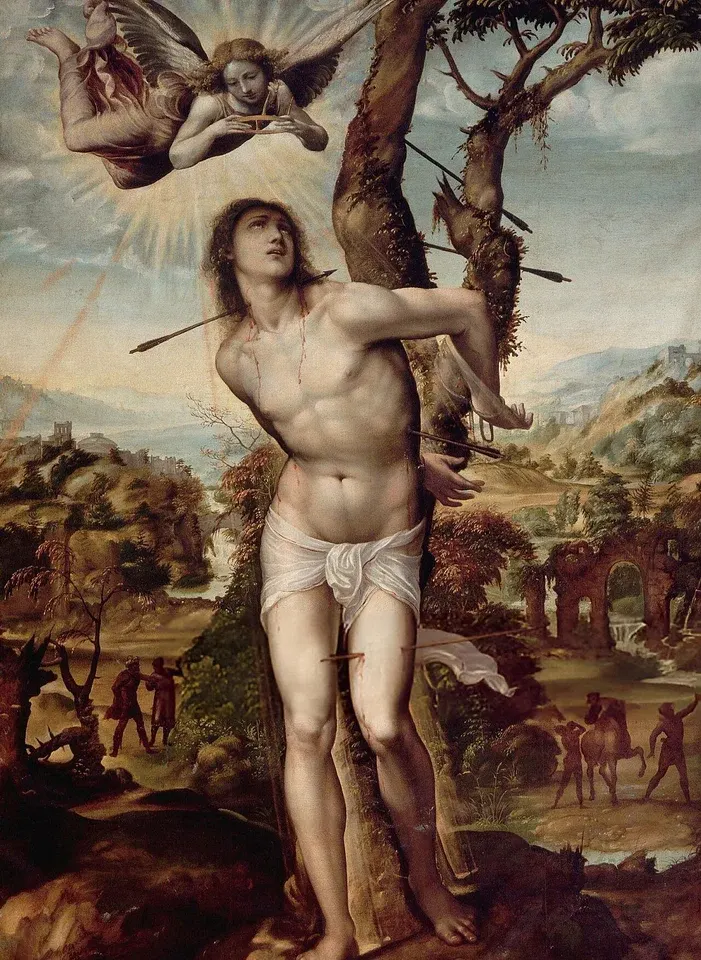
Biography
Sebastian was a Roman martyr whose burial on the Appian Way appears in an early calendar. Ambrose also attests to his veneration and associates him with Milan. These witnesses establish an ancient devotion, but relatively little about his personal life can be demonstrated securely.
The later narrative gives Irene an important role as the widow who nurses Sebastian after the attempted execution. It then presents him confronting imperial power again. These scenes explain familiar images of arrows, healing, and a second martyrdom without supplying securely established personal history.
His imagery changed across the centuries. An early mosaic portrayed a mature, bearded figure in court clothing; later artists emphasized youthful vulnerability and the wounded body. The church over his burial place and the distribution of relics helped devotion spread beyond Rome.
The familiar account of an imperial soldier surviving arrows before a second execution comes from later martyrdom literature. It became enormously influential in Christian art, but should be identified as tradition rather than a contemporary record. Sebastian was also invoked during epidemics. His January 20 commemoration honors the martyr behind a much larger body of artistic and devotional storytelling.
Context & contribution
Why an image is not a contemporary portrait
Sebastian’s familiar arrows belong to the later narrative and artistic reception of his martyrdom. The Catholic Encyclopedia contrasts a bearded figure in an early mosaic with the youthful figure widely known from later art. Images can reveal what a period emphasized without showing what the historical person looked like.
The early notice of burial on the Via Appia provides a different kind of evidence. It establishes a location in Rome’s memory of the martyrs while leaving most personal details unknown. Reading burial evidence and art separately allows a fuller account of his influence without turning a painting into proof of the legend it depicts.
Explore the sources for this section
AI-assisted source comparison updated 2026-09-26. Editorial approach
From the Saint Discovery blog
Keep exploring your faith
Practical guides to prayer, the saints, and living the Catholic faith.
Why Do Catholics Pray to Saints? Intercession Explained
Why do Catholics pray to saints? Learn how intercession differs from worship, how it relates to Jesus, and a simple way to ask a saint to pray for you.
A next step with your saintRead the article Living the seasonsHow to Celebrate Your Patron Saint's Feast Day at Home
Celebrate your patron saint's feast day with prayer, a short biography, and an act of kindness. A practical plan for families, sponsors, and individuals.
A next step with your saintRead the articleFrom reading to reflection
What will you carry with you?
After reading about St. Sebastian, take a moment to consider:
- Compare two images of Sebastian from different periods. What can they tell you about devotion rather than physical appearance?
These are reflection prompts from Saint Discovery, not quotations from the saint.
Sources and further reading
Biography source comparison recorded on . This is an AI-assisted comparison, not independent human or ecclesiastical approval.
What the recorded review covers
AI-assisted expansion using the linked historical and ecclesiastical sources; devotional traditions distinguished from documented history.
A source list helps you check an account; it does not establish that every claim is certain. Follow the biography’s qualifications about historical evidence, traditions and feast calendars.
Suggest a correction to this biography
How we research these pages and handle corrections · Directory corrections log
More lives to explore
Suggestions based on the site’s quiz themes, not a historical relationship or a measure of holiness.