Catholic saint biography
St. Scholastica
- Commemoration:
- February 10
- Lived:
- Late fifth–sixth centuries — Italy
Why dates and liturgical observances can differ
Read the sources for this biography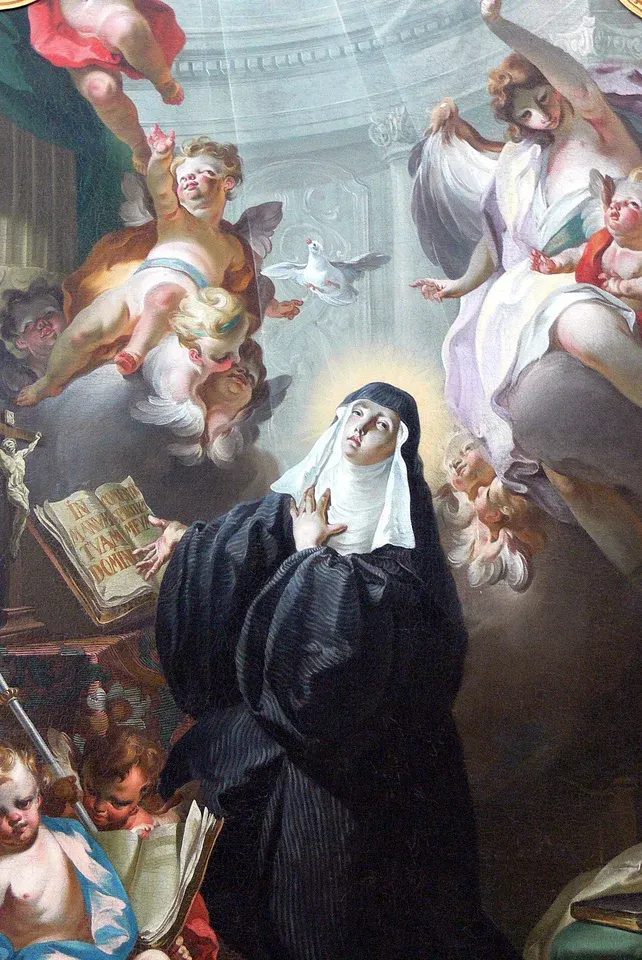
Biography
Scholastica is remembered as Benedict of Nursia’s sister and as a woman dedicated to religious life. The principal early account is Gregory the Great’s Dialogues, which offers a few significant episodes rather than a complete biography. Benedictine tradition associates her with a women’s community near Montecassino.
The siblings met to discuss spiritual life. During their final meeting, Scholastica asked Benedict to continue their conversation overnight, but he refused to remain away from his monastery. Gregory relates that she prayed and a sudden storm prevented his departure. He presents the episode as a demonstration of love’s strength in prayer.
Gregory also tells how Benedict saw her soul ascend in the form of a dove shortly before learning of her death. Their shared burial completes his portrait of the siblings’ spiritual closeness. The dove became her familiar identifying symbol in religious art, keeping this narrative visible to later generations.
These episodes explain her enduring importance to Benedictine women while leaving much of her personal history unknown. They should be understood within Gregory’s religious purpose, rather than expanded into an unsupported account of her childhood or administration. Her February 10 feast honors a formative figure in the Benedictine spiritual tradition.
Context & contribution
An educational legacy carried by Benedictine women
One concrete expression of Scholastica's later influence is the community bearing her name at Atchison, Kansas. Seven Benedictine sisters arrived in 1863 to open a school for girls, and Mount St. Scholastica Academy began that December. The sisters subsequently taught in other towns and developed institutions beyond the original academy.
Their college merged with Saint Benedict's College in 1971 to form Benedictine College; the community also opened Keeler Women's Center in 2003. These are documented achievements of later women who maintained a Benedictine identity under Scholastica's patronage. They show how her memory accompanies education and service across changing circumstances, without supplying missing facts about the organization of her own sixth-century community.
Explore the sources for this section
AI-assisted source comparison updated 2026-09-26. Editorial approach
From the Saint Discovery blog
Keep exploring your faith
Practical guides to prayer, the saints, and living the Catholic faith.
Why Do Catholics Pray to Saints? Intercession Explained
Why do Catholics pray to saints? Learn how intercession differs from worship, how it relates to Jesus, and a simple way to ask a saint to pray for you.
A next step with your saintRead the article Living the seasonsHow to Celebrate Your Patron Saint's Feast Day at Home
Celebrate your patron saint's feast day with prayer, a short biography, and an act of kindness. A practical plan for families, sponsors, and individuals.
A next step with your saintRead the articleFrom reading to reflection
What will you carry with you?
After reading about St. Scholastica, take a moment to consider:
- Build a short timeline from the sisters' 1863 girls' school to their later college and women's center; what remains continuous when a community's forms of service change?
These are reflection prompts from Saint Discovery, not quotations from the saint.
Sources and further reading
Biography source comparison recorded on . This is an AI-assisted comparison, not independent human or ecclesiastical approval.
What the recorded review covers
AI-assisted expansion using the linked historical and ecclesiastical sources; devotional traditions distinguished from documented history.
A source list helps you check an account; it does not establish that every claim is certain. Follow the biography’s qualifications about historical evidence, traditions and feast calendars.
Suggest a correction to this biography
How we research these pages and handle corrections · Directory corrections log
More lives to explore
Suggestions based on the site’s quiz themes, not a historical relationship or a measure of holiness.