Catholic saint biography
St. Flannan of Killaloe
- Commemoration:
- December 18
- Patron Saint of:
- Diocese of Killaloe
- Lived:
- Seventh century — Thomond, Ireland
Diocesan patronal feast on December 18.
Why dates and liturgical observances can differ
Read the sources for this biography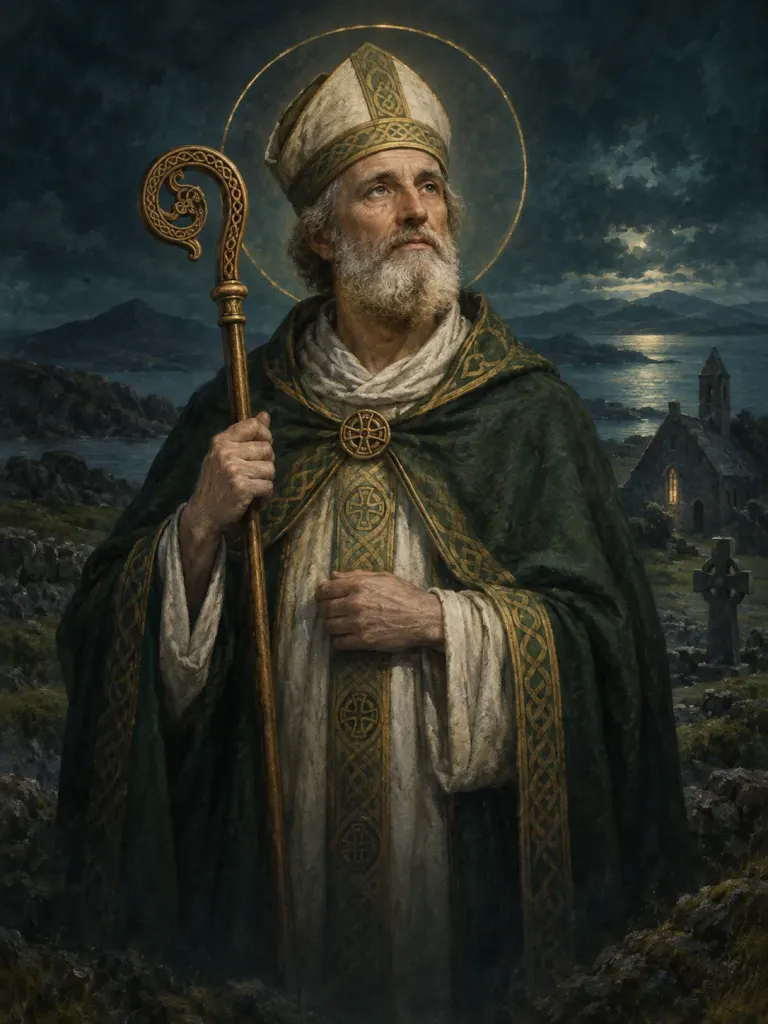
Biography
Flannan is the traditional patron of the Diocese of Killaloe in Ireland. His remembered life belongs to the early monastic foundations from which later diocesan structures developed.
The local account describes him as a son of the king of Thomond and a student of Molua. He is said to have succeeded his teacher in religious leadership. These relationships place his story within the close connections between ruling families, monasteries, and Christian teaching.
A journey to Rome for episcopal consecration is prominent in the traditional narrative. On returning, Flannan reportedly shared what he had learned about worship and sacramental practice. The twelfth-century Life portrays him above all as a persuasive preacher concerned with the religious life of his people.
That biography was written centuries after the period it describes, and even published summaries contain chronological tensions. The royal genealogy, miracles, and Roman journey cannot all be treated as independently established facts. His longstanding association with Killaloe and December 18 commemoration are clearer. His legacy is best presented as a remembered founding pastor whose cult survived major changes in the organization of the Irish Church.
Context & contribution
A patron across changing church structures
The Synod of Ráth Breasail in 1111 helped establish a territorial diocesan framework in Ireland, and later incorporation brought Roscrea and Scattery Island within Killaloe. This institutional history comes much later than the period associated with Flannan.
The distinction matters when calling him a founding bishop. His remembered community and the later diocese are connected through tradition, but their boundaries and administrative organization were not identical. Flannan's patronage provided continuity through those changes. It should not be used to assign the complete modern diocesan map to his own lifetime.
Explore the sources for this section
AI-assisted source comparison updated 2026-09-26. Editorial approach
From the Saint Discovery blog
Keep exploring your faith
Practical guides to prayer, the saints, and living the Catholic faith.
What Is the Domestic Church? John Paul II on Faith at Home
What Catholics mean by the domestic church, how John Paul II explained family life, and practical ways to begin with prayer, forgiveness and welcome.
Bring reflection into prayerRead the article Prayer & reflectionHow to Make a Spiritual Communion When You Cannot Receive
Learn how to make a spiritual communion, with a short original prayer and clear guidance on Mass, Confession, and times when you cannot receive.
Bring reflection into prayerRead the articleFrom reading to reflection
What will you carry with you?
After reading about St. Flannan of Killaloe, take a moment to consider:
- Create a two-stage map key distinguishing an early monastic center from a later territorial diocese. Explain how Flannan's patronage could persist through the transition.
These are reflection prompts from Saint Discovery, not quotations from the saint.
Sources and further reading
Biography source comparison recorded on . This is an AI-assisted comparison, not independent human or ecclesiastical approval.
What the recorded review covers
AI-assisted expansion checked against cited sources; historical traditions distinguished from documented evidence; not ecclesiastical approval
A source list helps you check an account; it does not establish that every claim is certain. Follow the biography’s qualifications about historical evidence, traditions and feast calendars.
Suggest a correction to this biography
How we research these pages and handle corrections · Directory corrections log
More lives to explore
Suggestions based on the site’s quiz themes, not a historical relationship or a measure of holiness.