Catholic saint biography
St. John XXIII
- Commemoration:
- October 11
- Lived:
- 1881–1963 — Sotto il Monte, Italy
Roman optional memorial, marking the opening of the Second Vatican Council.
Why dates and liturgical observances can differ
Read the sources for this biography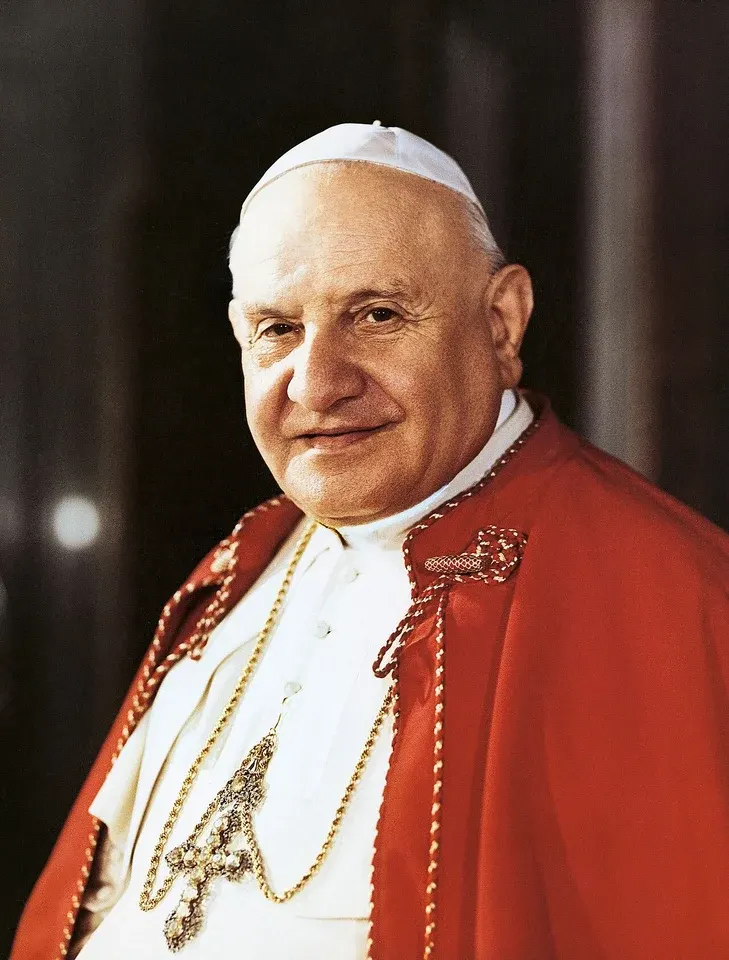
Biography
Angelo Giuseppe Roncalli served as a priest, military chaplain, and papal diplomat before becoming patriarch of Venice and then Pope John XXIII in 1958. His earlier assignments brought him into contact with Eastern Christians and with the political upheavals of twentieth-century Europe. His spiritual journals reveal a disciplined life of prayer.
Born into a large family at Sotto il Monte, Roncalli entered the Bergamo seminary as a boy. After ordination he served as a bishop's secretary and taught seminarians. During the First World War he worked first as a medical orderly and then as a chaplain, encountering suffering well before his later diplomatic responsibilities.
John XXIII convened the Second Vatican Council, which opened on October 11, 1962, and initiated revision of the Church's canon law. His teaching also emphasized peace and human dignity. He died in June 1963 before the council concluded and was canonized in 2014. His feast recalls the council's opening, one of the defining acts of his short pontificate.
His early spiritual notebooks eventually became the Journal of a Soul, a record of examination, prayer, and intention over many decades. That private discipline provides a counterpart to the public initiative of the council. Remembering both helps explain a pope whose relatively brief tenure had effects that continued long after his death.
Context & contribution
Diplomacy learned through local encounters
Roncalli's Bulgarian appointment involved small Catholic communities within a country whose religious life was predominantly Orthodox. The Holy See's biography records his assistance after the 1928 earthquake and acknowledges that his diplomatic work advanced unevenly. Concrete relief and patient relationships were part of that assignment, not merely formal negotiations.
His subsequent service in Turkey and Greece brought sustained contact with Orthodox Christians and Muslims. He also pursued historical scholarship, publishing records of Charles Borromeo's apostolic visitation to Bergamo. The future council pope thus approached renewal with experience of religious difference and close attention to an earlier generation's attempts to reform church life.
Explore the sources for this section
AI-assisted source comparison updated 2026-09-26. Editorial approach
From the Saint Discovery blog
Keep exploring your faith
Practical guides to prayer, the saints, and living the Catholic faith.
St. John XXIII Feast Day: Why October 11?
St. John XXIII’s October 11 memorial recalls the opening of Vatican II in 1962. Compare his memorial, death and canonization dates, including the 2026 calendar.
Connected to this saintRead the article Meet the saintsWhat Is the Domestic Church? John Paul II on Faith at Home
What Catholics mean by the domestic church, how John Paul II explained family life, and practical ways to begin with prayer, forgiveness and welcome.
Bring reflection into prayerRead the articleFrom reading to reflection
What will you carry with you?
After reading about St. John XXIII, take a moment to consider:
- Compare earthquake relief with editing visitation records: identify the different kinds of knowledge these activities could give a future pope about reform.
These are reflection prompts from Saint Discovery, not quotations from the saint.
Sources and further reading
Biography source comparison recorded on . This is an AI-assisted comparison, not independent human or ecclesiastical approval.
What the recorded review covers
AI-assisted expansion of the existing source-reviewed biography with comparison to retrieved cited sources; not ecclesiastical approval
A source list helps you check an account; it does not establish that every claim is certain. Follow the biography’s qualifications about historical evidence, traditions and feast calendars.
Suggest a correction to this biography
How we research these pages and handle corrections · Directory corrections log
More lives to explore
Suggestions based on the site’s quiz themes, not a historical relationship or a measure of holiness.