Catholic saint biography
St. Peter Claver
- Commemoration:
- September 9
- Lived:
- 1580–1654 — Spain; ministry in Cartagena, Colombia
Why dates and liturgical observances can differ
Read the sources for this biography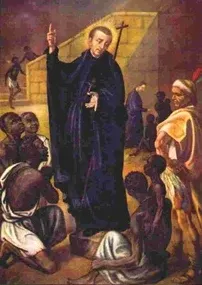
Biography
Peter Claver was a Spanish Jesuit who devoted decades of ministry in Cartagena to Africans brought across the Atlantic in slavery. After arriving in the Americas in 1610 and completing his formation, he was ordained in Cartagena in 1616. He met arriving ships, brought provisions, attended to wounds, and relied on interpreters to communicate.
During his formation in Majorca, the Jesuit brother Alphonsus Rodríguez encouraged his missionary vocation. In Cartagena, interpreters who had themselves experienced slavery were essential collaborators. Communication and practical care depended on their knowledge as well as Claver's own commitment.
People arriving in the port often remained only briefly before being sold onward. This imposed severe limits on instruction and follow-up. Remembering those circumstances avoids presenting mass baptism statistics as a complete account of the lives, freedom, or spiritual experience of the people he served.
His work included Christian instruction and baptism, as well as visits to hospitals and prisons. It took place within the violent system of colonial slavery; caring for its victims should not be confused with having ended that system. Claver’s life is remembered for sustained personal service to people treated as commodities.
Context & contribution
The interpreters belong in the story
Claver’s ministry required interpreters. The Jesuit account identifies former enslaved people accompanying him as he boarded the ships in Cartagena. Their contribution matters: the priest’s intentions alone could not overcome differences of language or communicate with people traumatized by the Atlantic crossing.
Remembering these collaborators also limits a biography centered exclusively on a European rescuer. Food, wound care, communication, and teaching were connected activities, undertaken within the violence of the slave trade. Claver’s charitable work deserves attention without implying that the system surrounding it had thereby become just or that the people he served lacked agency.
Explore the sources for this section
AI-assisted source comparison updated 2026-09-26. Editorial approach
From the Saint Discovery blog
Keep exploring your faith
Practical guides to prayer, the saints, and living the Catholic faith.
Why Do Catholics Pray to Saints? Intercession Explained
Why do Catholics pray to saints? Learn how intercession differs from worship, how it relates to Jesus, and a simple way to ask a saint to pray for you.
A next step with your saintRead the article Living the seasonsHow to Celebrate Your Patron Saint's Feast Day at Home
Celebrate your patron saint's feast day with prayer, a short biography, and an act of kindness. A practical plan for families, sponsors, and individuals.
A next step with your saintRead the articleFrom reading to reflection
What will you carry with you?
After reading about St. Peter Claver, take a moment to consider:
- Retell the scene at the docks while explicitly including the interpreters. What becomes visible that a single-person account leaves out?
These are reflection prompts from Saint Discovery, not quotations from the saint.
Sources and further reading
Biography source comparison recorded on . This is an AI-assisted comparison, not independent human or ecclesiastical approval.
What the recorded review covers
AI-assisted expansion using the linked historical and ecclesiastical sources; devotional traditions distinguished from documented history.
A source list helps you check an account; it does not establish that every claim is certain. Follow the biography’s qualifications about historical evidence, traditions and feast calendars.
Suggest a correction to this biography
How we research these pages and handle corrections · Directory corrections log
More lives to explore
Suggestions based on the site’s quiz themes, not a historical relationship or a measure of holiness.