Catholic saint biography
St. Norbert of Xanten
- Commemoration:
- June 6
- Lived:
- About 1080–1134 — Rhineland; Prémontré and Magdeburg
Why dates and liturgical observances can differ
Read the sources for this biography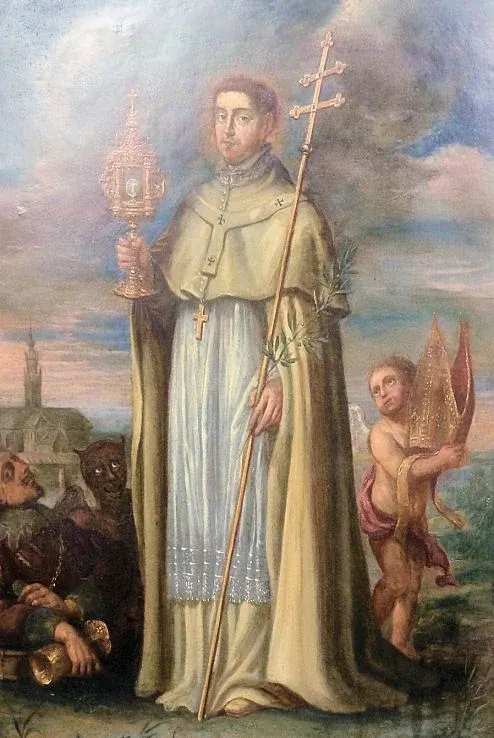
Biography
Norbert of Xanten was a preacher, religious founder, and archbishop who helped renew community life among clergy in medieval Europe. His followers became the Premonstratensians, also known as Norbertines, whose vocation combines common prayer with pastoral service.
He initially held a canonry at Xanten and served in aristocratic and imperial circles. A traditional account describes a violent storm as the turning point in his conversion. He subsequently abandoned courtly advancement, sought spiritual guidance, and embraced priestly ministry and a demanding penitential life.
After traveling as a preacher, Norbert gathered companions at Prémontré in France. Their small settlement grew into a religious community, and other foundations followed. Papal confirmation in 1126 helped establish the order as a lasting institution rather than a movement dependent only on one itinerant preacher.
As archbishop of Magdeburg, Norbert confronted the misuse of church property and resistance to clerical reform. He also became involved in the disputed papal succession of his time. He died in 1134, and his feast is June 6. His biography joins personal conversion with the less dramatic but enduring work of building communities, reforming institutions, and carrying pastoral responsibility.
Context & contribution
Making renewal last beyond a preacher
Norbert’s decision to form a stable community answered a problem his preaching alone could not solve: how would the work continue after his departure? The early settlement at Prémontré brought companions into a shared life, while subsequent foundations extended that life beyond a single charismatic leader. The institution made continuity possible.
The older Catholic Encyclopedia also describes Norbert advising Theobald of Champagne to remain in secular life rather than enter the order. That episode distinguishes a religious movement from the assumption that everyone it inspires must join a monastery. His legacy includes different forms of participation, as well as the demanding task of making a community’s habits match its stated ideals.
Explore the sources for this section
AI-assisted source comparison updated 2026-09-26. Editorial approach
From the Saint Discovery blog
Keep exploring your faith
Practical guides to prayer, the saints, and living the Catholic faith.
What Is the Domestic Church? John Paul II on Faith at Home
What Catholics mean by the domestic church, how John Paul II explained family life, and practical ways to begin with prayer, forgiveness and welcome.
Bring reflection into prayerRead the article Prayer & reflectionHow to Make a Spiritual Communion When You Cannot Receive
Learn how to make a spiritual communion, with a short original prayer and clear guidance on Mass, Confession, and times when you cannot receive.
Bring reflection into prayerRead the articleFrom reading to reflection
What will you carry with you?
After reading about St. Norbert of Xanten, take a moment to consider:
- Name a worthwhile project that depends heavily on one person. What shared practices would help it continue when that person leaves?
These are reflection prompts from Saint Discovery, not quotations from the saint.
Sources and further reading
Biography source comparison recorded on . This is an AI-assisted comparison, not independent human or ecclesiastical approval.
What the recorded review covers
AI-assisted expansion using the linked historical and ecclesiastical sources; devotional traditions distinguished from documented history.
A source list helps you check an account; it does not establish that every claim is certain. Follow the biography’s qualifications about historical evidence, traditions and feast calendars.
Suggest a correction to this biography
How we research these pages and handle corrections · Directory corrections log
More lives to explore
Suggestions based on the site’s quiz themes, not a historical relationship or a measure of holiness.