Catholic saint biography
St. Nicholas of Myra
- Commemoration:
- December 6
- Lived:
- Fourth century — Myra, Lycia, present-day Türkiye
Western and Byzantine date; Julian December 6 corresponds to civil December 19.
Why dates and liturgical observances can differ
Read the sources for this biography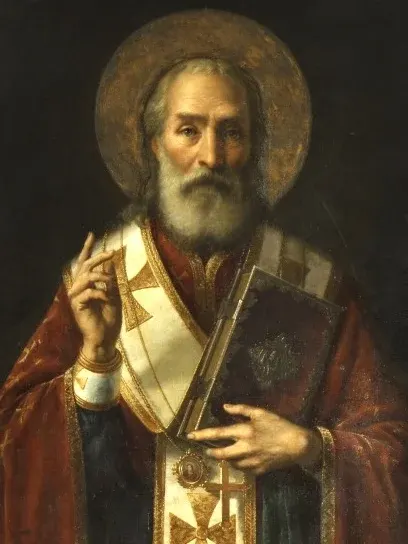
Biography
Nicholas was a bishop of Myra in Lycia whose veneration became exceptionally widespread. Firm contemporary details of his life are limited, while later stories describe generosity toward families in distress, protection of sailors, and intervention for people facing unjust punishment.
The stories repeatedly place his episcopal authority at the service of people without protection: families facing desperation, travelers at sea, and defendants in danger. These recurring themes explain the breadth of his patronage. They do not allow the historian to recover a complete sequence of independently dated events.
Those narratives shaped his reputation as a compassionate bishop and eventually influenced customs of giving gifts to children. Claims about particular episodes, including events assigned to the Council of Nicaea, require caution because the evidence is late. His relics and shrines became major centers of devotion. Both Eastern and Western churches celebrate him on December 6, not December 5.
A church at Constantinople already honored him in the sixth century, and the later translation of relics to Bari strengthened Western devotion. Gift customs are one branch of this much wider religious history. The bishop remembered in Christian worship should therefore be distinguished from the later secular character of Santa Claus, even while acknowledging the connection.
Context & contribution
A shared saint in modern encounters between churches
Nicholas's widespread veneration took a visible ecumenical form in 2017 when relics from Bari were taken to Moscow and Saint Petersburg. The loan followed the 2016 meeting of Pope Francis and Patriarch Kirill. Vatican Radio reported that an estimated two million Orthodox pilgrims visited during the two-month stay.
Catholic and Orthodox representatives prayed together before the relics returned to Italy in July. This episode documents a modern use of a shared saint's memory to foster contact between communities whose institutional separation remains real. It establishes neither the accuracy of every medieval Nicholas story nor the resolution of theological disagreements; its significance lies in a specific act of cooperation and the participation of ordinary pilgrims.
Explore the sources for this section
AI-assisted source comparison updated 2026-09-26. Editorial approach
From the Saint Discovery blog
Keep exploring your faith
Practical guides to prayer, the saints, and living the Catholic faith.
Why Do Catholics Pray to Saints? Intercession Explained
Why do Catholics pray to saints? Learn how intercession differs from worship, how it relates to Jesus, and a simple way to ask a saint to pray for you.
A next step with your saintRead the article Living the seasonsHow to Celebrate Your Patron Saint's Feast Day at Home
Celebrate your patron saint's feast day with prayer, a short biography, and an act of kindness. A practical plan for families, sponsors, and individuals.
A next step with your saintRead the articleFrom reading to reflection
What will you carry with you?
After reading about St. Nicholas of Myra, take a moment to consider:
- Compare a meeting between church leaders with the 2017 pilgrimage to Nicholas's relics; identify what each form of encounter could contribute to relations between their communities.
These are reflection prompts from Saint Discovery, not quotations from the saint.
Sources and further reading
Biography source comparison recorded on . This is an AI-assisted comparison, not independent human or ecclesiastical approval.
What the recorded review covers
AI-assisted expansion of the existing source-reviewed biography with comparison to retrieved cited sources; not ecclesiastical approval
A source list helps you check an account; it does not establish that every claim is certain. Follow the biography’s qualifications about historical evidence, traditions and feast calendars.
Suggest a correction to this biography
How we research these pages and handle corrections · Directory corrections log
More lives to explore
Suggestions based on the site’s quiz themes, not a historical relationship or a measure of holiness.