Catholic saint biography
St. Andrew Corsini
- Commemoration:
- January 9
- Lived:
- 1301–1374 — Florence and Fiesole, Italy
Why dates and liturgical observances can differ
Read the sources for this biography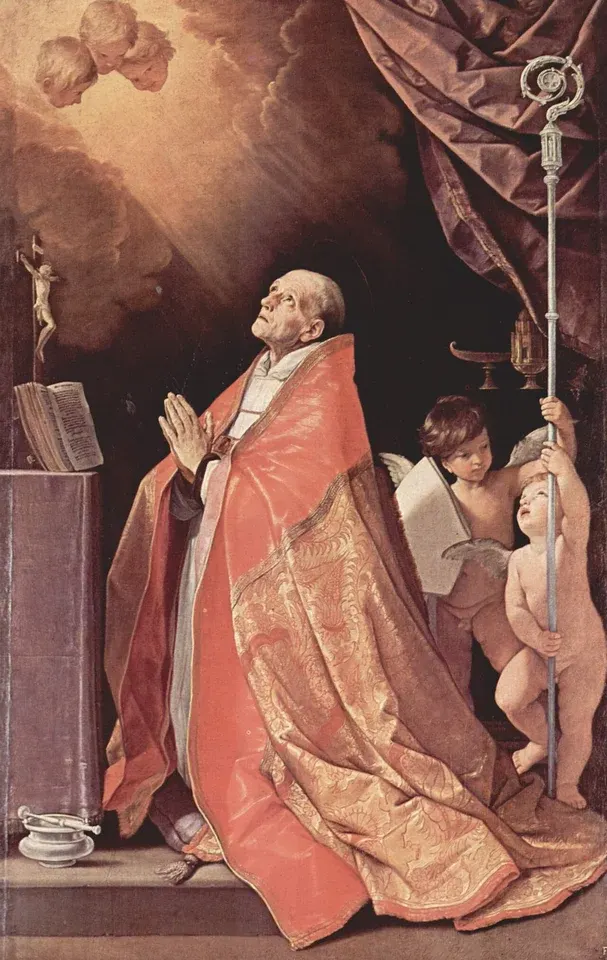
Biography
Andrew Corsini entered the Carmelites and served as their provincial before becoming bishop of Fiesole in 1349. His reputation for charity had grown during the plague at Florence, and he carried that concern for others into his episcopal ministry.
Coming from a Florentine family, he joined the Carmelite community while young and later completed studies in Paris. As bishop he chose to live at Fiesole rather than rely on the more comfortable residence in Florence used by earlier bishops. Parish visitation and care for clergy were part of his work.
His ministry joined material help with concern for the formation of priests. Peacemaking also exposed him to opposition: accounts of his episcopate remember conflict and imprisonment alongside his mediation. The sources preserve different calendar observances, so one local feast should not be mistaken for the only date on which he is remembered.
He also undertook work as a mediator, including a papal mission to settle disputes in Bologna. The account published by the Dicastery for the Causes of Saints emphasizes his preaching, prayer, and practical example. His commemoration appears on January 9 in the cited Vatican calendar; February 4 is found in the older Roman calendar.
Context & contribution
Reform through residence and formation
Andrew's decision to reside in Fiesole made a geographical statement about his office: the bishop would live among the church entrusted to him rather than remain in a more comfortable Florentine residence. Parish visits gave that decision practical substance by bringing him into contact with local needs.
The Dicastery's account also identifies standards for the intellectual and spiritual preparation of prospective priests. This makes reform more concrete than a general reputation for austerity. Andrew sought to shape the people who would continue pastoral work throughout the diocese. His care for damaged religious houses after the plague likewise joined immediate assistance with rebuilding the structures on which future ministry depended.
Explore the sources for this section
AI-assisted source comparison updated 2026-09-26. Editorial approach
From the Saint Discovery blog
Keep exploring your faith
Practical guides to prayer, the saints, and living the Catholic faith.
Why Do Catholics Pray to Saints? Intercession Explained
Why do Catholics pray to saints? Learn how intercession differs from worship, how it relates to Jesus, and a simple way to ask a saint to pray for you.
A next step with your saintRead the article Living the seasonsHow to Celebrate Your Patron Saint's Feast Day at Home
Celebrate your patron saint's feast day with prayer, a short biography, and an act of kindness. A practical plan for families, sponsors, and individuals.
A next step with your saintRead the articleFrom reading to reflection
What will you carry with you?
After reading about St. Andrew Corsini, take a moment to consider:
- How might living in Fiesole change what Andrew learned during parish visits? Connect his choice of residence with his preparation of future priests.
These are reflection prompts from Saint Discovery, not quotations from the saint.
Sources and further reading
- Dicastery for the Causes of Saints: Andrea Corsini ↗
- Vatican City State: January 9, Saint Andrew Corsini ↗
- Older Roman liturgy: Saint Andrew Corsini ↗
Biography source comparison recorded on . This is an AI-assisted comparison, not independent human or ecclesiastical approval.
What the recorded review covers
AI-assisted expansion checked against retrieved historical and institutional sources; traditions distinguished from documented history; not ecclesiastical approval
A source list helps you check an account; it does not establish that every claim is certain. Follow the biography’s qualifications about historical evidence, traditions and feast calendars.
Suggest a correction to this biography
How we research these pages and handle corrections · Directory corrections log
More lives to explore
Suggestions based on the site’s quiz themes, not a historical relationship or a measure of holiness.