Catholic saint biography
St. Teresa of Calcutta
- Commemoration:
- September 5
- Lived:
- 1910–1997 — Skopje; active in India
Optional memorial added to the General Roman Calendar in 2025.
Why dates and liturgical observances can differ
Read the sources for this biography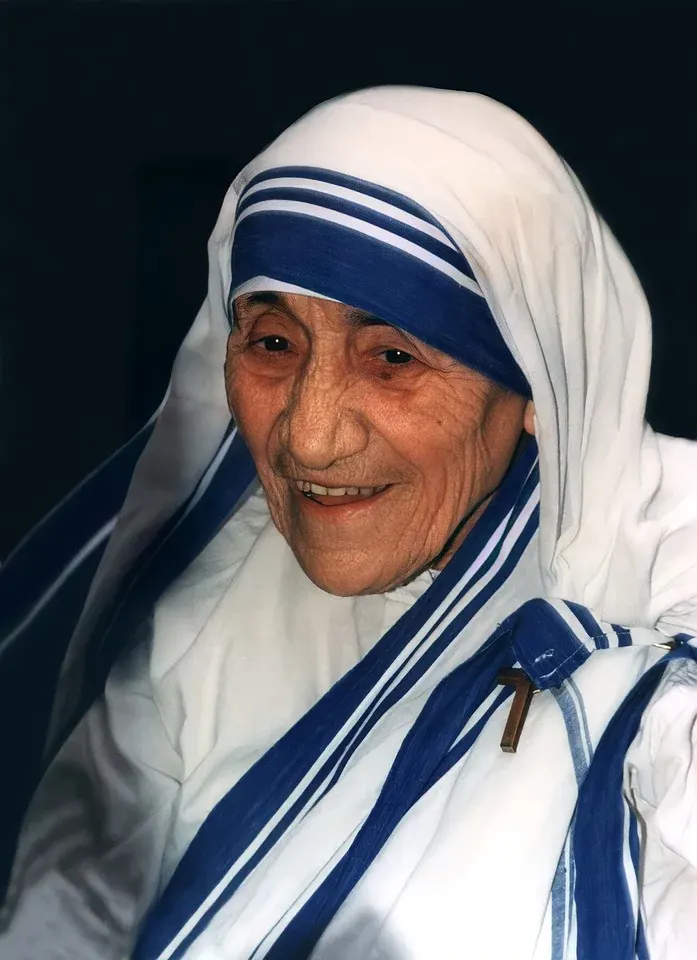
Biography
Teresa of Calcutta was born Agnes Gonxha Bojaxhiu and entered the Sisters of Loreto before going to India. After years of teaching, she began a new form of religious service among people living in extreme poverty. This work developed into the Missionaries of Charity.
Born in Skopje to an Albanian family in 1910, she left home at eighteen and entered Loreto in Ireland before going to India. The teaching years were an established religious vocation, not simply a preliminary to the work for which she became famous. Her later change was understood by her as a further call within that commitment.
Her community established homes and services for people who were sick, dying, abandoned, or without shelter, and eventually expanded internationally. She became one of the most widely recognized Catholic figures of the twentieth century. Teresa died in 1997 and was canonized in 2016. Her September 5 commemoration was added as an optional memorial to the General Roman Calendar in 2025.
In 1946 she described receiving the summons that led her toward direct service among Calcutta's poorest residents. Some former pupils joined the new work, which received diocesan recognition in 1950. The sisters' expansion involved forming communities able to provide daily care, rather than relying solely on the presence or reputation of their founder.
Preparing to begin the new mission involved permission from her religious superiors and practical training. In 1948 she exchanged the Loreto habit for a white sari with blue borders and received a short course of medical instruction in Patna. Back in Calcutta, she began visiting poor households and attending to people who were ill. The early work developed through personal contact and the gradual arrival of companions.
The religious family later included brothers, contemplative branches, and priests, alongside the sisters most closely associated with her public image. Letters made known after her death also revealed a prolonged experience of spiritual darkness and a felt absence of God. The Holy See's biography presents this as a hidden dimension of her life, showing that her outward activity was not accompanied by uninterrupted feelings of religious consolation.
Context & contribution
Loneliness in the Nobel lecture
In her 1979 Nobel lecture, Teresa described visiting a home where elderly residents had material comforts yet waited unhappily for relatives to appear. She used the episode to argue that abandonment could persist even where food and shelter were provided. Her language of poverty therefore included damaged relationships as well as a lack of goods.
The lecture's setting matters: an international peace award became an occasion to direct attention toward people within the listener's own household and neighborhood. This was her stated moral interpretation of care, not a comparative measurement of different forms of deprivation. Reading the speech preserves her own explanation of why attending to someone who felt unwanted belonged to her understanding of peace.
Explore the sources for this section
AI-assisted source comparison updated 2026-09-26. Editorial approach
From the Saint Discovery blog
Keep exploring your faith
Practical guides to prayer, the saints, and living the Catholic faith.
Why Is St. Thérèse the Patron Saint of Missions?
Why is St. Thérèse patron saint of missions? Discover her support for missionaries and practical ways to participate in the Church's mission from home.
Sharing the faithRead the article Everyday faithWhat Is Evangelization? A Catholic Guide to Sharing the Faith
What is evangelization? Learn the Catholic meaning, the new evangelization, and practical ways to share your faith with respect, confidence, and love.
Sharing the faithRead the articleFrom reading to reflection
What will you carry with you?
After reading about St. Teresa of Calcutta, take a moment to consider:
- Consider the elderly residents described in Teresa's Nobel lecture and distinguish needs a well-equipped institution can meet from needs requiring sustained human relationships.
These are reflection prompts from Saint Discovery, not quotations from the saint.
Sources and further reading
- www.vaticannews.va: Teresa of Calcutta ↗
- www.vaticannews.va: Teresa of Calcutta ↗
- Holy See: Mother Teresa of Calcutta biography ↗
Biography source comparison recorded on . This is an AI-assisted comparison, not independent human or ecclesiastical approval.
What the recorded review covers
AI-assisted expansion of the existing source-reviewed biography with comparison to retrieved cited sources; not ecclesiastical approval
A source list helps you check an account; it does not establish that every claim is certain. Follow the biography’s qualifications about historical evidence, traditions and feast calendars.
Suggest a correction to this biography
How we research these pages and handle corrections · Directory corrections log
More lives to explore
Suggestions based on the site’s quiz themes, not a historical relationship or a measure of holiness.