Catholic saint biography
St. Maximilian of Tebessa
- Commemoration:
- March 12
- Lived:
- Died 295 — Theveste, Roman North Africa
Why dates and liturgical observances can differ
Read the sources for this biography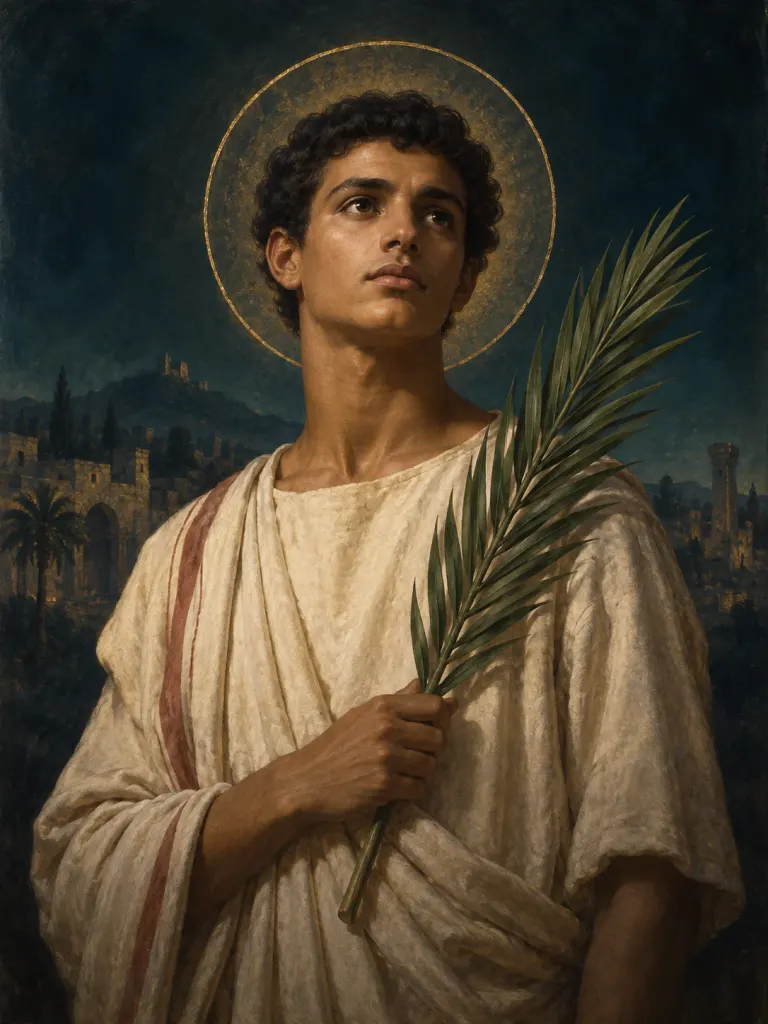
Biography
Maximilian was a young North African Christian brought before a Roman official for military enrollment. The account of his trial describes his refusal to accept the military sign and oath because he understood his Christian allegiance to exclude that service. His father was connected with military recruitment.
The dispute turns on enrollment and the sign of military service. In the trial tradition, an official demand and a Christian refusal are placed directly against one another. The account is unusually focused; it does not provide a full childhood or an extended public ministry before the confrontation.
He maintained his refusal despite the threat of execution and was put to death by the sword in 295, at about twenty-one years of age. His story is often discussed in relation to Christian conscience and military duty, but his personal stance should not be generalized into a claim about every early Christian. The Roman Martyrology commemorates him on March 12.
His remembrance raises a historical question about Christian participation in Roman institutions. Different Christians responded differently to military obligations, so his testimony should retain its particular character. He is also distinct from the modern Franciscan Maximilian Kolbe: their names are shared, but the circumstances and centuries of their martyrdoms differ.
Context & contribution
The courtroom argument acknowledges Christian soldiers
One revealing exchange in Maximilian's trial account concerns other Christians already serving in the army. The proconsul names the imperial rulers under whom they serve and offers their example as an argument against Maximilian's refusal. Maximilian answers by accepting responsibility for his own decision rather than claiming that those soldiers do not exist.
This detail makes the text valuable for studying conscience within a diverse early Christian population. It preserves disagreement about participation in imperial institutions inside the martyr's own story. The official's appeal to existing practice and the recruit's personal refusal are different kinds of argument; neither should be silently replaced with a fully developed modern theory of conscientious objection.
Explore the sources for this section
AI-assisted source comparison updated 2026-09-26. Editorial approach
From the Saint Discovery blog
Keep exploring your faith
Practical guides to prayer, the saints, and living the Catholic faith.
Why Do Catholics Pray to Saints? Intercession Explained
Why do Catholics pray to saints? Learn how intercession differs from worship, how it relates to Jesus, and a simple way to ask a saint to pray for you.
A next step with your saintRead the article Living the seasonsHow to Celebrate Your Patron Saint's Feast Day at Home
Celebrate your patron saint's feast day with prayer, a short biography, and an act of kindness. A practical plan for families, sponsors, and individuals.
A next step with your saintRead the articleFrom reading to reflection
What will you carry with you?
After reading about St. Maximilian of Tebessa, take a moment to consider:
- Analyze the proconsul's appeal to other Christian soldiers and Maximilian's response; identify whether each argument relies on precedent, authority, or personal responsibility.
These are reflection prompts from Saint Discovery, not quotations from the saint.
Sources and further reading
Biography source comparison recorded on . This is an AI-assisted comparison, not independent human or ecclesiastical approval.
What the recorded review covers
AI-assisted expansion of the existing source-reviewed biography with comparison to retrieved cited sources; not ecclesiastical approval
A source list helps you check an account; it does not establish that every claim is certain. Follow the biography’s qualifications about historical evidence, traditions and feast calendars.
Suggest a correction to this biography
How we research these pages and handle corrections · Directory corrections log
More lives to explore
Suggestions based on the site’s quiz themes, not a historical relationship or a measure of holiness.