Catholic saint biography
St. Margaret Clitherow
- Commemoration:
- March 26
- Lived:
- About 1556–1586 — York, England
Individual commemoration; March 25 is her execution date. English group observances also occur.
Why dates and liturgical observances can differ
Read the sources for this biography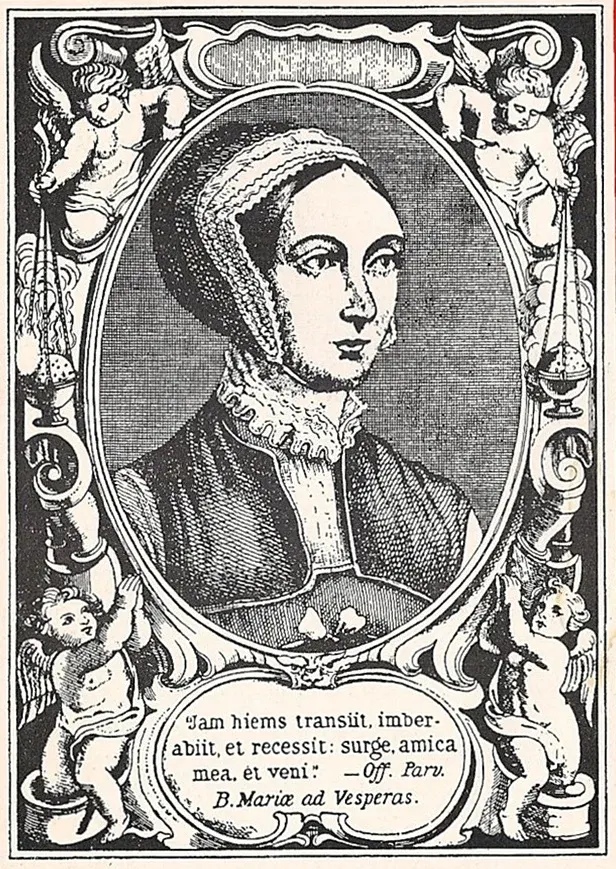
Biography
Margaret Clitherow was a married woman in York who became Catholic during the reign of Elizabeth I. She sheltered priests and helped sustain Catholic worship when such activities could carry severe penalties. Her home became a place of refuge and religious instruction, bringing her repeatedly into conflict with the authorities.
Her husband, John Clitherow, was a butcher and remained Protestant after her conversion. Their household therefore stood within the divided religious landscape rather than outside ordinary civic life. Sheltering clergy and making room for Mass turned a family home into a center of prohibited religious activity.
In 1586 she was charged with harboring priests. She refused to enter a plea and was executed by pressing on March 25. Her death is remembered among the martyrdoms arising from England's religious conflicts. She was canonized in 1970 with the Forty Martyrs of England and Wales. Her individual feast is commonly observed on March 26.
Her refusal to plead is traditionally explained as an effort to spare others, including her children, involvement in the proceedings. Pressing was a legal consequence of refusing a plea, which distinguishes the circumstances of her death from a conventional sentence following conviction at trial. Her story links domestic responsibilities with the dangers of recusant Catholic practice.
Context & contribution
A house adapted for a hidden religious network
The parish account describes an opening between the attics of Margaret's house and a neighboring property through which a priest could escape. Her son Henry also went to Reims for priestly training. These details place the household within both a local network of refuge and a wider continental system of Catholic formation.
The same source distinguishes the later Shambles shrine from the house now identified as her actual residence farther along the street. A place of commemoration need not occupy the exact location of every event it recalls. That distinction matters for visitors who want to connect a powerful devotional site with the historical geography of York.
Explore the sources for this section
AI-assisted source comparison updated 2026-09-26. Editorial approach
From the Saint Discovery blog
Keep exploring your faith
Practical guides to prayer, the saints, and living the Catholic faith.
Why Do Catholics Pray to Saints? Intercession Explained
Why do Catholics pray to saints? Learn how intercession differs from worship, how it relates to Jesus, and a simple way to ask a saint to pray for you.
A next step with your saintRead the article Living the seasonsHow to Celebrate Your Patron Saint's Feast Day at Home
Celebrate your patron saint's feast day with prayer, a short biography, and an act of kindness. A practical plan for families, sponsors, and individuals.
A next step with your saintRead the articleFrom reading to reflection
What will you carry with you?
After reading about St. Margaret Clitherow, take a moment to consider:
- On a sketch of a street, distinguish a historical household, an escape route, and a later shrine; discuss what each reveals about hidden worship and public remembrance.
These are reflection prompts from Saint Discovery, not quotations from the saint.
Sources and further reading
Biography source comparison recorded on . This is an AI-assisted comparison, not independent human or ecclesiastical approval.
What the recorded review covers
AI-assisted expansion of the existing source-reviewed biography with comparison to retrieved cited sources; not ecclesiastical approval
A source list helps you check an account; it does not establish that every claim is certain. Follow the biography’s qualifications about historical evidence, traditions and feast calendars.
Suggest a correction to this biography
How we research these pages and handle corrections · Directory corrections log
More lives to explore
Suggestions based on the site’s quiz themes, not a historical relationship or a measure of holiness.