Catholic saint biography
St. Lidwina of Schiedam
- Commemoration:
- April 14
- Lived:
- 1380–1433 — Schiedam, Netherlands
Traditional commemoration on April 14.
Why dates and liturgical observances can differ
Read the sources for this biography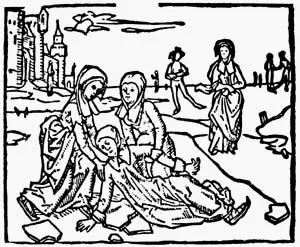
Biography
Lidwina, also spelled Lydwine, lived in Schiedam and became severely ill after a skating accident in adolescence. Accounts of her life describe prolonged pain and increasing disability. With spiritual guidance, she developed a life centered on prayer and the Eucharist, while visitors sought her counsel and asked her to pray for them.
The illness restricted her movement but did not isolate her completely from religious and civic relationships. Visitors, clergy, and spiritual writers contributed to the accounts through which she became known. Her story therefore includes networks of care and interpretation, not only a solitary individual enduring pain.
Her early biographies also recount extraordinary visions, fasting, and other mystical phenomena. These belong to the religious testimony surrounding her and should not be converted into verified medical facts or a confident retrospective diagnosis. Her enduring local veneration received official recognition from Leo XIII in 1890. Remembering her responsibly means recognizing a person who continued to exercise spiritual agency amid suffering, without implying that illness itself must be welcomed.
Her grave became a pilgrimage place soon after her death in 1433. Later movements of her relics and their return to Schiedam show the persistence of local attachment. Official recognition of her cult confirmed a long-standing devotion; it should not be confused with a modern medical assessment of the symptoms described in medieval biographies.
Context & contribution
The writers around a woman confined by illness
Lidwina's story intersects with an identifiable devotional literary network. Hendrik Mande composed a Dutch tract for her consolation, and Joannes Busch brought it to her. Later accounts of her life were written by Joannes Brugmann and Thomas à Kempis. Her room was therefore connected with the circulation of religious texts as well as personal visits.
These connections give her a place in the history of late medieval spiritual reading. They also require attention to mediation: much of what survives about her comes through men who interpreted her experience for devotional purposes. Comparing their literary aims with the limited biographical outline helps preserve both her influence and the limits of access to her own voice.
Explore the sources for this section
AI-assisted source comparison updated 2026-09-26. Editorial approach
From the Saint Discovery blog
Keep exploring your faith
Practical guides to prayer, the saints, and living the Catholic faith.
What Is the Domestic Church? John Paul II on Faith at Home
What Catholics mean by the domestic church, how John Paul II explained family life, and practical ways to begin with prayer, forgiveness and welcome.
Bring reflection into prayerRead the article Prayer & reflectionHow to Make a Spiritual Communion When You Cannot Receive
Learn how to make a spiritual communion, with a short original prayer and clear guidance on Mass, Confession, and times when you cannot receive.
Bring reflection into prayerRead the articleFrom reading to reflection
What will you carry with you?
After reading about St. Lidwina of Schiedam, take a moment to consider:
- Create a source map with Lidwina, Mande, Busch, Brugmann, and Thomas à Kempis; distinguish a text sent to her from a later text written about her.
These are reflection prompts from Saint Discovery, not quotations from the saint.
Sources and further reading
Biography source comparison recorded on . This is an AI-assisted comparison, not independent human or ecclesiastical approval.
What the recorded review covers
AI-assisted expansion of the existing source-reviewed biography with comparison to retrieved cited sources; not ecclesiastical approval
A source list helps you check an account; it does not establish that every claim is certain. Follow the biography’s qualifications about historical evidence, traditions and feast calendars.
Suggest a correction to this biography
How we research these pages and handle corrections · Directory corrections log
More lives to explore
Suggestions based on the site’s quiz themes, not a historical relationship or a measure of holiness.