Catholic saint biography
St. Joseph
- Commemoration:
- March 19
- Patron Saint of:
- The universal Church and workers
- Lived:
- First century; exact lifespan unknown — Nazareth and Judea in the Gospel narratives
Solemnity of Mary's spouse; May 1 commemorates Joseph the Worker.
Why dates and liturgical observances can differ
Read the sources for this biography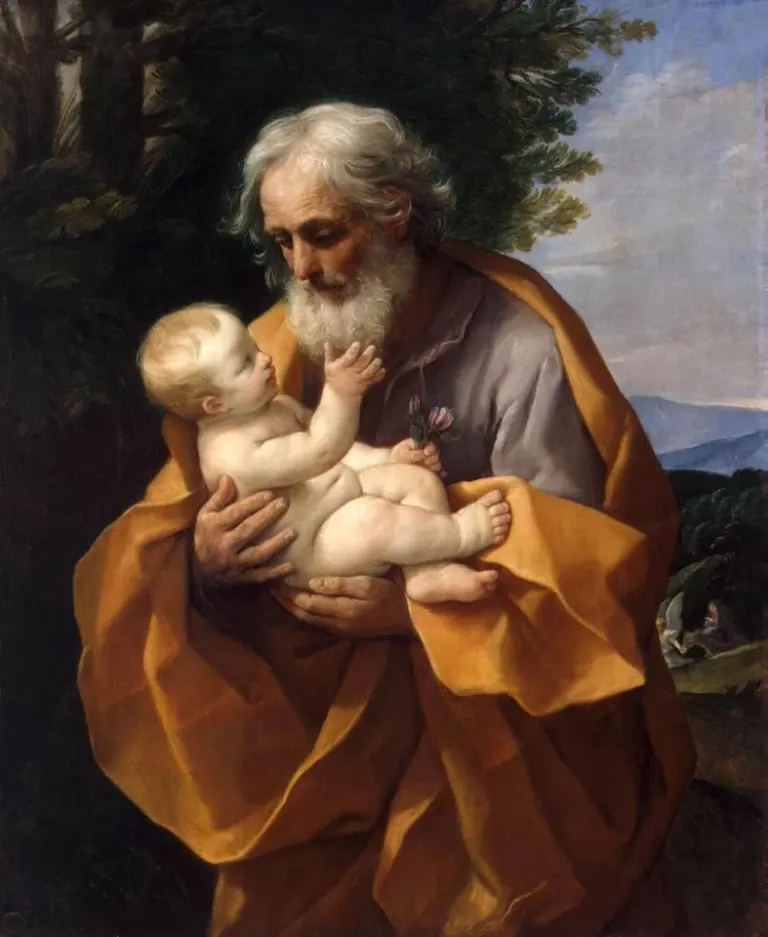
Biography
Joseph is Mary's husband and the earthly father who cared for Jesus in the Gospel narratives. Matthew describes him as righteous and presents his response to divine guidance through dreams. Luke places him with Mary at Jesus' birth, presentation in the Temple, and the search for the twelve-year-old Jesus in Jerusalem.
Matthew places his care within a genealogy connecting Jesus with David. Joseph accepts responsibility for Mary and her child and acts when the family's safety is threatened. The flight into Egypt and eventual settlement at Nazareth show this guardianship through movement, decisions, and protection rather than through recorded explanations.
The Gospels give him no recorded speech and provide no account of his death. Later stories about his age or earlier family should therefore be distinguished from the biblical evidence. Catholic devotion emphasizes his care, obedience, work, and protection of the family. Pius IX declared him patron of the universal Church, and a separate observance honors him as a worker.
The title father describes the real parental role he exercised while Catholic belief distinguishes it from biological paternity. His biblical silence leaves room for reflection, but not for invented conversations. Devotional portraits of an elderly man and detailed accounts of his death are later traditions, not information supplied by Matthew or Luke.
The Church's teaching also considers his ordinary household responsibilities. In the 1989 apostolic exhortation Redemptoris Custos, John Paul II interpreted Joseph's fatherhood through the actual service he gave Mary and Jesus. The document connects the journey to Bethlehem, exile in Egypt, and life in Nazareth with a continuing commitment to the family. This is a theological reading of the biblical narrative, rather than a source of additional episodes from Joseph's life.
Joseph's trade has a particular place in this reflection. His work supported the household, and Christian tradition contemplates Jesus sharing the ordinary labor of Nazareth. The May 1 observance of Joseph the Worker focuses on this dimension, alongside the principal March 19 solemnity. Devotion to Joseph thus encompasses both protection of the Church and the dignity of responsibilities that rarely attract public attention: employment, family care, and dependable daily service.
Context & contribution
Naming Jesus and accepting responsibility
Redemptoris Custos gives particular attention to Joseph naming the child Jesus. John Paul II interprets this act as an exercise of legal fatherhood and an acknowledgment of the saving mission expressed by the name. It is a specific way of understanding Joseph's agency within a narrative that records none of his spoken words.
The document also considers circumcision and the family's observance of Israel's religious obligations. These passages place the household within Jewish covenantal life rather than imagining it outside its own community. They are theological interpretations of Gospel scenes, not independent evidence for otherwise unknown events. They help explain how the Church understands fatherhood through accepted responsibilities and public acts of belonging.
Explore the sources for this section
AI-assisted source comparison updated 2026-09-26. Editorial approach
From the Saint Discovery blog
Keep exploring your faith
Practical guides to prayer, the saints, and living the Catholic faith.
Why Is Saint Luke's Symbol an Ox? Meaning and Biblical Roots
Discover why Saint Luke's symbol is a winged ox, its biblical roots, and how the image connects his Gospel with priesthood and sacrifice.
Go deeper into ScriptureRead the article Prayer & reflectionHow to Pray the Jesus Prayer: A Catholic Beginner's Guide
Learn the Jesus Prayer, its Eastern Christian roots and biblical meaning, with a simple Catholic practice focused on Christ and mercy.
Go deeper into ScriptureRead the articleFrom reading to reflection
What will you carry with you?
After reading about St. Joseph, take a moment to consider:
- Compare naming, providing, and protecting in Matthew's account of Joseph; explain what each action contributes to the meaning of parenthood.
These are reflection prompts from Saint Discovery, not quotations from the saint.
Sources and further reading
Biography source comparison recorded on . This is an AI-assisted comparison, not independent human or ecclesiastical approval.
What the recorded review covers
AI-assisted expansion of the existing source-reviewed biography with comparison to retrieved cited sources; not ecclesiastical approval
A source list helps you check an account; it does not establish that every claim is certain. Follow the biography’s qualifications about historical evidence, traditions and feast calendars.
Suggest a correction to this biography
How we research these pages and handle corrections · Directory corrections log
Explore this saint in everyday life
Saints for Parents: Patience, Prayer, and Family Life
Explore Monica and Joseph as companions for parenting, with sourced explanations, reflection questions, and a simple prayer for family life.
Saints for Difficult Decisions and Discernment
Explore Ignatius of Loyola and Joseph as companions for difficult choices, with sourced reflections, practical questions, and a prayer for discernment.
More lives to explore
Suggestions based on the site’s quiz themes, not a historical relationship or a measure of holiness.