Catholic saint biography
St. John of Sahagún
- Commemoration:
- June 12
- Lived:
- Fifteenth century–1479 — Sahagún, León, Spain
Augustinian feast; his death is recorded on June 11.
Why dates and liturgical observances can differ
Read the sources for this biography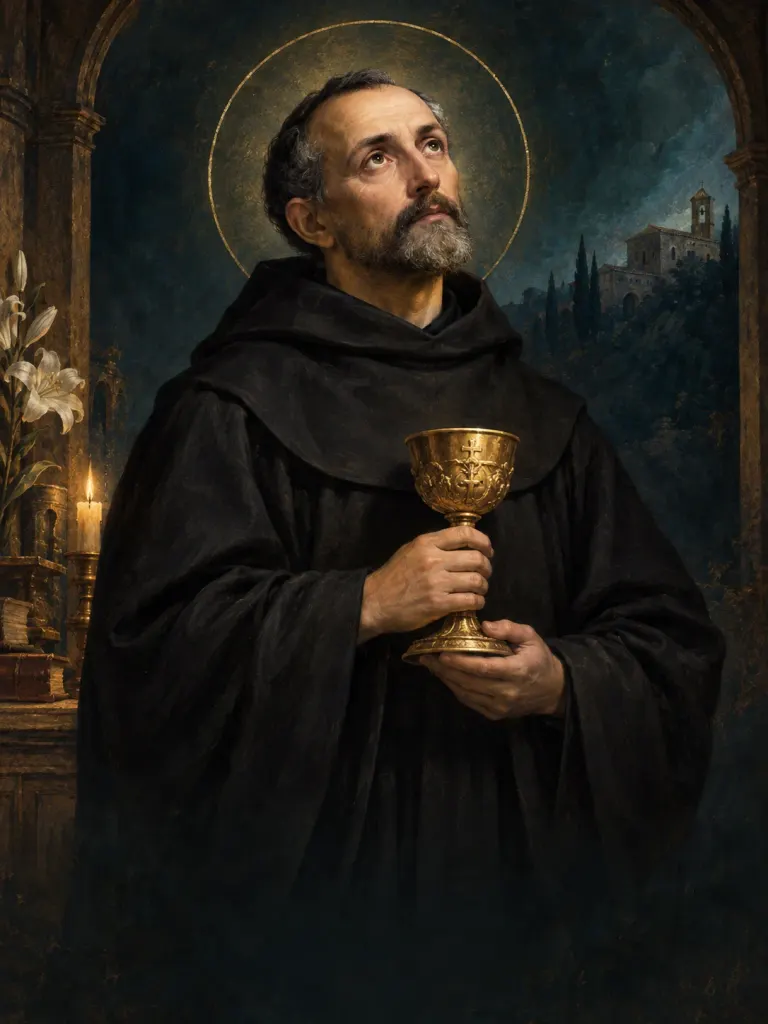
Biography
John González of Sahagún was a Spanish priest who served in Burgos before continuing his studies and preaching in Salamanca. He entered the Augustinian order in 1463 and subsequently held responsibilities within its community. His preaching addressed the behavior of powerful citizens as well as ordinary people.
Before becoming a friar, he questioned the accumulation of church income and positions and relinquished benefits he believed he could not conscientiously retain. Further study at Salamanca helped prepare him for a ministry in which moral teaching and the responsibilities of public life frequently met.
He became especially associated with efforts to reconcile feuding groups in Salamanca. Later biographies include miracles and a claim that he was poisoned, but the latter is not established by the earliest evidence. He was canonized in 1690. Sahagún and the older forms San Facundo or San Fagondez refer to his place-name; they do not indicate separate saints. Sources differ on his birth year.
His reputation as a peacemaker reflects the factional violence of his city, not simply a pleasant personal temperament. Challenging powerful people carried risks. Devotional art often gives him a chalice and host, reflecting his Eucharistic devotion; miraculous episodes associated with that imagery belong to the history of his cult.
Context & contribution
A peacemaker who also formed a community
John's Augustinian responsibilities included serving as novice master and later as prior. Those appointments place his public peacemaking alongside a less visible task: preparing new members for a disciplined common life. He had to teach and govern people who encountered him daily, as well as address crowds who heard an occasional sermon.
The early stages of his cause began in 1525, well before his beatification in 1601 and canonization in 1690. This long reception history helps distinguish his fifteenth-century ministry from the later growth of his reputation. Claims about supernatural insight and the circumstances of his death belong to that devotional record and should not be used to manufacture a precise psychological portrait.
Explore the sources for this section
AI-assisted source comparison updated 2026-09-26. Editorial approach
From the Saint Discovery blog
Keep exploring your faith
Practical guides to prayer, the saints, and living the Catholic faith.
Why Is St. Thérèse the Patron Saint of Missions?
Why is St. Thérèse patron saint of missions? Discover her support for missionaries and practical ways to participate in the Church's mission from home.
Sharing the faithRead the article Everyday faithWhat Is Evangelization? A Catholic Guide to Sharing the Faith
What is evangelization? Learn the Catholic meaning, the new evangelization, and practical ways to share your faith with respect, confidence, and love.
Sharing the faithRead the articleFrom reading to reflection
What will you carry with you?
After reading about St. John of Sahagún, take a moment to consider:
- Contrast the skills required to mediate a civic feud with those needed to guide novices; identify one tension John could have faced between these responsibilities.
These are reflection prompts from Saint Discovery, not quotations from the saint.
Sources and further reading
Biography source comparison recorded on . This is an AI-assisted comparison, not independent human or ecclesiastical approval.
What the recorded review covers
AI-assisted expansion of the existing source-reviewed biography with comparison to retrieved cited sources; not ecclesiastical approval
A source list helps you check an account; it does not establish that every claim is certain. Follow the biography’s qualifications about historical evidence, traditions and feast calendars.
Suggest a correction to this biography
How we research these pages and handle corrections · Directory corrections log
More lives to explore
Suggestions based on the site’s quiz themes, not a historical relationship or a measure of holiness.