Catholic saint biography
St. John Francis Regis
- Commemoration:
- June 16
- Patron Saint of:
- Lacemakers
- Lived:
- 1597–1640 — Fontcouverte, France
Traditional French observance; the U.S. Jesuit source also records July 2.
Why dates and liturgical observances can differ
Read the sources for this biography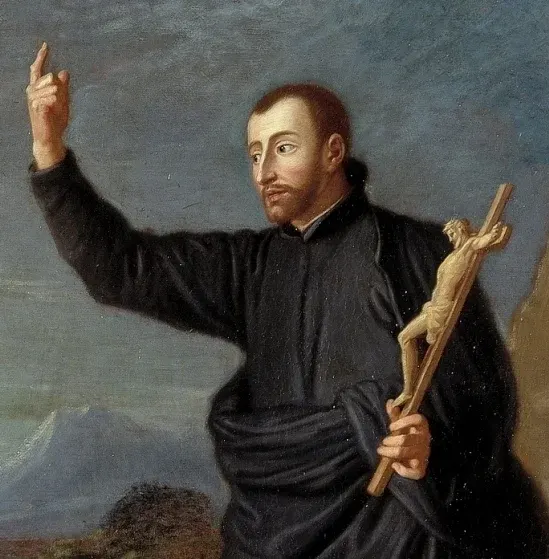
Biography
Saint John Francis Regis was a French Jesuit priest whose preaching was closely joined to practical assistance for people living in poverty. His missions reached rural communities and others with limited access to regular pastoral care.
Educated by Jesuits, he entered the Society of Jesus in 1616. His later ministry unfolded in regions marked by Catholic-Protestant conflict. He preached, taught children, visited prisoners, and heard confessions, traveling widely rather than confining his work to a single established parish.
Regis paid particular attention to women seeking to leave prostitution. He helped provide safe accommodation and alternative employment, including training in lace-making. This work explains his later association with lacemakers: the connection arose from an effort to make lasting financial independence possible.
He continued a parish mission despite serious illness and died at the end of 1640. Afterward, associations bearing his name carried forward charitable and educational work, and his tomb became a destination for pilgrims. Canonized in 1737, he is remembered for a form of evangelization that combined preaching with the practical conditions people needed to rebuild their lives.
Context & contribution
How a French missionary became a college's patron
The institution now known as Regis University adopted his name in 1921. Its history explains that the earlier name, College of the Sacred Heart, had become awkward in sporting chants and newspaper coverage. President Robert Kelley sought a new name as part of a broader effort to strengthen the college's public identity.
The faculty considered Newman and Regis, and the board chose Regis after learning the Jesuit provincial's preference; the change took effect on July 1. This is a concrete example of a saint's later reception, with an institutional decision that can be dated and explained. It should be distinguished from a school founded personally by the saint, who had died centuries earlier in France.
Explore the sources for this section
AI-assisted source comparison updated 2026-09-26. Editorial approach
From the Saint Discovery blog
Keep exploring your faith
Practical guides to prayer, the saints, and living the Catholic faith.
Why Is St. Thérèse the Patron Saint of Missions?
Why is St. Thérèse patron saint of missions? Discover her support for missionaries and practical ways to participate in the Church's mission from home.
Sharing the faithRead the article Everyday faithWhat Is Evangelization? A Catholic Guide to Sharing the Faith
What is evangelization? Learn the Catholic meaning, the new evangelization, and practical ways to share your faith with respect, confidence, and love.
Sharing the faithRead the articleFrom reading to reflection
What will you carry with you?
After reading about St. John Francis Regis, take a moment to consider:
- Read the university's account of its 1921 name change. Discuss how choosing a patron can combine religious memory with the practical needs of a later institution.
These are reflection prompts from Saint Discovery, not quotations from the saint.
Sources and further reading
Biography source comparison recorded on . This is an AI-assisted comparison, not independent human or ecclesiastical approval.
What the recorded review covers
AI-assisted expansion checked against cited sources; historical traditions distinguished from documented evidence; not ecclesiastical approval
A source list helps you check an account; it does not establish that every claim is certain. Follow the biography’s qualifications about historical evidence, traditions and feast calendars.
Suggest a correction to this biography
How we research these pages and handle corrections · Directory corrections log
More lives to explore
Suggestions based on the site’s quiz themes, not a historical relationship or a measure of holiness.