Catholic saint biography
St. John Bosco
- Commemoration:
- January 31
- Lived:
- 1815–1888 — Becchi, Piedmont, Italy
Roman memorial.
Why dates and liturgical observances can differ
Read the sources for this biography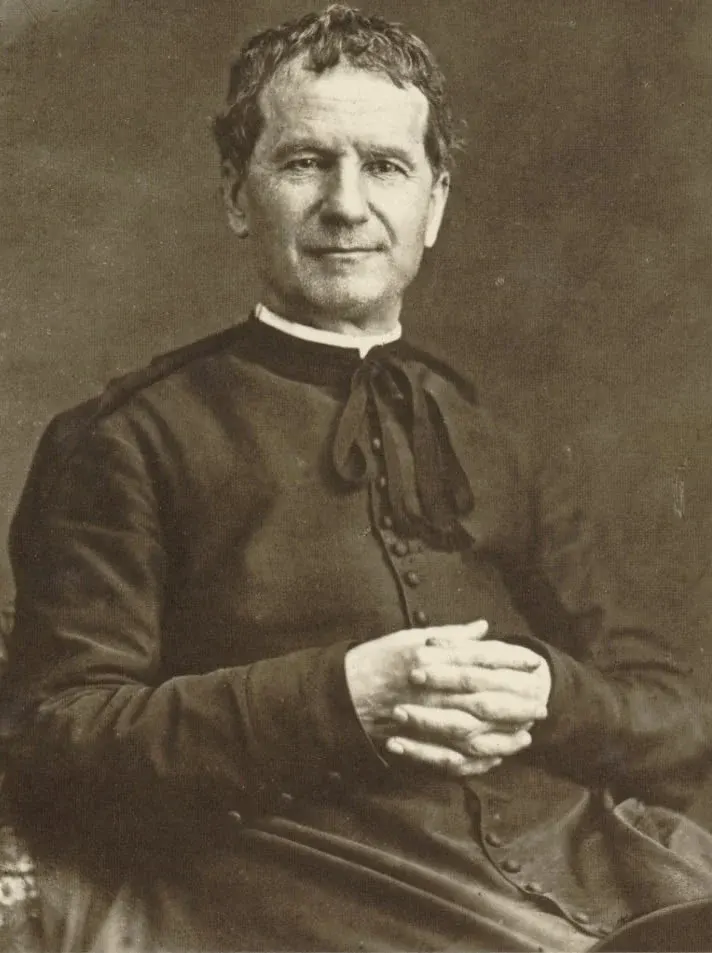
Biography
Saint John Bosco was an Italian priest who developed homes, schools, and youth communities for young people facing poverty and insecure work. Known as Don Bosco, he made Turin the starting point of the Salesian educational movement.
His oratory gathered boys who needed more than a classroom. It offered worship, recreation, learning, and a place of belonging. This combination reflected his conviction that education must address a young person's relationships, practical needs, and spiritual life together.
Drawing inspiration from Francis de Sales, Bosco founded a congregation of priests and brothers in 1859. With Mary Domenica Mazzarello he also founded the Daughters of Mary Help of Christians for the education of girls. Salesian Cooperators enabled lay people to share the mission.
The three principles describe a relationship as much as a school program. Reason means respecting a young person's capacity to understand expectations, ask questions, and take responsibility. Religion connects education with prayer, moral formation, and the possibility of a meaningful vocation. Loving kindness requires an educator to know a young person as an individual, including the circumstances that shape behavior.
The Salesian Sisters explain this inheritance through active participation, encouragement of curiosity, and everyday gestures of care. Its continuing application includes classrooms, youth activities, and recreation, making the playground as relevant as the formal lesson. In that understanding, a safe and welcoming environment is not an optional extra added to education: it is part of how trust develops and learning becomes possible.
His Preventive System emphasized reason, religion, and loving kindness. Educators were to accompany young people with a trustworthy presence, explaining expectations and helping them develop responsibility. The method sought to make care evident in everyday relationships rather than rely on punishment. Canonized in 1934, Bosco left a religious family whose educational work continues through schools, parishes, youth centers, and other forms of service.
Context & contribution
The local history behind the Salesian name
The Salesians' account of their name includes the Marchioness Barolo, whose intended foundation at Turin was to have Francis de Sales as patron. When Bosco's oratory used premises connected with her work in 1844, that existing devotion joined his own admiration for Francis's gentleness. The name developed within concrete relationships of patronage and place.
The account also places Bosco's choice within Catholic controversies with the Waldensians. His Catholic Readings, begun in 1853, participated in that polemical setting. This historical context helps explain why Francis represented both pastoral kindness and a model of defending Catholic belief for Bosco. Understanding the setting need not reproduce the hostility of nineteenth-century religious disputes.
Explore the sources for this section
AI-assisted source comparison updated 2026-09-26. Editorial approach
From the Saint Discovery blog
Keep exploring your faith
Practical guides to prayer, the saints, and living the Catholic faith.
Why Do Catholics Pray to Saints? Intercession Explained
Why do Catholics pray to saints? Learn how intercession differs from worship, how it relates to Jesus, and a simple way to ask a saint to pray for you.
A next step with your saintRead the article Living the seasonsHow to Celebrate Your Patron Saint's Feast Day at Home
Celebrate your patron saint's feast day with prayer, a short biography, and an act of kindness. A practical plan for families, sponsors, and individuals.
A next step with your saintRead the articleFrom reading to reflection
What will you carry with you?
After reading about St. John Bosco, take a moment to consider:
- Identify the different reasons the Salesian history gives for choosing Francis de Sales as patron. Discuss how a community's name can reflect local support, educational ideals, and the conflicts of its time.
These are reflection prompts from Saint Discovery, not quotations from the saint.
Sources and further reading
- Salesians of Don Bosco: Our origins and educational mission ↗
- Salesian Sisters: The Preventive System ↗
Biography source comparison recorded on . This is an AI-assisted comparison, not independent human or ecclesiastical approval.
What the recorded review covers
AI-assisted expansion checked against cited sources; historical traditions distinguished from documented evidence; not ecclesiastical approval
A source list helps you check an account; it does not establish that every claim is certain. Follow the biography’s qualifications about historical evidence, traditions and feast calendars.
Suggest a correction to this biography
How we research these pages and handle corrections · Directory corrections log
Explore this saint in everyday life
More lives to explore
Suggestions based on the site’s quiz themes, not a historical relationship or a measure of holiness.