Catholic saint biography
St. Hedwig of Silesia
- Commemoration:
- October 16
- Patron Saint of:
- Silesia
- Lived:
- About 1174–1243 — Andechs, Bavaria
Current Roman commemoration; older calendars may show October 17.
Why dates and liturgical observances can differ
Read the sources for this biography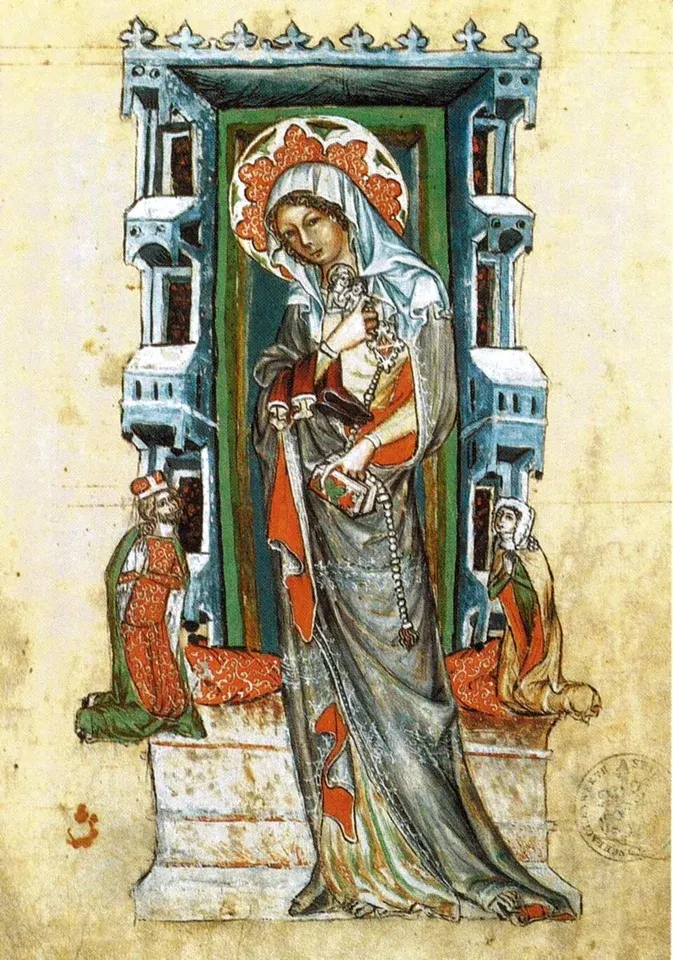
Biography
Hedwig of Silesia was a duchess whose religious patronage and direct charity helped shape her region's Christian institutions. Born into the house of Andechs, she married Henry, the future duke of Silesia.
The couple supported monasteries, hospitals, and other religious foundations. Trzebnica became especially important, bringing a community of Cistercian women into a lasting relationship with the ducal household. Such foundations combined worship with education, land management, and care.
Her public position did not spare her bereavement or political conflict. She intervened when her husband was taken captive and lived through losses within the family. Her remembered austerity belongs within this demanding household and public life.
After Henry's death she lived near the Trzebnica community, where her daughter Gertrude was abbess. She did not take vows that would have prevented her from retaining resources for charity. Canonized in 1267, she became a patroness of Silesia. Her life should be distinguished from that of Jadwiga, the later ruler of Poland: the similar names can conceal two different women, centuries, and forms of public responsibility.
Context & contribution
A medieval patron's later educational legacy
Hedwig's name became the patronage of a new charitable initiative centuries after her death. In 1848, Robert Spiske formed an association of women and girls at Breslau; the Sisters of Saint Hedwig developed from it in 1859. Their work included the education of orphaned and abandoned children, as well as schools and vocational instruction.
This later foundation should be distinguished from the medieval communities Hedwig herself supported. It illustrates a different form of legacy: a remembered example of charity could inspire people facing the needs of a later city. The nineteenth-century sisters supplied their own organization and labor, while choosing her name to express continuity with a regional religious inheritance.
Explore the sources for this section
AI-assisted source comparison updated 2026-09-26. Editorial approach
From the Saint Discovery blog
Keep exploring your faith
Practical guides to prayer, the saints, and living the Catholic faith.
Saint Hedwig of Silesia and Saint Jadwiga: What's the Difference?
Are Saint Hedwig and Saint Jadwiga the same person? Compare the duchess of Silesia and queen of Poland, their dates, and their distinct stories.
Connected to this saintRead the article Prayer & reflectionWhy Do Catholics Pray to Saints? Intercession Explained
Why do Catholics pray to saints? Learn how intercession differs from worship, how it relates to Jesus, and a simple way to ask a saint to pray for you.
A next step with your saintRead the articleFrom reading to reflection
What will you carry with you?
After reading about St. Hedwig of Silesia, take a moment to consider:
- Make a two-column timeline separating Hedwig's medieval patronage from Spiske's nineteenth-century foundation. Discuss what can continue across centuries without being the same institution.
These are reflection prompts from Saint Discovery, not quotations from the saint.
Sources and further reading
Biography source comparison recorded on . This is an AI-assisted comparison, not independent human or ecclesiastical approval.
What the recorded review covers
AI-assisted expansion checked against cited sources; historical traditions distinguished from documented evidence; not ecclesiastical approval
A source list helps you check an account; it does not establish that every claim is certain. Follow the biography’s qualifications about historical evidence, traditions and feast calendars.
Suggest a correction to this biography
How we research these pages and handle corrections · Directory corrections log
More lives to explore
Suggestions based on the site’s quiz themes, not a historical relationship or a measure of holiness.