Catholic saint biography
St. Bernadette Soubirous
- Commemoration:
- April 16
- Lived:
- 1844–1879 — Lourdes and Nevers, France
Why dates and liturgical observances can differ
Read the sources for this biography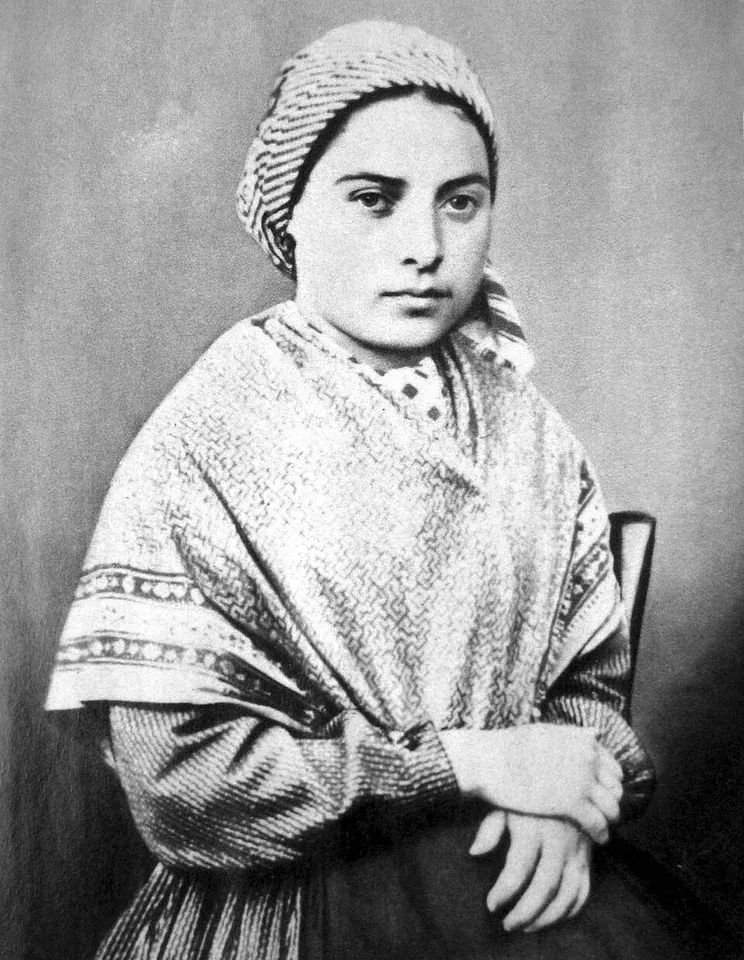
Biography
Bernadette was born in Lourdes in 1844 and grew up amid poverty and ill health. She became known for reporting apparitions of the Virgin Mary in 1858, events that gave rise to the Lourdes pilgrimage tradition.
Born at the Boly Mill, Bernadette was baptized in the parish church shortly after her birth. The sanctuary preserves the places associated with her childhood and her later departure. This local history places the events of 1858 within a real family and town rather than an isolated apparition story.
Her move to Nevers marked a substantial second part of her life. She did not remain permanently at the center of Lourdes’s growing public attention. Religious community, ordinary responsibilities, and continuing poor health shaped the years by which her personal holiness was also remembered.
In 1866 she left Lourdes for the Sisters of Charity at Nevers, where she lived as a religious sister until her death on April 16, 1879. Her canonization in 1933 concerned the holiness of her response and life, rather than simply the fact that she reported visions. She is commemorated on April 16, with an additional February 18 celebration in the Lourdes tradition.
Context & contribution
A witness who resisted becoming a spectacle
The Lourdes sanctuary's account emphasizes Bernadette's care with testimony. During questioning she resisted officials' attempts to replace her own descriptions with their assumptions. This makes her story relevant to the ethics of listening: a young person with little formal education still deserved to have her actual words distinguished from other people's interpretations.
She also refused to turn public attention into a commercial or clerical role. The sanctuary records her refusal of payment and her reluctance to act as though she could bless devotional objects as a priest would. Her later education at the hospice adds another dimension: learning to read and write was part of her growth, even after she had become internationally known through spoken testimony.
Explore the sources for this section
AI-assisted source comparison updated 2026-09-26. Editorial approach
From the Saint Discovery blog
Keep exploring your faith
Practical guides to prayer, the saints, and living the Catholic faith.
Walking the Camino de Santiago: A Catholic Beginner’s Guide
Walking the Camino de Santiago? Explore its Catholic meaning, beginner routes, preparation tips, pilgrim credentials, and ways to pray along the journey.
Explore the pilgrim journeyRead the article Prayer & reflectionWhy Do Catholics Pray to Saints? Intercession Explained
Why do Catholics pray to saints? Learn how intercession differs from worship, how it relates to Jesus, and a simple way to ask a saint to pray for you.
A next step with your saintRead the articleFrom reading to reflection
What will you carry with you?
After reading about St. Bernadette Soubirous, take a moment to consider:
- Compare reporting someone's exact experience with supplying an interpretation for them; how did Bernadette protect that boundary when questioned?
These are reflection prompts from Saint Discovery, not quotations from the saint.
Sources and further reading
- Sanctuary of Lourdes: Birth and baptism of Bernadette ↗
- Sanctuary of Lourdes: Fête de Sainte Bernadette ↗
Biography source comparison recorded on . This is an AI-assisted comparison, not independent human or ecclesiastical approval.
What the recorded review covers
AI-assisted expansion checked against retrieved historical and institutional sources; traditions distinguished from documented history; not ecclesiastical approval
A source list helps you check an account; it does not establish that every claim is certain. Follow the biography’s qualifications about historical evidence, traditions and feast calendars.
Suggest a correction to this biography
How we research these pages and handle corrections · Directory corrections log
More lives to explore
Suggestions based on the site’s quiz themes, not a historical relationship or a measure of holiness.