Catholic saint biography
St. Eutychian
- Commemoration:
- December 8
- Lived:
- Died 283 — Rome, Italy
Traditional Roman commemoration on December 8; not a separate universal memorial.
Why dates and liturgical observances can differ
Read the sources for this biography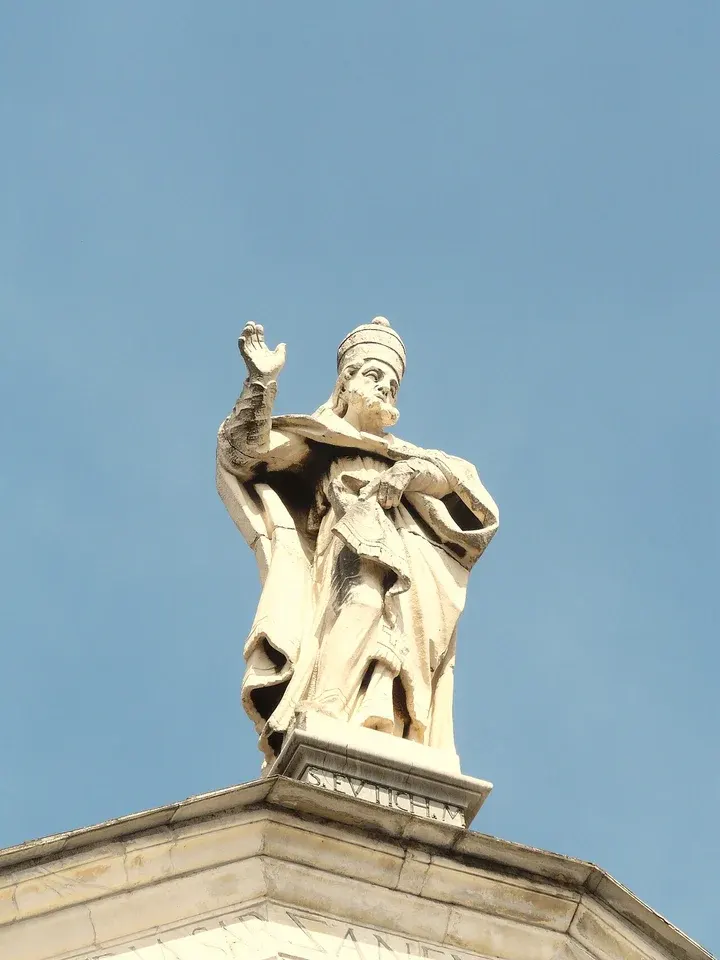
Biography
Eutychian was bishop of Rome from 275 to 283, succeeding Felix I. The limited surviving evidence makes his burial and place in the succession clearer than the details of his leadership.
His remains were placed in the papal crypt of the Catacomb of Callistus. Fragments of a Greek inscription identify him as a bishop. This archaeological evidence matters because it offers a direct material connection with a figure otherwise known chiefly through brief notices.
Later writers attributed various regulations to him, including practices involving agricultural offerings. They also said that he personally buried large numbers of martyrs. The evidence is insufficient to present these claims as established accomplishments.
Accounts of his own martyrdom are also problematic. An early Roman calendar places him among deceased bishops rather than martyrs, so a violent death should not be asserted confidently. His biography is therefore necessarily restrained. Its value lies in explaining what the surviving inscription and calendars do establish, while distinguishing that evidence from the fuller narrative that devotional writers subsequently supplied.
Context & contribution
The importance of a quiet historical interval
The relative respite from persecution following Aurelian's death is one reason historians question the later story that Eutychian personally buried hundreds of martyrs. A claim must fit the surrounding chronology as well as appear in a venerable book.
The surviving Greek epitaph gives an office and a name rather than a catalogue of achievements. That restraint is instructive: a community can preserve someone's place in its leadership without leaving enough evidence to narrate his policies. For Eutychian, absence of detail is a feature of the record, not permission to fill it with later practices.
Explore the sources for this section
AI-assisted source comparison updated 2026-09-26. Editorial approach
From the Saint Discovery blog
Keep exploring your faith
Practical guides to prayer, the saints, and living the Catholic faith.
Why Do Catholics Pray to Saints? Intercession Explained
Why do Catholics pray to saints? Learn how intercession differs from worship, how it relates to Jesus, and a simple way to ask a saint to pray for you.
A next step with your saintRead the article Living the seasonsHow to Celebrate Your Patron Saint's Feast Day at Home
Celebrate your patron saint's feast day with prayer, a short biography, and an act of kindness. A practical plan for families, sponsors, and individuals.
A next step with your saintRead the articleFrom reading to reflection
What will you carry with you?
After reading about St. Eutychian, take a moment to consider:
- Compare the epitaph's limited claim with the later burial story. Identify which additional evidence would be needed to support the larger claim.
These are reflection prompts from Saint Discovery, not quotations from the saint.
Sources and further reading
Biography source comparison recorded on . This is an AI-assisted comparison, not independent human or ecclesiastical approval.
What the recorded review covers
AI-assisted expansion checked against cited sources; historical traditions distinguished from documented evidence; not ecclesiastical approval
A source list helps you check an account; it does not establish that every claim is certain. Follow the biography’s qualifications about historical evidence, traditions and feast calendars.
Suggest a correction to this biography
How we research these pages and handle corrections · Directory corrections log
More lives to explore
Suggestions based on the site’s quiz themes, not a historical relationship or a measure of holiness.