Catholic saint biography
St. Anthony Mary Claret
- Commemoration:
- October 24
- Lived:
- 1807–1870 — Spain, Cuba, and France
Why dates and liturgical observances can differ
Read the sources for this biography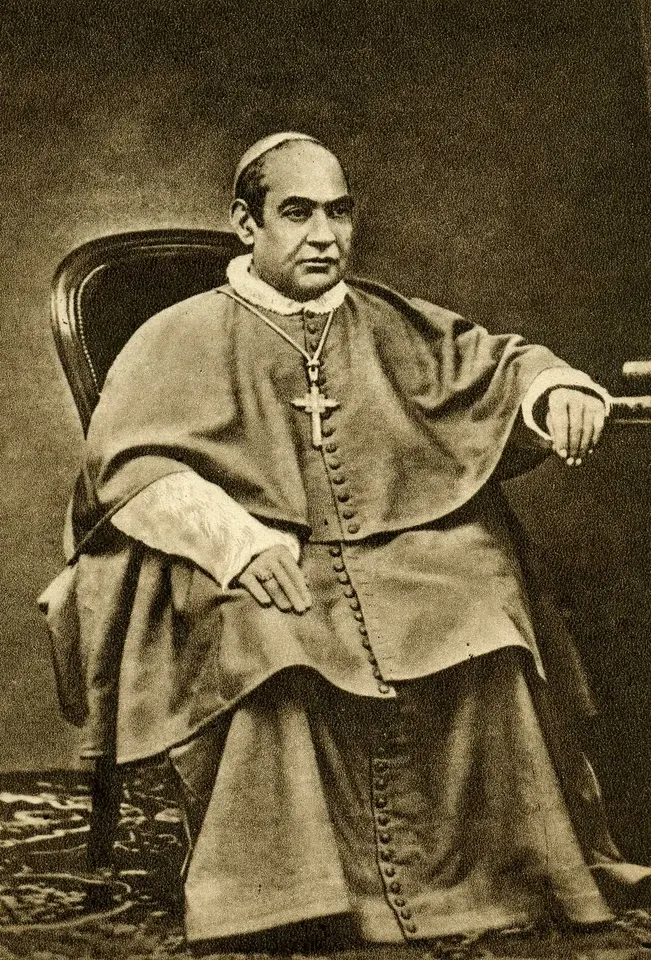
Biography
Anthony Mary Claret grew up in a textile-working family in Catalonia and trained in that trade before entering the seminary. Ordained in 1835, he moved from parish service into itinerant preaching, combining missionary travel with the distribution of religious publications.
Born at Sallent in 1807, Claret developed real skill in textile manufacture and studied in Barcelona. His religious vocation therefore redirected an established aptitude and possible career. The experience of work remained part of the background of a preacher who sought to reach people beyond academic circles.
His use of printed material extended preaching beyond a single visit or sermon. The congregation gave that missionary approach a continuing community and structure. Appointment to Cuba greatly widened his responsibilities, while political upheaval later made displacement and exile part of the same life of public ministry.
In 1849 he founded the Missionary Sons of the Immaculate Heart of Mary, now known as the Claretians. He was subsequently appointed archbishop of Santiago de Cuba and consecrated in 1850. His later life ended in exile in France, where he died on October 24, 1870. Pope Pius XII canonized him in 1950.
Context & contribution
Social projects in a plantation society
The Claretians' account of Claret's Cuban ministry includes a farm school for poor children, a savings institution, libraries, and writing on agriculture. These projects made material conditions part of his pastoral agenda. Agricultural knowledge, access to books, and ways of managing small resources answered needs a sermon alone could not meet.
He also brought teaching and charitable congregations to the island and worked with Antonia París in founding the Claretian Missionary Sisters. His opposition to slavery belongs within this setting of exploitation and inequality. The range of initiatives reveals a bishop trying to combine preaching with institutions of education and assistance, while his conflicts show that such work had social consequences.
Explore the sources for this section
AI-assisted source comparison updated 2026-09-26. Editorial approach
From the Saint Discovery blog
Keep exploring your faith
Practical guides to prayer, the saints, and living the Catholic faith.
Why Is St. Thérèse the Patron Saint of Missions?
Why is St. Thérèse patron saint of missions? Discover her support for missionaries and practical ways to participate in the Church's mission from home.
Sharing the faithRead the article Everyday faithWhat Is Evangelization? A Catholic Guide to Sharing the Faith
What is evangelization? Learn the Catholic meaning, the new evangelization, and practical ways to share your faith with respect, confidence, and love.
Sharing the faithRead the articleFrom reading to reflection
What will you carry with you?
After reading about St. Anthony Mary Claret, take a moment to consider:
- Compare Claret's farm school, library, and savings project. What different obstacles to security or participation did each attempt to address?
These are reflection prompts from Saint Discovery, not quotations from the saint.
Sources and further reading
Biography source comparison recorded on . This is an AI-assisted comparison, not independent human or ecclesiastical approval.
What the recorded review covers
AI-assisted expansion checked against retrieved historical and institutional sources; traditions distinguished from documented history; not ecclesiastical approval
A source list helps you check an account; it does not establish that every claim is certain. Follow the biography’s qualifications about historical evidence, traditions and feast calendars.
Suggest a correction to this biography
How we research these pages and handle corrections · Directory corrections log
More lives to explore
Suggestions based on the site’s quiz themes, not a historical relationship or a measure of holiness.