Catholics bless animals to thank God for his creation, ask for his care, and remember our responsibility toward the creatures entrusted to us. Many parishes offer an animal blessing around October 4, the day associated with Saint Francis of Assisi. The gathering can be joyful and noisy, but its purpose reaches beyond a photograph with your pet.
If you are thinking of attending for the first time, understanding the prayer can help you connect a short parish event with the way you care for animals every day.
Why is the blessing associated with Saint Francis?
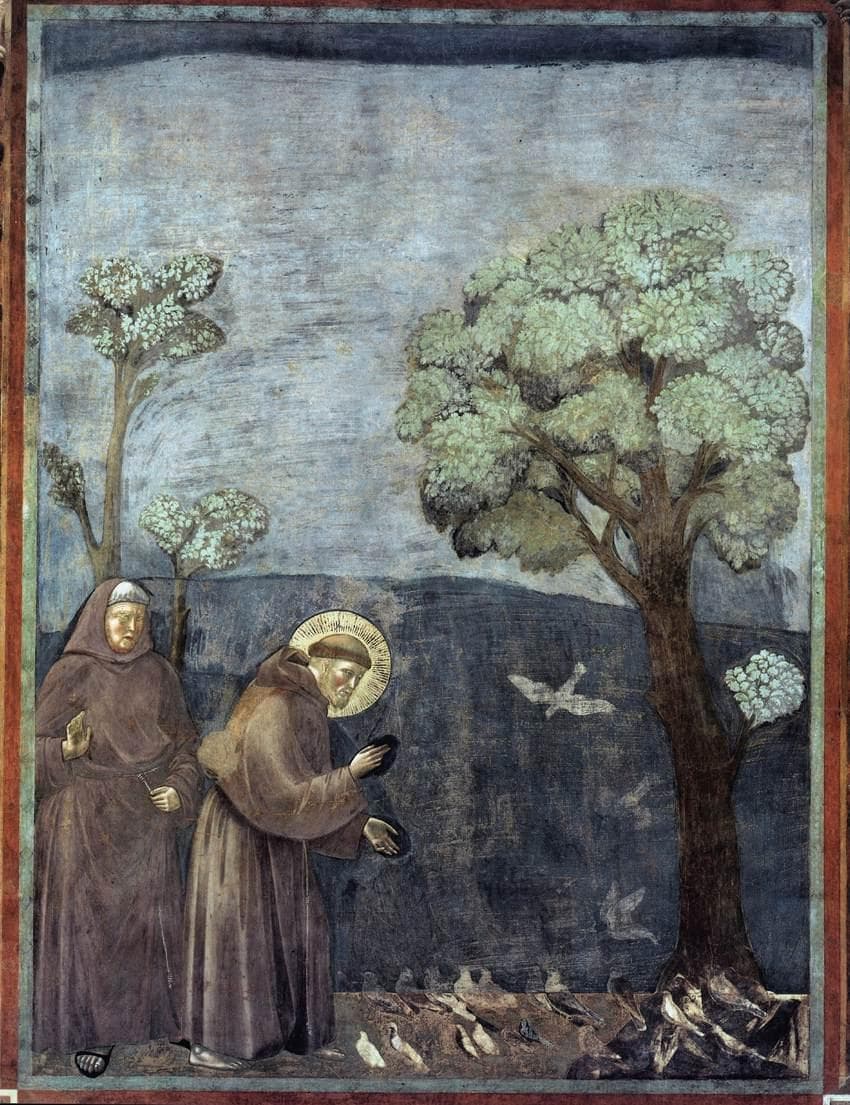
Saint Francis helps Christians see creation as a gift that leads us toward its Creator. His love for creatures belongs within a life of following Jesus, prayer, simplicity, and service. He is more than the friendly figure beside a birdbath.
In Laudato Si', paragraphs 10–11, Pope Francis presents the saint's concern for nature together with his concern for poor and excluded people. Those commitments illuminate each other: gratitude for creation should make us more attentive to our neighbors, too.
The USCCB describes the custom of animal blessings on or around October 4. That report documents the practice; it does not establish that Francis invented the ceremony. For more about the person behind the custom, explore our Saint Francis of Assisi biography.
Francis's own song of praise offers another way into his spirituality. Our guide to the Canticle of the Creatures explains how his language about sun, water, and earth turns attention toward God.
What does an animal blessing actually do?
The Catechism, paragraphs 1667–1671, places blessings among the sacramentals: sacred signs connected with the Church's prayer. A blessing praises God and asks for his gifts. Its meaning comes from prayer and faith, rather than from treating an object or gesture as a source of independent power.
An animal blessing is not Baptism and does not make a pet a member of the Church. Nor is it one of the seven sacraments. The distinction matters when explaining an event to children who may see water being sprinkled and assume it is the same action they witnessed at a baby's Baptism. Our guide to the seven sacraments explains their place in Christian life.
The blessing is also not a promise that an animal will never become sick, go missing, or die. Prayer belongs alongside responsible care. Receiving a blessing does not remove the daily work of feeding, protecting, and looking after a dependent creature.
When is the blessing in 2026?
October 4, 2026, falls on a Sunday. The general U.S. Roman Rite readings for that date are those of the Twenty-seventh Sunday in Ordinary Time. A parish may still arrange an animal blessing around the date, even though its Sunday Mass is not celebrating Francis's memorial. Proper local calendars can differ.
Check your parish's current announcement for the actual time and location. A Saturday gathering, a Sunday afternoon event, or another nearby date may be chosen locally. There is no single worldwide appointment for the blessing, and an old parish announcement is not a reliable schedule for this year.
If the distinction between a saint's customary day and the liturgical celebration is confusing, our explanation of solemnities, feasts, and memorials gives the wider context.
How should I prepare to bring a pet?
Start with the parish's instructions. Ask which animals are welcome, whether the gathering is outdoors, and what arrangements are available if your animal cannot safely join a crowd. These details belong to the organizers; do not assume every parish offers the same format.
As practical preparation, use an appropriate leash or secure carrier, allow space between animals, and bring what you need to clean up. Consider the weather, noise, and your animal's comfort. A crowded event may not suit every pet. Keeping an animal calm and safe matters more than getting close enough for a photograph.
Give children a simple task before arriving: name one reason they are grateful for the animal and one responsibility they can help fulfill afterward. A child who enjoys cuddling a pet can also learn that love includes less exciting jobs, such as checking the water bowl with an adult.
During the prayer, listen to whom it is addressed and what is being asked. The gathering turns gratitude toward God. It is not a competition over whose animal is the most unusual, photogenic, or well behaved.
Can I pray at home if we cannot attend?
Yes. The USCCB's account of the custom points to an animal blessing in Catholic Household Blessings and Prayers for use by animal owners. You can ask your parish about an approved household text or offer a simple prayer of thanksgiving in your own words. A family does not need to recreate a public ceremony to pray sincerely.
The following is an original prayer from Saint Discovery, not an official liturgical formula or a historical prayer by Saint Francis:
God our Creator, thank you for the animals that share our lives. Help us care for them patiently and responsibly. Make us attentive to their needs, grateful for the goodness of creation, and generous toward the people around us. Through Christ our Lord. Amen.
Let the blessing shape the days that follow
The Catechism, paragraphs 2415–2418, calls for respect for creation, kindness toward animals, and rejection of needless cruelty. It also keeps care for animals connected with our responsibilities toward human beings, especially those in need.
A useful family follow-up is to choose one realistic act of care. Share a routine task more fairly, learn what your animal needs, or help a neighbor who is struggling to manage a responsibility. Make the action specific enough that you can return to it next week.
Francis's example invites a wider gratitude than affection for our own pets alone. The short blessing can become a beginning: receive creation with thanks, care for it faithfully, and let that care deepen your love of God and neighbor.
Artwork: Sermon to the Birds, a medieval fresco in Assisi traditionally attributed to Giotto. It represents a traditional episode in Francis's life, rather than documenting a modern animal-blessing ceremony.
