A Catholic martyr is someone who bears witness to Christ and the truth of the faith even to death. The Church honors the person's faithful love and courage, rather than the violence that ended the person's life. Understanding that distinction helps us read the saints' stories with care.
You may meet the title in a biography, a church name, or the liturgical calendar. It points to a particular kind of witness. It does not mean that every Christian who dies tragically is automatically recognized as a martyr, or that holiness requires seeking danger.
What does martyr mean in Catholic teaching?
The Catechism, paragraph 2473, describes martyrdom as witness to the truth of the faith carried through death. It connects that witness with Christ's death and Resurrection, charity, and fortitude.
The center of the account is therefore a relationship with Christ. When reading a martyr's biography, look for what the person believed, how that belief shaped the person's choices, and the circumstances of the death. A dramatic final scene by itself cannot tell the whole story.
The preceding paragraph, 2472, also speaks about Christian witness through words and deeds. That gives ordinary readers a place to begin: speaking truthfully, acting justly, and allowing faith to shape daily conduct. The martyrs' extraordinary witness should not make those ordinary responsibilities seem unimportant.
Is every Christian killed violently a martyr?
No. A violent death is a terrible loss, but the fact of violence alone does not establish the Church's recognition of martyrdom. Claims about a particular person require careful examination, rather than a conclusion drawn from a headline.
The USCCB's explanation of saints and canonization describes an investigation into a person's life, writings, virtues, or martyrdom. Formal recognition involves the Church's judgment.
For readers, this suggests a simple habit: distinguish a reported death, a proposed cause for sainthood, and an official declaration. These are different stages of knowledge. A moving account shared online may be worth reading, but it should not be presented as a completed Church judgment unless the source supports that claim.
We can pray for someone who has died and support grieving people without settling every question about a possible title. Compassion does not have to wait for a canonization process.
What does Saint Stephen's story show?
Acts 7:54–60, in the USCCB's NABRE text, recounts Stephen's death by stoning. In the account, he looks toward Christ, entrusts his spirit to Jesus, and prays that the sin of those killing him will not be held against them. This is a summary of the passage, not a direct quotation.
The account directs attention to faith and prayer in the midst of violence. Stephen does not become meaningful simply because he suffers. His witness includes trust in Christ and concern for the people attacking him.
If you are reading with a group, pause over those two movements: trust and intercession. Ask what each contributes to understanding the story. Our Saint Stephen biography offers a starting point for learning more about him.
How is a martyr different from a confessor?
Historical saint titles describe different forms of witness. Confessor traditionally distinguishes a saint who professed the faith from a martyr; it does not mean that the saint was necessarily a priest who heard confessions. Our guide to the title Confessor explains the word's history.
These titles are useful for understanding a biography, but they are not a ranking of whose life mattered most. Begin with the person and the sources. Notice the faith, virtues, and responsibilities of the life as well as its ending.
What about someone who gives a life to save others?
Heroic self-giving deserves careful attention, but it should not automatically be folded into the category of martyrdom. In Maiorem hac dilectionem, issued in 2017, Pope Francis established the offering of life as a distinct basis for a beatification and canonization cause.
The document sets specific conditions, including a free offering motivated by charity, a connection with premature death, and Christian virtues. It distinguishes this path from causes based on martyrdom or heroic virtue.
The practical lesson is to use the Church's categories accurately. We do not honor a person's love more deeply by assigning a title before the facts and the Church's judgment are clear.
Are martyrs automatically canonized?
No. The USCCB explains that a miracle is not required before the beatification of a recognized martyr, while a miracle is ordinarily required before canonization. It also notes that the pope may waive requirements.
The absence of the usual beatification miracle requirement does not remove the investigation of martyrdom. Nor are Blessed and Saint interchangeable titles. When reading about a recent cause, check what has actually been recognized.
How can I learn from martyrs today?
For an original reading exercise, choose one martyr and identify a virtue other than bravery: patience, forgiveness, honesty, or care for others. Then name one situation in which you could practice that virtue this week.
You can use our Confirmation saint guide to explore a possible patron. If Ignatius interests you, our guide to his letters and the Eucharist focuses on reading his teaching, rather than only the manner of his death.
With children, begin with the person's name, love for Jesus, and one concrete act of faithfulness. Answer questions honestly and keep details appropriate to their age. The aim is thoughtful understanding, not frightening them into admiration.
About the cover artwork
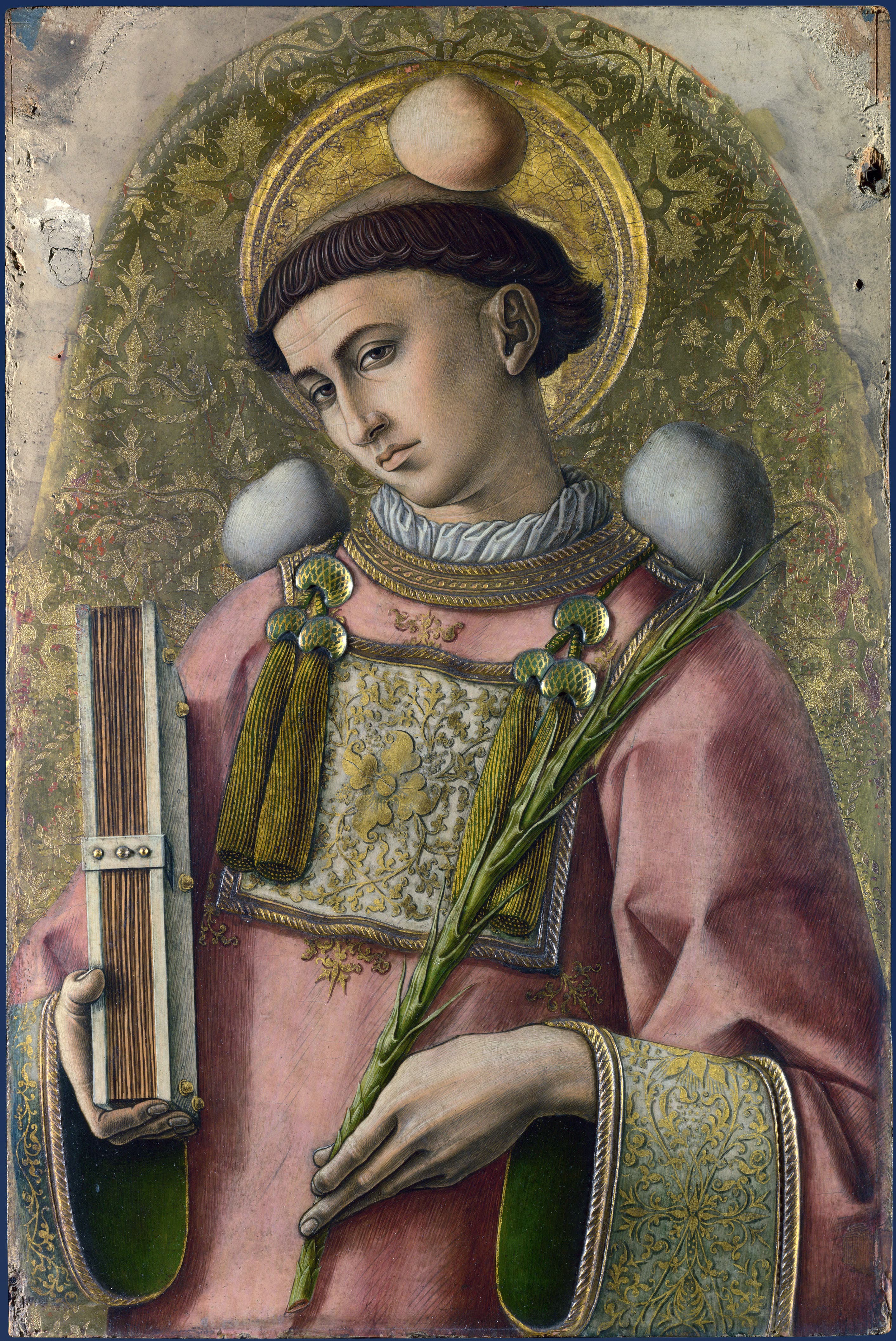
Carlo Crivelli's Saint Stephen, painted in 1476, shows the saint with stones, a book, and a martyr's palm. The National Gallery's catalogue explains these symbols. The stones recall his death; the book and palm belong to the artist's portrayal of his witness.
This is a fifteenth-century devotional painting, not an eyewitness image of Stephen. The Wikimedia Commons reproduction is identified as public domain. Reading its symbols can help us look beyond the violence toward the faith the Church remembers.
