Catholic saint biography
St. Sergius of Radonezh
- Commemoration:
- September 25
- Lived:
- Fourteenth century; died 1392 — Radonezh region, Russia
September 25 is recorded by Catholic Online and Catholic Ireland. This reference date does not imply a General Roman Calendar memorial.
Why dates and liturgical observances can differ
Catholic Ireland records his inclusion in the liturgical calendar for Russian Catholics in 1940; Catholic Online and CNEWA also cover him as a saint. This is not a claim of a modern papal canonization or universal memorial.
Read the sources for this biography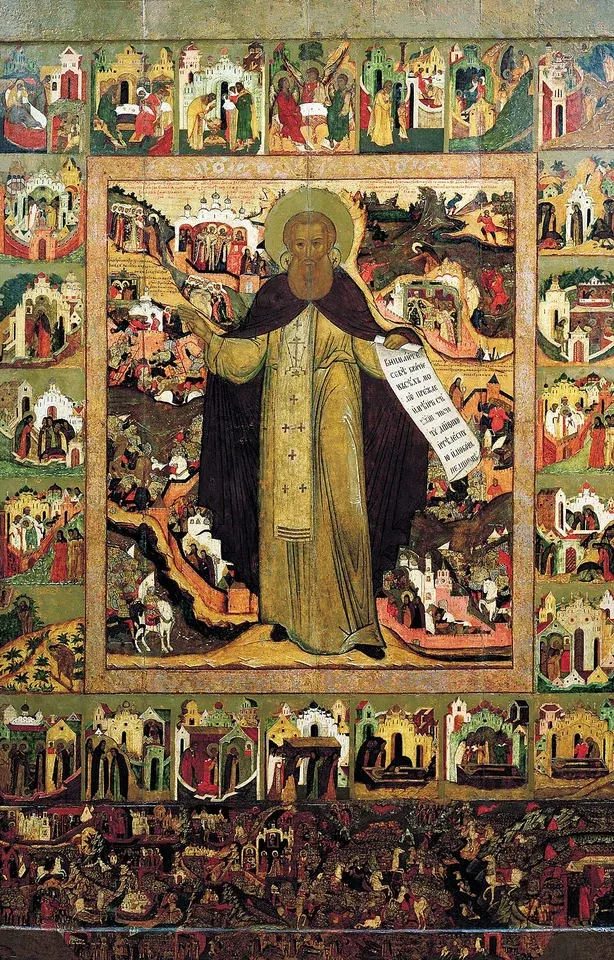
Biography
Sergius of Radonezh, originally named Bartholomew, began monastic life in the forest with his brother. A small church dedicated to the Trinity became the center of a growing brotherhood. As its leader, Sergius continued manual work, including building, carrying water, and preparing food, alongside the community’s prayer.
The move from a solitary settlement to an organized monastery brought difficulties. The Orthodox life describes resistance when a stricter common rule was introduced and a period when Sergius withdrew to found another community before returning. Leadership required resolving tensions as well as attracting disciples.
Church leaders sought his counsel, but he declined the office of metropolitan. The tradition contrasts the influence he acquired with his reluctance to seek rank. His example spread through the communities and pupils connected with his monastery, extending its spiritual influence far beyond the original forest settlement.
His monastery became an influential center of Russian Orthodox spiritual life. The surviving hagiographic tradition includes miraculous childhood stories, but his role as a monastic founder and guide is the central focus of his legacy. He died in 1392 and is commemorated on September 25, observed on October 8 by communities using the Julian calendar.
Context & contribution
Ordinary labor and difficult succession
The OCA life remembers Sergius building cells, carrying water, baking, sewing, and preparing food. These details make his authority visible through the work that sustained other monks. They also keep the monastery’s growth from appearing effortless: more members meant more needs and decisions.
The account does not describe uninterrupted harmony. Introducing stricter common life provoked disagreement, and Sergius left for a time before returning. Near his death he designated Nikon to succeed him. These episodes place conflict and continuity within the community’s story, alongside its accounts of prayer and miracles.
Explore the sources for this section
AI-assisted source comparison updated 2026-09-26. Editorial approach
From the Saint Discovery blog
Keep exploring your faith
Practical guides to prayer, the saints, and living the Catholic faith.
What Is the Domestic Church? John Paul II on Faith at Home
What Catholics mean by the domestic church, how John Paul II explained family life, and practical ways to begin with prayer, forgiveness and welcome.
Bring reflection into prayerRead the article Prayer & reflectionHow to Make a Spiritual Communion When You Cannot Receive
Learn how to make a spiritual communion, with a short original prayer and clear guidance on Mass, Confession, and times when you cannot receive.
Bring reflection into prayerRead the articleFrom reading to reflection
What will you carry with you?
After reading about St. Sergius of Radonezh, take a moment to consider:
- Which of Sergius’s practical tasks would be easiest to overlook when describing an abbot’s leadership?
These are reflection prompts from Saint Discovery, not quotations from the saint.
Sources and further reading
- Orthodox Church in America: Sergius of Radonezh ↗
- Catholic Online: St. Sergius of Radonezh ↗
- Catholic Near East Welfare Association: Saga of a Saint ↗
- Catholic Ireland: St Sergius and the Russian Catholic calendar ↗
Biography source comparison recorded on . This is an AI-assisted comparison, not independent human or ecclesiastical approval.
What the recorded review covers
AI-assisted expansion using the linked historical and ecclesiastical sources; devotional traditions distinguished from documented history.
A source list helps you check an account; it does not establish that every claim is certain. Follow the biography’s qualifications about historical evidence, traditions and feast calendars.
Suggest a correction to this biography
How we research these pages and handle corrections · Directory corrections log
More lives to explore
Suggestions based on the site’s quiz themes, not a historical relationship or a measure of holiness.