Catholic saint biography
St. Saturninus of Toulouse
- Commemoration:
- November 29
- Lived:
- Third century — Toulouse, Gaul
Why dates and liturgical observances can differ
Read the sources for this biography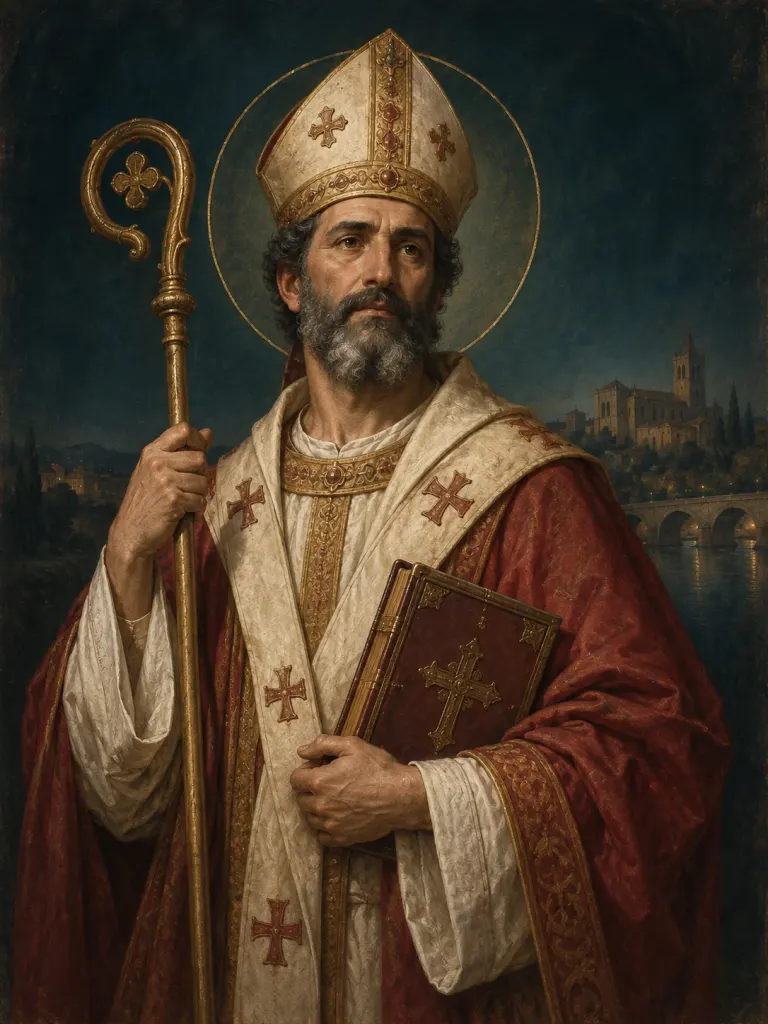
Biography
Saturninus, also known as Sernin, is remembered as the first bishop of Toulouse and a martyr of the third century. An early account used by Gregory of Tours describes his refusal to participate in pagan sacrifice. It recounts his death after being tied to a bull and dragged through the town.
The martyrdom narrative places the conflict at the town’s religious center. Saturninus passed a pagan temple on his way to the Christian assembly; its priests reportedly blamed him for the silence of their oracles. His refusal to sacrifice brought the dispute to its violent conclusion.
The account also remembers two women who recovered and buried his body. Later bishops honored the burial, and churches preserved the places associated with his death. These details show how a martyr’s memory became part of the geography and communal identity of Toulouse.
His burial and subsequent veneration became central to Christian Toulouse, particularly at the basilica of Saint-Sernin. Later legends expanded his missionary activity into other regions, but those additions lack the same historical basis. His November 29 commemoration preserves the memory of an early Christian community and its bishop’s witness under persecution.
Context & contribution
How martyrdom became part of a city’s geography
The account of Saturninus links his memory to places in Toulouse: the site associated with the bull, the care of his remains, and the later church of Saint-Sernin. The two women remembered as gathering his body also belong in the story. Their action represents the community’s care after public violence.
Later traditions extended Saturninus’s activity to additional cities. The Catholic Encyclopedia distinguishes these unsupported extensions from the older Toulouse account. Following the development of the tradition therefore involves both geography and source criticism: where a saint was remembered is not automatically everywhere that saint personally ministered.
Explore the sources for this section
AI-assisted source comparison updated 2026-09-26. Editorial approach
From the Saint Discovery blog
Keep exploring your faith
Practical guides to prayer, the saints, and living the Catholic faith.
Why Do Catholics Pray to Saints? Intercession Explained
Why do Catholics pray to saints? Learn how intercession differs from worship, how it relates to Jesus, and a simple way to ask a saint to pray for you.
A next step with your saintRead the article Living the seasonsHow to Celebrate Your Patron Saint's Feast Day at Home
Celebrate your patron saint's feast day with prayer, a short biography, and an act of kindness. A practical plan for families, sponsors, and individuals.
A next step with your saintRead the articleFrom reading to reflection
What will you carry with you?
After reading about St. Saturninus of Toulouse, take a moment to consider:
- On a map of Toulouse, distinguish a place associated with Saturninus’s cult from a claim about where he actually traveled.
These are reflection prompts from Saint Discovery, not quotations from the saint.
Sources and further reading
Biography source comparison recorded on . This is an AI-assisted comparison, not independent human or ecclesiastical approval.
What the recorded review covers
AI-assisted expansion using the linked historical and ecclesiastical sources; devotional traditions distinguished from documented history.
A source list helps you check an account; it does not establish that every claim is certain. Follow the biography’s qualifications about historical evidence, traditions and feast calendars.
Suggest a correction to this biography
How we research these pages and handle corrections · Directory corrections log
More lives to explore
Suggestions based on the site’s quiz themes, not a historical relationship or a measure of holiness.