Catholic saint biography
St. Pachomius the Great
- Commemoration:
- May 9
- Lived:
- Died about 346 — Upper Egypt
Western commemoration; Byzantine calendars generally use May 15, civil May 28 where Julian dates are followed.
Why dates and liturgical observances can differ
Read the sources for this biography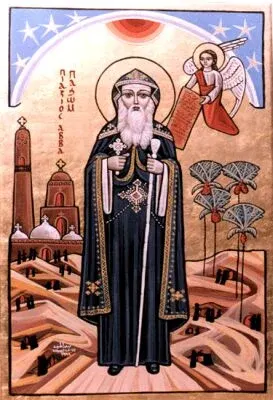
Biography
Pachomius helped establish organized communal monasticism in Egypt. After conversion to Christianity and a period of ascetic training, he founded a community at Tabennisi. His monasteries joined prayer, work, shared resources, and obedience under a common pattern of life.
His teacher Palemon helped him establish the new settlement. Early companions were accustomed to solitary ascetic life, so Pachomius initially carried much of the practical workload himself. This allowed them to learn a common life without abruptly abandoning their familiar discipline of prayer.
As Tabennisi grew, another monastery was founded at Pabau, and further communities joined the network. The rule accommodated different capacities for ascetic practice, with shared meals and provision for monks who ate separately. Community life developed through practical arrangements rather than a single uniform demand on every member.
The network grew to include multiple communities, and its rules influenced later monastic traditions. Stories of angelic instructions express the religious significance assigned to his work, but should not replace attention to the practical institutions he created. He died around the middle of the fourth century. Western calendars commemorate him on May 9, while Byzantine calendars generally observe May 15.
Context & contribution
Learning to carry a community’s work
The early recruits in Pachomius’s community did not immediately share his understanding of common life. The historical account describes him taking on burdensome practical work while they adjusted from solitary habits. That detail makes the foundation a process of teaching and adaptation, rather than a finished system imposed on the first day.
His achievement involved making room for people with different capacities while maintaining a shared commitment. Common meals, work, and responsibility gave ascetic life a social shape. The useful question is therefore not only how strictly an individual monk fasted, but who made it possible for others to live and pray together.
Explore the sources for this section
AI-assisted source comparison updated 2026-09-26. Editorial approach
From the Saint Discovery blog
Keep exploring your faith
Practical guides to prayer, the saints, and living the Catholic faith.
What Is the Domestic Church? John Paul II on Faith at Home
What Catholics mean by the domestic church, how John Paul II explained family life, and practical ways to begin with prayer, forgiveness and welcome.
Bring reflection into prayerRead the article Prayer & reflectionHow to Make a Spiritual Communion When You Cannot Receive
Learn how to make a spiritual communion, with a short original prayer and clear guidance on Mass, Confession, and times when you cannot receive.
Bring reflection into prayerRead the articleFrom reading to reflection
What will you carry with you?
After reading about St. Pachomius the Great, take a moment to consider:
- Name an unnoticed task that makes a group’s shared purpose possible. Who currently carries it?
These are reflection prompts from Saint Discovery, not quotations from the saint.
Sources and further reading
- www.newadvent.org: Pachomius the Great ↗
- www.catholicculture.org: Pachomius the Great ↗
- www.oca.org: Pachomius the Great ↗
Biography source comparison recorded on . This is an AI-assisted comparison, not independent human or ecclesiastical approval.
What the recorded review covers
AI-assisted expansion using the linked historical and ecclesiastical sources; devotional traditions distinguished from documented history.
A source list helps you check an account; it does not establish that every claim is certain. Follow the biography’s qualifications about historical evidence, traditions and feast calendars.
Suggest a correction to this biography
How we research these pages and handle corrections · Directory corrections log
More lives to explore
Suggestions based on the site’s quiz themes, not a historical relationship or a measure of holiness.