Catholic saint biography
St. Mary Magdalene
- Commemoration:
- July 22
- Lived:
- First century — Galilee and Judea
Why dates and liturgical observances can differ
Read the sources for this biography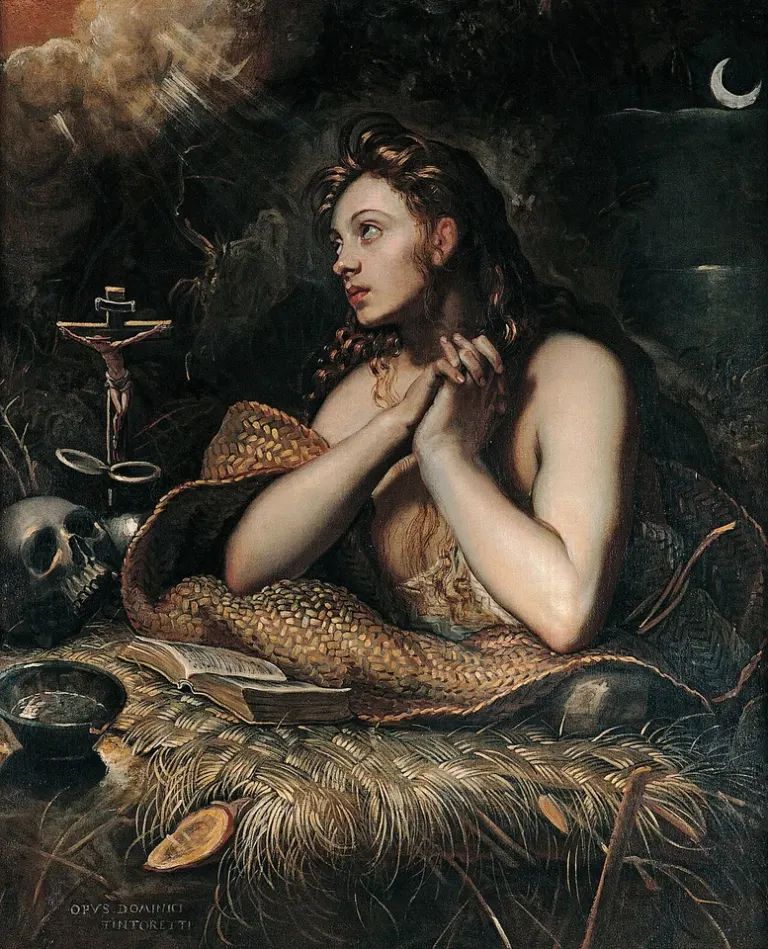
Biography
Mary Magdalene was a disciple of Jesus and a central witness in the Gospel accounts of his death and resurrection. She remained among the women associated with the crucifixion and burial, and John's Gospel describes the risen Jesus sending her to announce his resurrection to the disciples.
John's resurrection account moves from an empty tomb and grief to recognition when Jesus addresses her. The message she carries is entrusted to a person who had remained close to the events of the Passion. Her witness is therefore more than a symbolic appearance in a later devotional scene.
Her name should not be used to merge her automatically with Mary of Bethany or the unnamed woman who anointed Jesus. Those identifications developed in later Western tradition and are not established by the Gospel texts. The Roman liturgy now celebrates her distinctly on July 22. Pope Francis raised that celebration to the rank of feast in 2016, emphasizing her apostolic witness.
The title apostle to the apostles describes her role as a messenger to the disciples, not membership in the Twelve. The 2016 liturgical decision drew attention to that particular Gospel responsibility. Her remembrance rests on discipleship and testimony rather than the unsupported assumption that every unnamed female sinner in the Gospels must be her.
Luke also identifies Mary among the women who accompanied Jesus and supported his ministry from their own resources. Joanna and Susanna are named with her, placing Mary's discipleship within a wider group whose practical contribution helped sustain the mission. Luke reports that seven demons had gone out from her; the text does not identify this with prostitution. That distinction matters because later assumptions about her past have often overshadowed what the Gospels actually say.
In a 2007 catechesis on women in the early Church, Benedict XVI placed her resurrection testimony within this wider participation of women in Jesus' ministry. He also recalled the medieval theological use of the title apostle to the apostles. Her prominence therefore rests on several connected features of the Gospel accounts: accompanying Jesus, remaining associated with his Passion, encountering him risen, and carrying the news to others.
Context & contribution
How a new liturgical text uses older material
The explanation of Mary Magdalene's new Mass preface identifies sources stretching across centuries. Its opening draws on the Missale Gothicum, while part of its sequence of actions adapts a medieval life formerly attributed to Rabanus Maurus. The commentary dates that work to the twelfth century rather than accepting its traditional attribution.
This is a revealing example of liturgical editing: useful language from an older work could be retained while its conflation of different Gospel women was set aside. The commentary also contrasts the 1962 Missal's reading from Luke 7 with the newer use of John 20. Changes in selected texts reshaped how worshippers encountered Mary's distinct scriptural identity.
Explore the sources for this section
AI-assisted source comparison updated 2026-09-26. Editorial approach
From the Saint Discovery blog
Keep exploring your faith
Practical guides to prayer, the saints, and living the Catholic faith.
Why Is Saint Luke's Symbol an Ox? Meaning and Biblical Roots
Discover why Saint Luke's symbol is a winged ox, its biblical roots, and how the image connects his Gospel with priesthood and sacrifice.
Go deeper into ScriptureRead the article Prayer & reflectionHow to Pray the Jesus Prayer: A Catholic Beginner's Guide
Learn the Jesus Prayer, its Eastern Christian roots and biblical meaning, with a simple Catholic practice focused on Christ and mercy.
Go deeper into ScriptureRead the articleFrom reading to reflection
What will you carry with you?
After reading about St. Mary Magdalene, take a moment to consider:
- Compare the former Luke 7 reading with John 20, then explain how changing a reading can alter a congregation's understanding of the person being commemorated.
These are reflection prompts from Saint Discovery, not quotations from the saint.
History, tradition & the calendar
Reading the evidence
The Gospel accounts and the later identification of several women named Mary are different kinds of evidence. The Holy See's explanation of the 2016 liturgical change describes the older Western conflation and the reformed liturgy's focus on Mary of Magdala. A painting or an older devotional life that combines these figures does not establish that they were the same person.
Understanding the commemoration
July 22 is a feast in the General Roman Calendar. The 2016 decree changed the celebration's rank from an obligatory memorial to a feast; it did not move the date. Here, feast describes a specific liturgical rank, rather than a general term for any saint's anniversary.
These notes were compared with the linked sources on 2026-10-03 using AI assistance.
Sources and further reading
- www.vaticannews.va: Mary Magdalene ↗
- www.vatican.va: Mary Magdalene ↗
- Benedict XVI: Women at the service of the Gospel ↗
Biography source comparison recorded on . This is an AI-assisted comparison, not independent human or ecclesiastical approval.
What the recorded review covers
AI-assisted expansion of the existing source-reviewed biography with comparison to retrieved cited sources; not ecclesiastical approval
A source list helps you check an account; it does not establish that every claim is certain. Follow the biography’s qualifications about historical evidence, traditions and feast calendars.
Suggest a correction to this biography
How we research these pages and handle corrections · Directory corrections log
Editorial updates
· Clarification
Explained Mary Magdalene's distinct identity and the 2016 feast-rank change
Added source-linked evidence and calendar notes: the reformed liturgy concerns Mary of Magdala, and the 2016 change elevated the celebration's rank without moving July 22.
Read the change record →
More lives to explore
Suggestions based on the site’s quiz themes, not a historical relationship or a measure of holiness.