Catholic saint biography
St. Lazarus of Bethany
- Commemoration:
- July 29
- Lived:
- First century — Bethany, Judea
Celebrated with Martha and Mary in the General Roman Calendar since 2021.
Why dates and liturgical observances can differ
Read the sources for this biography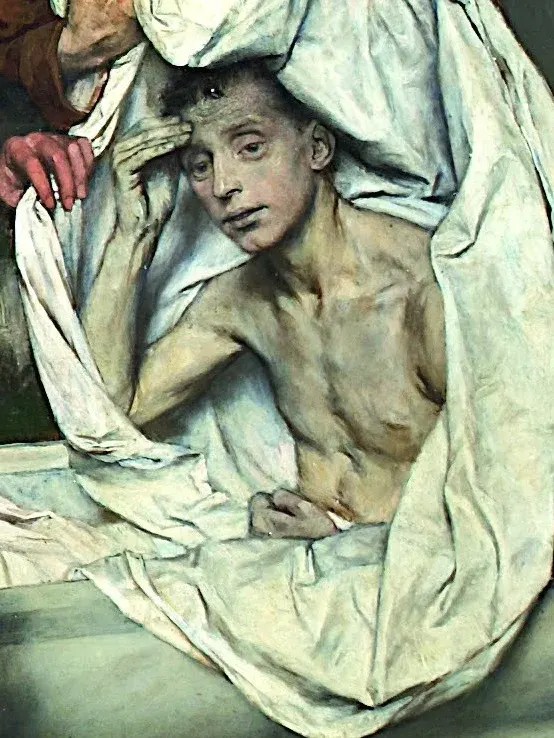
Biography
Lazarus of Bethany appears in John's Gospel as the brother of Martha and Mary and a friend loved by Jesus. The account of his death and return to life forms a major sign in the Gospel: Jesus shares the family's grief and calls Lazarus out of the tomb. Lazarus later appears at a meal in Bethany before Jesus' passion.
John 11 makes room for the responses of both sisters and for Jesus' own grief before the command at the tomb. Lazarus is the person around whom these encounters unfold, but he is not given a speech explaining the experience. Supplying one would change the nature of the Gospel's account.
The Gospel provides no continuous biography, secure dates, or account of his later ministry. He should not be confused with the poor man named Lazarus in Luke's parable. Traditions about subsequent travels belong to later Christian memory. In 2021 Pope Francis placed Martha, Mary, and Lazarus together in the Roman calendar, emphasizing their household's friendship with Jesus and reception of him.
At the later Bethany meal, his presence contributes to the hostility developing around Jesus. This narrative role is more securely grounded than subsequent traditions assigning him a bishopric or a voyage overseas. The joint memorial with his sisters keeps attention on the household named in Scripture rather than treating the siblings as unrelated devotional figures.
Context & contribution
The sign that helps explain the Jerusalem crowds
John 12 connects the raising of Lazarus with the crowd that goes out to meet Jesus at his entry into Jerusalem. Witnesses continue to speak about the sign, and others respond because they have heard of it. Lazarus's place in the narrative therefore extends beyond his own recovery and the meal at Bethany.
The chapter also states that chief priests planned to kill Lazarus because his presence was leading people to believe in Jesus. The text presents competing responses to the same sign: testimony and faith on one side, an attempt to suppress the witness on the other. This is a literary connection supplied by the Gospel itself, without requiring an invented later career for Lazarus.
Explore the sources for this section
AI-assisted source comparison updated 2026-09-26. Editorial approach
From the Saint Discovery blog
Keep exploring your faith
Practical guides to prayer, the saints, and living the Catholic faith.
Why Is Saint Luke's Symbol an Ox? Meaning and Biblical Roots
Discover why Saint Luke's symbol is a winged ox, its biblical roots, and how the image connects his Gospel with priesthood and sacrifice.
Go deeper into ScriptureRead the article Prayer & reflectionHow to Pray the Jesus Prayer: A Catholic Beginner's Guide
Learn the Jesus Prayer, its Eastern Christian roots and biblical meaning, with a simple Catholic practice focused on Christ and mercy.
Go deeper into ScriptureRead the articleFrom reading to reflection
What will you carry with you?
After reading about St. Lazarus of Bethany, take a moment to consider:
- Follow every reference to Lazarus through John 12:1–19 and diagram how his presence affects the meal, the authorities, and the Jerusalem crowd.
These are reflection prompts from Saint Discovery, not quotations from the saint.
Sources and further reading
- Vatican News: Martha, Mary, and Lazarus in the calendar ↗
- USCCB Bible: John 11 ↗
- USCCB Bible: John 12 ↗
Biography source comparison recorded on . This is an AI-assisted comparison, not independent human or ecclesiastical approval.
What the recorded review covers
AI-assisted expansion of the existing source-reviewed biography with comparison to retrieved cited sources; not ecclesiastical approval
A source list helps you check an account; it does not establish that every claim is certain. Follow the biography’s qualifications about historical evidence, traditions and feast calendars.
Suggest a correction to this biography
How we research these pages and handle corrections · Directory corrections log
More lives to explore
Suggestions based on the site’s quiz themes, not a historical relationship or a measure of holiness.