Catholic saint biography
St. Hyginus
- Commemoration:
- January 11
- Lived:
- Second century; episcopal chronology uncertain — Traditionally Greece
Traditional Roman commemoration.
Why dates and liturgical observances can differ
Read the sources for this biography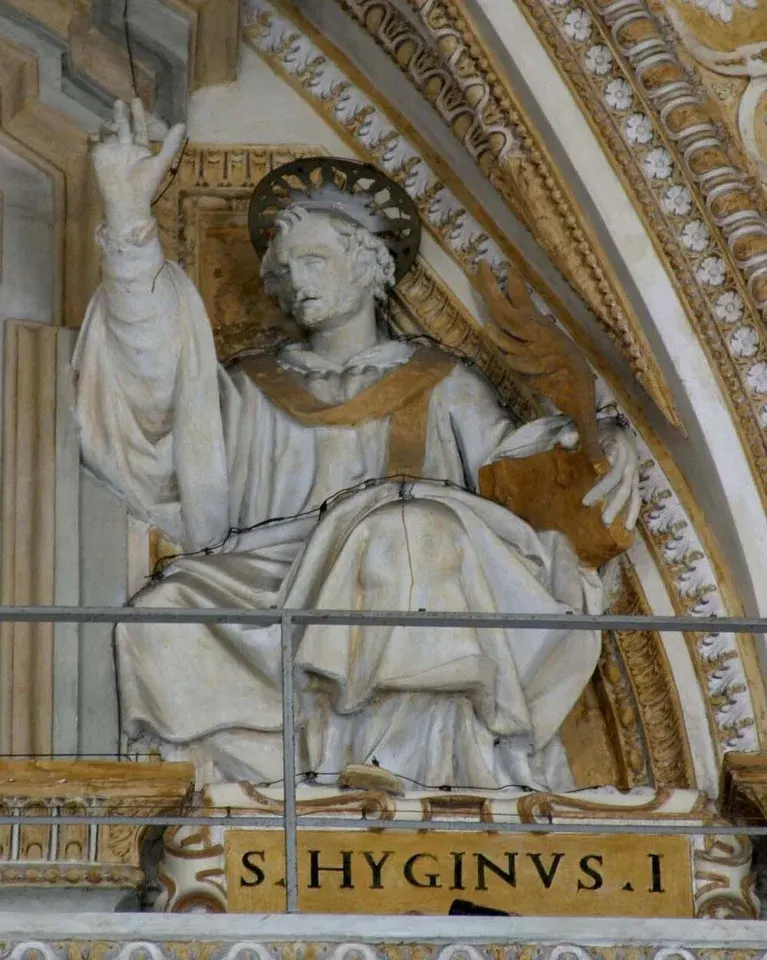
Biography
Saint Hyginus was a second-century bishop of Rome, remembered among the early successors of the apostles. He followed Telesphorus, although the surviving evidence does not allow the dates of his leadership to be fixed precisely.
Irenaeus places the arrival of the teacher Valentinus in Rome during Hyginus's time. Cerdo, another teacher associated with ideas later opposed by the Church, also lived there. These references locate Hyginus within an expanding Christian community debating how faithfully to transmit the apostolic message.
Later papal biographies describe him as Greek and credit him with organizing ranks of clergy. Such statements are not equally reliable: the claim that he had been a philosopher may reflect confusion with similarly named writers, while sweeping accounts of his administrative reforms lack secure historical support.
Ancient sources do not establish that Hyginus died a martyr, despite that description in some later retellings. His commemoration on January 11 preserves the memory of an early Roman pastor whose place in the Church's succession is better documented than the personal details of his life.
Context & contribution
Recognizing a formula in a later biography
One reason for caution about Hyginus's supposed reorganization of the clergy is unusually specific: the Catholic Encyclopedia notes that the same general statement also appears in the biography of Pope Hormisdas, who lived much later. Repeated administrative language may function as a biographer's formula rather than preserve a distinctive second-century event.
This comparison offers a practical way to read sparse early papal records. Instead of expanding a repeated phrase into invented offices, ceremonies, or decrees, a reader can examine where else it occurs and how early the account is. Hyginus's place in succession remains a separate question from the reliability of that particular claim.
Explore the sources for this section
AI-assisted source comparison updated 2026-09-26. Editorial approach
From the Saint Discovery blog
Keep exploring your faith
Practical guides to prayer, the saints, and living the Catholic faith.
Why Do Catholics Pray to Saints? Intercession Explained
Why do Catholics pray to saints? Learn how intercession differs from worship, how it relates to Jesus, and a simple way to ask a saint to pray for you.
A next step with your saintRead the article Living the seasonsHow to Celebrate Your Patron Saint's Feast Day at Home
Celebrate your patron saint's feast day with prayer, a short biography, and an act of kindness. A practical plan for families, sponsors, and individuals.
A next step with your saintRead the articleFrom reading to reflection
What will you carry with you?
After reading about St. Hyginus, take a moment to consider:
- Compare the administrative statement attributed to Hyginus with its parallel in Hormisdas's biography. Discuss what repetition can reveal about a compiler's methods.
These are reflection prompts from Saint Discovery, not quotations from the saint.
Sources and further reading
Biography source comparison recorded on . This is an AI-assisted comparison, not independent human or ecclesiastical approval.
What the recorded review covers
AI-assisted expansion checked against cited sources; historical traditions distinguished from documented evidence; not ecclesiastical approval
A source list helps you check an account; it does not establish that every claim is certain. Follow the biography’s qualifications about historical evidence, traditions and feast calendars.
Suggest a correction to this biography
How we research these pages and handle corrections · Directory corrections log
More lives to explore
Suggestions based on the site’s quiz themes, not a historical relationship or a measure of holiness.