Catholic saint biography
St. Wolfgang
- Commemoration:
- October 31
- Lived:
- c. 934–994 — Swabia and Regensburg, Germany
Why dates and liturgical observances can differ
Read the sources for this biography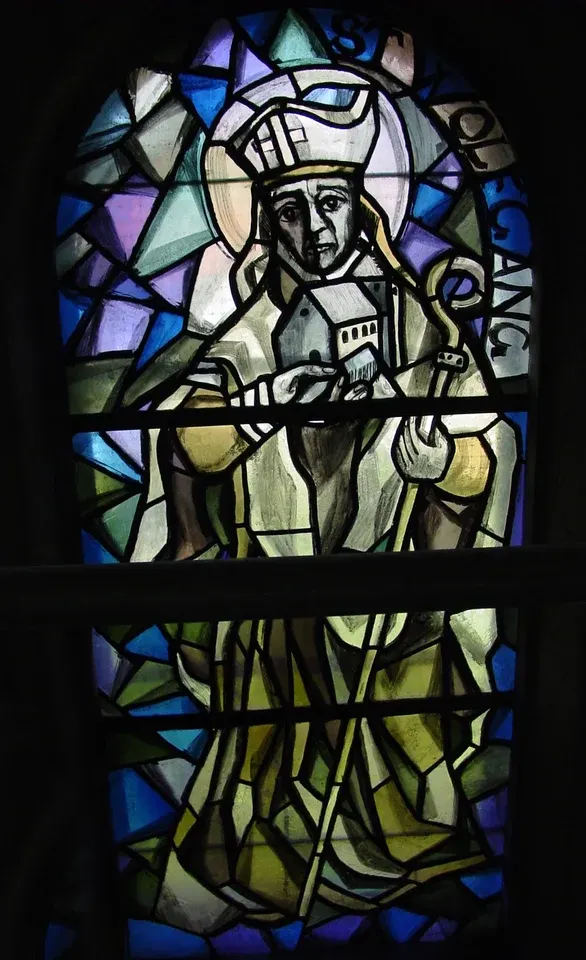
Biography
Wolfgang was a teacher and monk who became bishop of Regensburg in 972. His education and early work took him through important centers of learning, including Reichenau and Trier. He later entered the monastery at Einsiedeln and was ordained a priest.
One significant reform concerned Saint Emmeram. Wolfgang restored its own abbatial leadership instead of keeping the monastery under the bishop’s direct control, and brought Ramwold from Trier to guide it. The decision gave practical expression to his belief in a disciplined monastic life.
He also supported reform in women’s communities and accepted changes in diocesan boundaries for the development of the Church at Prague. His episcopal service thus involved sharing authority as well as exercising it. Teaching, administration, and monastic renewal were closely connected in his understanding of leadership.
As bishop, he brought monastic discipline and concern for education to the leadership of his diocese. Accounts of his life also preserve periods of withdrawal into solitude and later legends associated with places bearing his name. He died while traveling in 994 and was buried at Saint Emmeram in Regensburg. His October 31 feast honors a pastor shaped by learning and prayer.
Context & contribution
Reform through giving up control
One of Wolfgang's significant reforms concerned the abbey of St. Emmeram. Instead of continuing the arrangement in which the bishop also controlled the abbey, he restored its own abbatial leadership and brought Ramwold from Trier to serve as abbot. The change gave monastic life a more suitable form of local direction.
That decision is an instructive counterpart to the image of reform as a leader taking ever more authority. In this case, improvement required allowing another person and community to exercise responsibility. Wolfgang's work can prompt a practical examination of leadership: sometimes the most helpful act is to establish sound oversight and then stop occupying a role that someone else should hold.
Explore the sources for this section
AI-assisted source comparison updated 2026-09-26. Editorial approach
From the Saint Discovery blog
Keep exploring your faith
Practical guides to prayer, the saints, and living the Catholic faith.
What Is the Domestic Church? John Paul II on Faith at Home
What Catholics mean by the domestic church, how John Paul II explained family life, and practical ways to begin with prayer, forgiveness and welcome.
Bring reflection into prayerRead the article Prayer & reflectionHow to Make a Spiritual Communion When You Cannot Receive
Learn how to make a spiritual communion, with a short original prayer and clear guidance on Mass, Confession, and times when you cannot receive.
Bring reflection into prayerRead the articleFrom reading to reflection
What will you carry with you?
After reading about St. Wolfgang, take a moment to consider:
- Where do you hold responsibility that could be shared or entrusted to someone better placed? What support would make that transfer responsible?
These are reflection prompts from Saint Discovery, not quotations from the saint.
Sources and further reading
Biography source comparison recorded on . This is an AI-assisted comparison, not independent human or ecclesiastical approval.
What the recorded review covers
AI-assisted expansion using the linked historical and ecclesiastical sources; devotional traditions distinguished from documented history.
A source list helps you check an account; it does not establish that every claim is certain. Follow the biography’s qualifications about historical evidence, traditions and feast calendars.
Suggest a correction to this biography
How we research these pages and handle corrections · Directory corrections log
More lives to explore
Suggestions based on the site’s quiz themes, not a historical relationship or a measure of holiness.