Catholic saint biography
St. Caesarius of Nazianzus
- Commemoration:
- February 25
- Lived:
- About 330–368/369 — Cappadocia, in present-day Türkiye
Western commemoration February 25; Greek calendar March 9. Identification follows the former entry's date, correcting its unsupported martyr narrative.
Why dates and liturgical observances can differ
Read the sources for this biography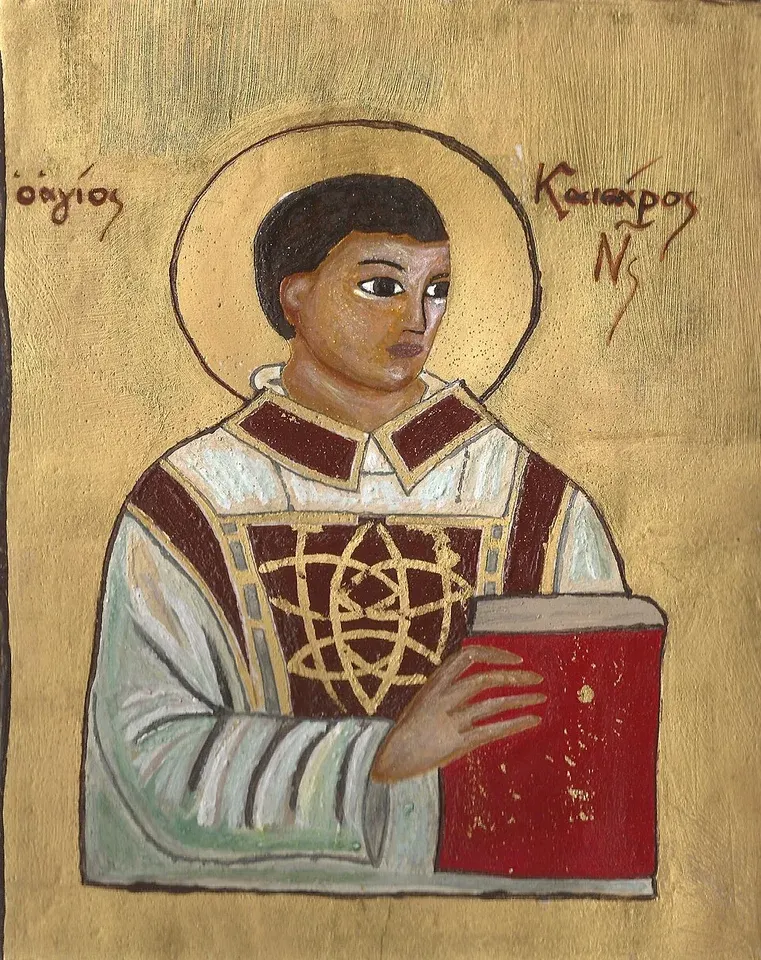
Biography
Caesarius was the younger brother of Gregory of Nazianzus and trained as a physician, studying at Alexandria before pursuing a career at Constantinople. He served at the imperial court, including under Julian, whose efforts to draw him away from Christianity failed. He later held public office in Bithynia and survived the destructive earthquake at Nicaea in 368.
His training included subjects beyond medicine, and his professional reputation made imperial service possible. The relationship with Gregory supplies a family perspective on that career: admiration for his abilities existed alongside concern about the attractions and religious pressures of court life.
The earthquake became a turning point in the remembered account. Yet he died from subsequent illness, not in the disaster itself. That distinction, together with his late baptism and charitable bequest, prevents his story from being confused with that of an early persecution martyr who shared a similar name.
After receiving baptism late in life, he died of illness and left instructions that his property be given to the poor. Gregory delivered his funeral oration, an important witness to his life. He was not a martyr of Diocletian's persecution. February 25 identifies this Caesarius in Western calendars; the Greek commemoration is March 9. Writings later circulated under his name are not securely his.
Context & contribution
Separating a physician from a borrowed library
Caesarius of Nazianzus acquired a literary reputation that needs careful qualification. A collection of four dialogues containing 197 questions and answers circulated under his name. The Catholic Encyclopedia identifies anachronisms that prevent treating that collection as the work of Gregory's physician brother. A name on a manuscript can record a history of attribution without establishing authorship.
This distinction matters because the authentic evidence and the attributed works answer different questions. Gregory's funeral oration witnesses to a particular family and career; the dialogues witness to later theological transmission. Readers should not use arguments in the latter to reconstruct Caesarius's personal convictions or medical practice. His documented professional life remains significant without assigning him a theological library.
Explore the sources for this section
AI-assisted source comparison updated 2026-09-26. Editorial approach
From the Saint Discovery blog
Keep exploring your faith
Practical guides to prayer, the saints, and living the Catholic faith.
Why Do Catholics Pray to Saints? Intercession Explained
Why do Catholics pray to saints? Learn how intercession differs from worship, how it relates to Jesus, and a simple way to ask a saint to pray for you.
A next step with your saintRead the article Living the seasonsHow to Celebrate Your Patron Saint's Feast Day at Home
Celebrate your patron saint's feast day with prayer, a short biography, and an act of kindness. A practical plan for families, sponsors, and individuals.
A next step with your saintRead the articleFrom reading to reflection
What will you carry with you?
After reading about St. Caesarius of Nazianzus, take a moment to consider:
- Make two headings, evidence about Caesarius and works attributed to Caesarius, and explain why a later manuscript title cannot settle authorship.
These are reflection prompts from Saint Discovery, not quotations from the saint.
Sources and further reading
Biography source comparison recorded on . This is an AI-assisted comparison, not independent human or ecclesiastical approval.
What the recorded review covers
AI-assisted expansion checked against retrieved historical and institutional sources; traditions distinguished from documented history; not ecclesiastical approval
A source list helps you check an account; it does not establish that every claim is certain. Follow the biography’s qualifications about historical evidence, traditions and feast calendars.
Suggest a correction to this biography
How we research these pages and handle corrections · Directory corrections log
More lives to explore
Suggestions based on the site’s quiz themes, not a historical relationship or a measure of holiness.