Catholic saint biography
St. Bibiana
- Commemoration:
- December 2
- Lived:
- Venerated at Rome by the fifth century — Rome
Why dates and liturgical observances can differ
Read the sources for this biography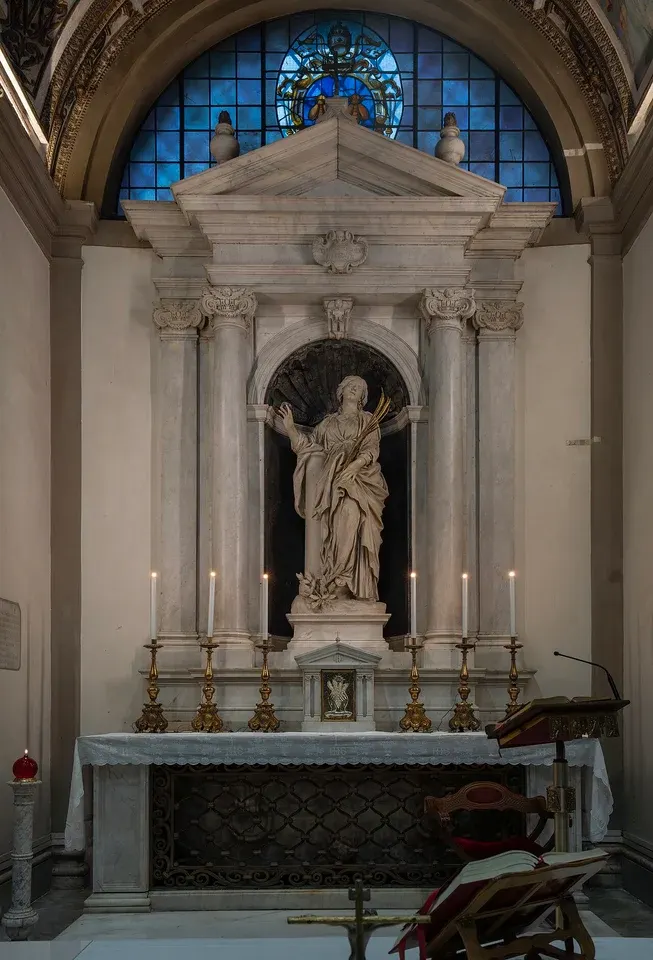
Biography
Bibiana, also called Viviana, is venerated as a Roman martyr. The earliest reliable evidence for her cult is the Liber Pontificalis, which records a basilica dedicated to her under Pope Simplicius in the fifth century.
The basilica matters because it provides a firmer point of reference than the later narrative of persecution. A church housing her remains existed within Rome by the fifth century. This establishes a history of devotion without settling the martyr’s age, occupation, or family relationships.
The developed story names relatives and explains their burial in a family house that became a church. The Catholic Encyclopedia treats this as a later attempt to account for the shrine and its relics. Those explanatory legends should remain separate from the earlier documentary reference.
That evidence establishes an early church and veneration of her remains, but does not provide a detailed life or securely identify the circumstances of her death. Later narratives about her parents, sister, and persecution under Julian belong to a legendary account. Her December 2 commemoration preserves the memory of a martyr whose personal history remains largely unknown.
Context & contribution
When a church building generates a story
Bibiana's later legend attempts to explain why her remains and those associated with her family were found together in a Roman church. It supplies a domestic setting, a persecuted household, and the conversion of a home into a sacred place. The story therefore tells us something about later efforts to interpret a shrine, even where it cannot establish the circumstances of her life.
This is a useful example of working backward from a monument. The existence of a church and a remembered martyr may be well attested while a narrative explaining every feature of that church is much later. Respect for Bibiana's ancient commemoration does not require treating the explanatory story as an eyewitness account.
Explore the sources for this section
AI-assisted source comparison updated 2026-09-26. Editorial approach
From the Saint Discovery blog
Keep exploring your faith
Practical guides to prayer, the saints, and living the Catholic faith.
Why Do Catholics Pray to Saints? Intercession Explained
Why do Catholics pray to saints? Learn how intercession differs from worship, how it relates to Jesus, and a simple way to ask a saint to pray for you.
A next step with your saintRead the article Living the seasonsHow to Celebrate Your Patron Saint's Feast Day at Home
Celebrate your patron saint's feast day with prayer, a short biography, and an act of kindness. A practical plan for families, sponsors, and individuals.
A next step with your saintRead the articleFrom reading to reflection
What will you carry with you?
After reading about St. Bibiana, take a moment to consider:
- Choose one detail in Bibiana's later legend that explains the church's contents; distinguish that explanation from the evidence that the shrine itself existed.
These are reflection prompts from Saint Discovery, not quotations from the saint.
Sources and further reading
Biography source comparison recorded on . This is an AI-assisted comparison, not independent human or ecclesiastical approval.
What the recorded review covers
AI-assisted expansion checked against retrieved historical and institutional sources; traditions distinguished from documented history; not ecclesiastical approval
A source list helps you check an account; it does not establish that every claim is certain. Follow the biography’s qualifications about historical evidence, traditions and feast calendars.
Suggest a correction to this biography
How we research these pages and handle corrections · Directory corrections log
More lives to explore
Suggestions based on the site’s quiz themes, not a historical relationship or a measure of holiness.