Catholic saint biography
St. Catherine Labouré
- Commemoration:
- November 28
- Lived:
- 1806–1876 — France
Why dates and liturgical observances can differ
Read the sources for this biography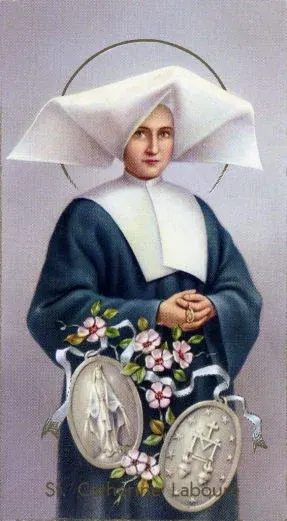
Biography
Catherine Labouré joined the Daughters of Charity in 1830. While a novice in Paris, she reported apparitions of Mary associated with the design of the Miraculous Medal. The medal became widely known while Catherine herself continued a largely hidden life of service.
Born Zoé Labouré in Burgundy in 1806, she lost her mother as a child and later assumed substantial domestic responsibilities. The official chapel’s account describes work around the family farm and care of the household. Her religious vocation developed against that background of practical competence.
The contrast between the medal’s public spread and Catherine’s quiet service is central to her story. Her association with an influential devotion did not replace decades of caring work. Reported apparitions belong to her devotional history, while the hospice provides the setting for her long everyday ministry.
Assigned to the hospice at Reuilly in 1831, she cared for elderly people and fulfilled ordinary community duties for decades. Her life therefore includes both the reported visions and a long record of practical charity. She died on December 31, 1876. Her November 28 commemoration is distinct from the anniversary of her death.
Context & contribution
Care across the barricades
The official chapel history places Catherine's hospice within the upheavals of nineteenth-century Paris. During the June fighting of 1848, Reuilly cared for wounded people from both sides. In the siege of 1870, its facilities again became a hospital. Her years of service therefore unfolded within political violence and war, not within an institution insulated from the city around it.
The same history remembers her attention to domestic workers and newly arrived sisters, as well as elderly residents. These details broaden the picture of her charity: the people who kept a household or hospital functioning also needed care and guidance. Catherine's contribution was sustained through the practical relationships that allowed a community to remain hospitable in ordinary work and during crisis.
Explore the sources for this section
AI-assisted source comparison updated 2026-09-26. Editorial approach
From the Saint Discovery blog
Keep exploring your faith
Practical guides to prayer, the saints, and living the Catholic faith.
Why Do Catholics Pray to Saints? Intercession Explained
Why do Catholics pray to saints? Learn how intercession differs from worship, how it relates to Jesus, and a simple way to ask a saint to pray for you.
A next step with your saintRead the article Living the seasonsHow to Celebrate Your Patron Saint's Feast Day at Home
Celebrate your patron saint's feast day with prayer, a short biography, and an act of kindness. A practical plan for families, sponsors, and individuals.
A next step with your saintRead the articleFrom reading to reflection
What will you carry with you?
After reading about St. Catherine Labouré, take a moment to consider:
- Reflect on Reuilly receiving wounded people from both sides in 1848; what arrangements help a care institution maintain that welcome amid political division?
These are reflection prompts from Saint Discovery, not quotations from the saint.
Sources and further reading
- Chapel of Our Lady of the Miraculous Medal: Catherine Labouré ↗
- Society of St. Vincent de Paul reflection: Feast of Saint Catherine Labouré ↗
Biography source comparison recorded on . This is an AI-assisted comparison, not independent human or ecclesiastical approval.
What the recorded review covers
AI-assisted expansion checked against retrieved historical and institutional sources; traditions distinguished from documented history; not ecclesiastical approval
A source list helps you check an account; it does not establish that every claim is certain. Follow the biography’s qualifications about historical evidence, traditions and feast calendars.
Suggest a correction to this biography
How we research these pages and handle corrections · Directory corrections log
More lives to explore
Suggestions based on the site’s quiz themes, not a historical relationship or a measure of holiness.