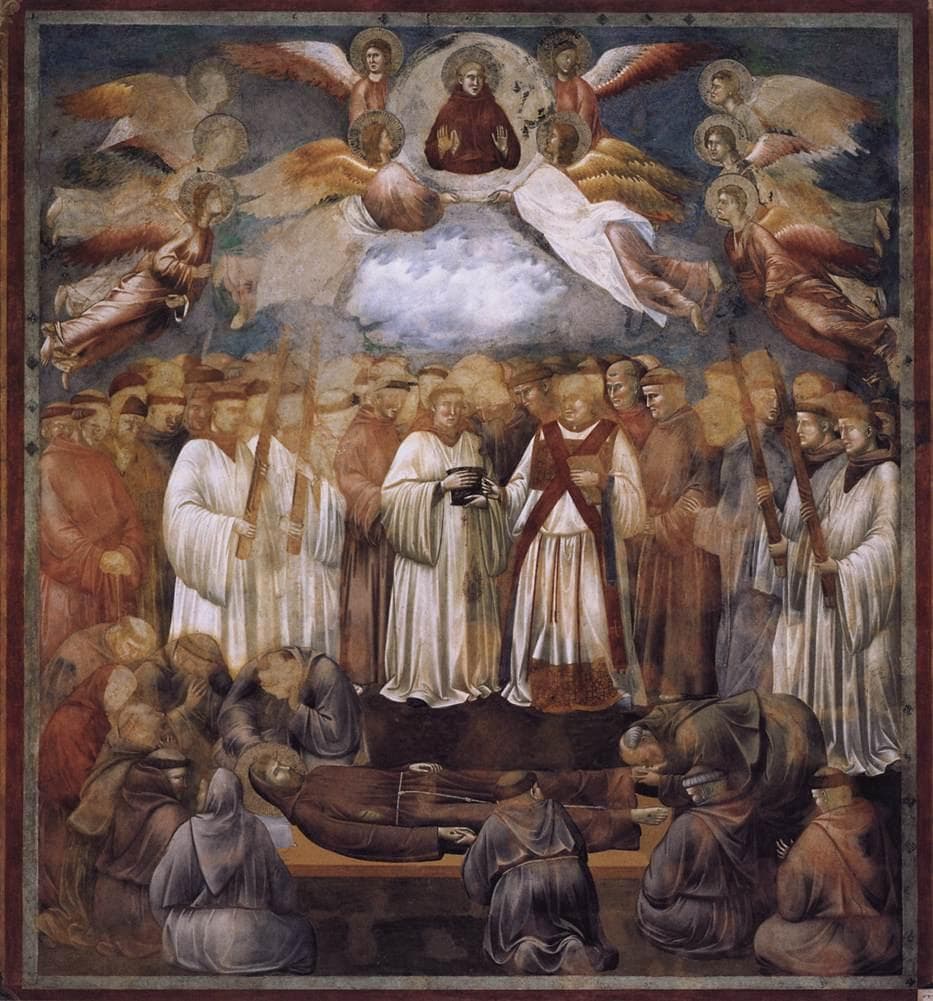
The Transitus of Saint Francis is a Franciscan prayer gathering on the evening of October 3 that remembers his passing from earthly life to God. Its name comes from a Latin word for passage or crossing. It brings people together to hear about Francis's final hours, pray, and consider how his trust in Christ can shape their own lives.
If you have seen a parish invitation and wondered whether you need to be a Franciscan to attend, this guide will help you prepare. The service offers a way to encounter the saint beyond the familiar stories about animals and nature.
Why is the Transitus on October 3?
Francis died at the Portiuncula, near Assisi, on the evening of October 3, 1226. The Order of Friars Minor's chronology distinguishes his death that evening from his burial the following day. October 4 is the date associated with his liturgical celebration; the Transitus recalls the evening before it.
The timing has particular significance in 2026: it marks 800 years since Francis's death. The Franciscan family's centenary announcement identifies 1226–2026 as the eighth centenary and describes the commemoration as an invitation to life and hope. That anniversary can help a community ask what it means to keep Francis's witness alive through actual choices.
What happens at a Transitus service?
There is no single ceremony used everywhere. The Conventual Franciscan Friars' explanation describes prayers, Francis's writings, and accounts from his early biographers as common elements. The Gospel account of Jesus washing his disciples' feet is often included. Depending on the community, you may also encounter hymns, silence, or a gathering afterward.
Read the local announcement before attending: the starting time, location, and format will vary. You do not need to know every response beforehand. Arrive a little early, take a service sheet if one is offered, and listen for the relationship between the story being read and the prayer that follows.
The Transitus is a devotional commemoration rather than, by itself, a Mass. Check whether the host has scheduled Mass separately. If you are bringing children, explain simply that the gathering remembers a saint who died surrounded by people who cared for him, and that Christians pray with hope in the resurrection.
What do the early accounts tell us?
The Commission on the Franciscan Intellectual-Spiritual Tradition summarizes Saint Bonaventure's account of Francis asking to be brought to the Portiuncula as death approached. It describes companions caring for him and his request to hear the Gospel according to John, beginning at John 13:1.
These details come to us through early Franciscan biographies. They should be identified as those accounts, rather than presented as a modern eyewitness transcript. The important connection for a prayer service is clear: Francis's final hours were remembered in the light of Jesus's loving service.
For a broader introduction to his life, read our Saint Francis of Assisi biography. The Transitus focuses on his final passage; a biography helps you see the years of conversion and discipleship that preceded it.
Why is the washing of feet such a fitting reading?
In John 13:1–17 in the USCCB's NABRE text, Jesus washes his disciples' feet and instructs them to follow his example. The passage joins love to an action that serves another person's need. It also shows Peter struggling to receive what Jesus offers him.
That second detail makes a useful reflection for the Transitus. We may like the idea of generous service but find it harder to accept help ourselves. Francis's companions cared for him when he could no longer manage alone. Dependence did not erase his dignity.
Before the gathering, read the passage slowly. Ask where someone needs your patient attention, and where pride or embarrassment makes you reluctant to receive care. Choose one concrete response: share a task with a caregiver, accept a meal offered in kindness, or make time for someone whose needs are easily overlooked.
What does welcoming Sister Death mean?
Francis's language about Sister Bodily Death belongs to his Canticle of the Creatures. It expresses trust in God while acknowledging that human life is finite. It is not an instruction to enjoy suffering, suppress grief, or abandon care for someone who is ill.
The Catechism's summary of the resurrection, paragraphs 1016–1019, connects Christian hope with Christ's victory over death and the resurrection of the body. A Transitus service makes sense within that hope. Remembering death can sharpen our attention to how we love today without making loss painless.
If the subject touches a recent bereavement, you can participate gently. Sit near someone you trust, remain silent when words are difficult, or step outside if you need a moment. Our guide to praying for someone who has died offers another starting point for personal prayer.
Carry one part of Francis's witness into the next day
Francis's own Testament remembers his encounter with people suffering from leprosy, the gift of brothers, reverence for the Eucharist, and a commitment to living the Gospel. These are more substantial guides to his legacy than an inspiring image alone.
After the Transitus, choose one practice you can sustain. Visit a person who is isolated. Offer practical help without demanding recognition. Thank someone whose quiet work supports your parish. For a family or Confirmation group, discuss this question: what would serving with greater humility look like in our ordinary week?
The calendar also deserves attention in 2026. October 4 falls on a Sunday, and the USCCB's daily readings page lists the Twenty-seventh Sunday in Ordinary Time. Ask your parish or Franciscan community about its own celebration and calendar. An October 3 devotional gathering should not be treated as a substitute for Sunday Mass.
An original prayer for personal reflection
Lord Jesus, teach me to receive your love and share it through patient service. Help me care for people whose needs I would rather avoid, and accept kindness when I need it myself. Give comfort to those who mourn, strength to caregivers, and hope to those who are afraid. Through the intercession of Saint Francis, lead me to live this day faithfully in your presence. Amen.
This prayer is original to Saint Discovery and intended for personal reflection; it is not an official text for a Transitus service.
Cover artwork: Death and Ascension of St Francis, an Assisi fresco of about 1300 by an unknown artist, formerly attributed to Giotto. Public-domain reproduction from Web Gallery of Art via Wikimedia Commons.
