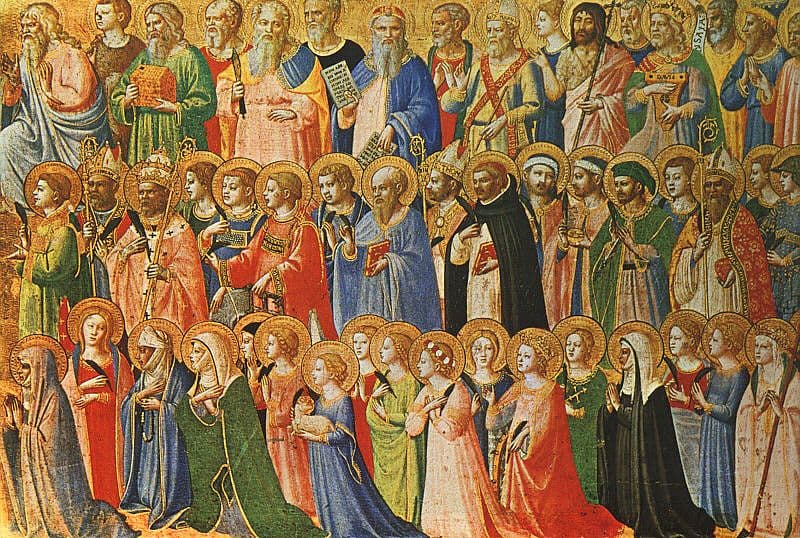
All Saints' Day celebrates all the saints in heaven, including those whose names and stories we do not know. It is a joyful thanksgiving for what God's grace has accomplished in human lives. A Vatican homily for the solemnity explicitly includes both the saints recognized by the Church and those known to God alone.
In 2026, All Saints' Day falls on Sunday, November 1, in the U.S. Roman Catholic calendar. Here is what the celebration means, how it differs from All Souls' Day, and a few simple ways to prepare.
When is All Saints' Day in 2026?
The USCCB's 2026 liturgical calendar lists November 1 as the Solemnity of All Saints, with white as the liturgical color. November 2, a Monday, is the Commemoration of All the Faithful Departed, commonly called All Souls' Day.
Because November 1 is a Sunday this year, plan around your parish's Sunday Mass schedule. Check the parish bulletin for any additional celebrations or changes to the usual times.
The dates here follow the U.S. Roman Catholic calendar. Other Christian traditions may observe All Saints at a different time. If the word solemnity is unfamiliar, our guide to solemnities, feasts, and memorials explains these calendar terms.
Who is included in the celebration?
A directory helps us learn about named saints through their biographies and sources. All Saints' Day invites us to look beyond the names a directory can contain.
The celebration is not limited to famous founders, martyrs, popes, or people with a dedicated feast on our calendar. Its scope includes every person who has reached the fullness of life with God, whether that person's earthly story has been preserved or forgotten.
That gives the day a particular warmth. The history of holiness is larger than the history we can document. We can honor the entire company of heaven without claiming certainty about the eternal state of a particular deceased relative or friend. We continue to entrust our loved ones to God's mercy.
For a child, a helpful explanation might be: today we thank God for all his friends in heaven, including the ones whose names we have never learned. That is a suggested explanation for families, not a quotation from an official prayer.
What does the communion of saints mean?
The Catechism's teaching on the communion of saints, especially paragraphs 954–957, describes one Church: disciples still living on earth, the dead undergoing purification, and those already in heavenly glory.
The saints in heaven remain united to Christ and intercede for us. Honoring them draws us toward him; worship belongs to God. All Saints' Day therefore celebrates a living relationship in Christ, rather than simply preserving the memory of admirable people.
If the idea of asking a saint to pray for you is new, read our introduction to the intercession of saints. You do not have to learn many unfamiliar names before beginning to understand that relationship.
How is All Saints different from All Souls?
All Saints celebrates those already in heaven. All Souls directs our prayer toward the faithful departed undergoing purification. Catechism paragraph 958 explains the Church's practice of praying for the dead.
The two days belong together, but their emphasis differs. On November 1, we rejoice in God's work in the saints. On November 2, we pray for those who have died, entrusting them to his mercy.
A family can mark both days without creating an elaborate program. Learn about a saint on All Saints, then bring the names of deceased loved ones into prayer on All Souls. Our guide to praying for someone who has died offers a starting point.
Does holiness belong only to extraordinary people?
In his All Saints reflection from 2019, Pope Francis describes holiness as God's gift and our response to it. He connects that response with the duties and circumstances of daily life.
That is an encouraging way to approach this solemnity. We can receive the saints' example within the responsibilities we already have: caring for someone, doing our work honestly, seeking forgiveness, or making time to listen.
Choose one concrete action rather than a vague promise to become better. You might finish a neglected act of service or give your full attention to someone who needs to talk. These are original suggestions for reflection, not a formula for earning holiness.
A simple way to prepare as a family or parish group
Before November 1, choose one biography from the saint directory. Read it together and ask what the person faced, how they responded, and which details are supported by the sources. Let questions remain questions when the historical record is uncertain.
After Mass, invite each person to share one thing they learned and one small act of love they want to practice during the week. A meal, a drawing, or a brief conversation can make space for this without becoming another demanding project.
You can also return to the directory throughout the year. All Saints' Day offers a beginning: gratitude for the saints we know, joy in the multitude we do not know, and hope that God's grace can bear fruit in our own ordinary lives.
Artwork: Fra Angelico's The Forerunners of Christ with Saints and Martyrs, about 1423–1424, is in the National Gallery, London. See the museum catalogue and the public-domain image record.
