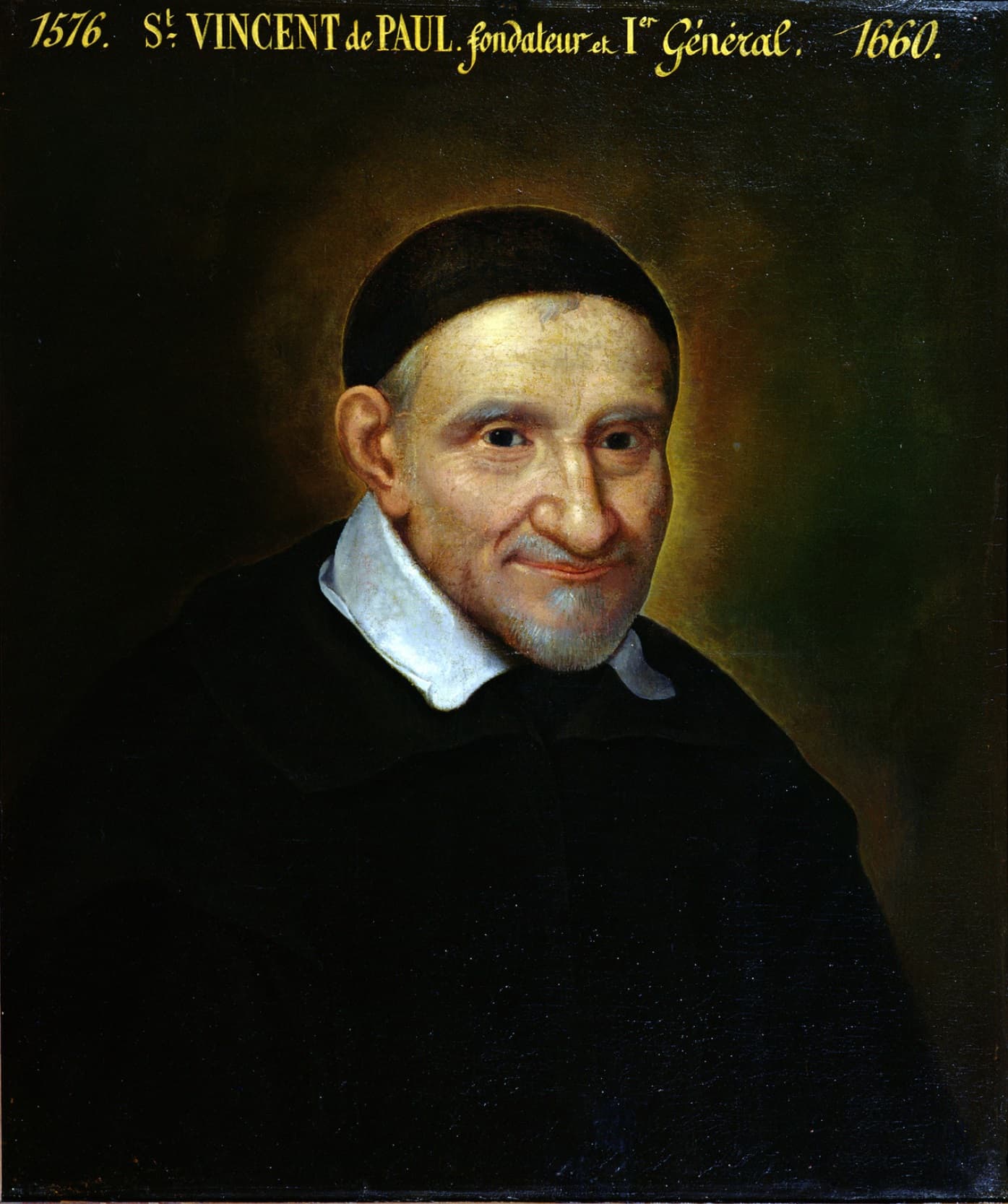
St. Vincent de Paul shows Catholics a practical way to help people in poverty: recognize their dignity, listen to what they need, and organize help that can continue. Compassion becomes more useful when it includes attention, preparation, and dependable follow-through.
You may know his name from a parish collection or a thrift store. Behind that familiar name is a demanding question: how can I serve someone without making my generosity the center of the encounter? This guide connects Vincent’s example with a small service plan you can actually use.
What did St. Vincent de Paul do for people in poverty?
Vincent was a French priest whose work joined Christian formation with practical care. In 1617 he founded the first Brotherhoods of Charity at Châtillon. These groups involved laypeople, particularly women, in caring for neighbors in need. In his message to the International Association of Charities, Pope Francis highlighted both that beginning and Vincent’s recognition of people experiencing poverty as members of Christ’s body.
Vincent also worked with Saint Louise de Marillac. The Society’s account of its Vincentian heritage identifies them as co-founders of the Daughters of Charity. His legacy was collaborative: clergy, religious communities, and laypeople could contribute different gifts. Read our Saint Vincent de Paul biography for a fuller introduction to his life.
That history offers a useful starting point. You do not need to create an organization before doing good. Look for people already serving well, learn how their work functions, and find a responsibility you can sustain.
Start by listening, rather than guessing
In his 2017 message to the Vincentian Family, Francis connects Vincent’s legacy with personal contact, training, and organized relationships. He also urges Christians to give people experiencing poverty a voice. Good intentions need to meet the actual circumstances of another person’s life.
For example, imagine a parish group planning a food collection. Before buying identical bags of groceries, the group could ask the pantry coordinator which items are needed, whether storage space is limited, and what kinds of food families can use. The answers might change both the shopping list and the delivery date. This is a hypothetical example, not a story from Vincent’s life.
The same habit matters in conversation. Ask what would be helpful instead of beginning with a diagnosis of someone’s choices. Listen without turning their difficulties into a lesson for yourself. Let them decide what they want to share.
Why preparation and dignity belong together
Catholic charity calls for both skill and personal concern. In Deus Caritas Est, paragraphs 31 and 34, Benedict XVI explains that those providing care need appropriate competence as well as heartfelt attention. He also warns against giving in a way that humiliates the person receiving help.
For a volunteer, that means accepting training and following the organization’s procedures. Ask how it protects personal information, arranges visits, and handles needs beyond your role. A willingness to help does not make you qualified to promise housing, resolve legal problems, or provide counseling.
Keep the person’s dignity in view after the encounter, too. Avoid using identifying details or photographs of someone’s hardship to promote your service project. When writing a reflection, focus on what you learned and what responsibility you will take next. A person’s difficult circumstances are not yours to turn into publicity.
Must someone share my faith to receive help?
No. Catholic service should not make food, practical assistance, or respectful treatment conditional on attending church or agreeing with a belief. Deus Caritas Est 31 explains that charity is freely given and must not become a device for imposing faith. You can be open about why you serve while respecting the other person's freedom.
At a parish pantry, for example, an invitation to a prayer service should remain an invitation. A person who declines should receive the same courtesy and assistance available under the pantry's ordinary procedures. When someone asks about your faith, answer honestly; when someone needs groceries, listen to the grocery need.
This distinction protects trust. The encounter is with a neighbor, not a prospective conversion or a success story to report afterward.
Did Vincent found the Society of St. Vincent de Paul?
No. The Society was established in Paris in 1833, long after Vincent’s death in 1660. Blessed Frédéric Ozanam and his companions began the group, which took Vincent as its patron. Its official history explains that distinction and describes personal visits as a central part of its service.
The connection is spiritual and practical, rather than a claim that Vincent founded every organization bearing his name. The Society’s home-visit guidance emphasizes orientation, local training, prayer, and reflection. If that form of service interests you, contact a local Conference through your parish and ask about its process. Do not assume that reading an article replaces volunteer preparation.
A simple plan for your first month of service
The following is an original planning exercise inspired by these principles, not a rule written by Saint Vincent. Adapt it to your circumstances and to the organization’s requirements.
During the first week, choose one local organization and learn what it does. Send a short inquiry: “I can offer two hours a month. What help do you currently need, and what preparation is required?” Be honest about your availability. If your schedule is unpredictable, a requested donation or occasional administrative task may fit better than a weekly commitment.
During the second week, listen and prepare. Attend any required orientation. Ask who will supervise your work and what to do if you cannot attend. For a school or Confirmation group, have the adult leader arrange an appropriate activity and confirm the organization’s requirements for young volunteers.
During the third week, complete one agreed task. Show up when expected, accept an ordinary assignment, and leave time to do it properly. Sorting supplies accurately or making a dependable delivery can be more useful than designing a new project the organization did not request.
During the fourth week, reflect and follow up. Was the task useful to the people receiving help? What did the coordinator say needs to change? Can you repeat your commitment next month? Choose a specific next step rather than measuring the experience only by how inspired you felt.
When a need keeps returning
Repeated requests are a reason to understand the situation better, not proof that help has failed. With the person's consent and within your volunteer role, ask the coordinator whether there is an appropriate referral or a barrier the ministry can address. A hypothetical example: groceries may help today, while unreliable transport keeps someone from reaching the pantry next week.
Record only information your organization actually needs and follow its privacy rules. Agree on a realistic next contact instead of promising that you will solve everything. A useful follow-up question is, “Did the help arrive when you could use it?” That can reveal more than the number of bags distributed.
Charity also requires attention to justice. Catechism 2446 warns against presenting as generosity what is already owed to another person. Paying an employee fairly or returning money you owe is not a charitable donation. Vincentian service should make us examine our ordinary responsibilities as well as our volunteer hours.
Bringing Vincent’s example into Confirmation preparation
If you are considering Vincent as a Confirmation patron, connect your reading with an honest question: am I willing to become more attentive and dependable in serving others? Discuss that question with your sponsor. Our Confirmation saint guide can help you compare patrons without treating the choice as a personality test with one correct answer.
You can also use our guide to the corporal works of mercy to understand the wider Catholic vocabulary of service. Vincent’s example invites a concrete response: learn a real need, cooperate with others, and keep the commitment you make.
Cover artwork: Simon François de Tours, seventeenth-century portrait of Vincent de Paul. Public-domain artwork and reproduction; image source and rights information on Wikimedia Commons.
