Catholic saint biography
St. Paul the Simple
- Commemoration:
- March 7
- Lived:
- Fourth century — Egypt
March 7 in the Orthodox calendar; also commemorated on October 4.
Why dates and liturgical observances can differ
Read the sources for this biography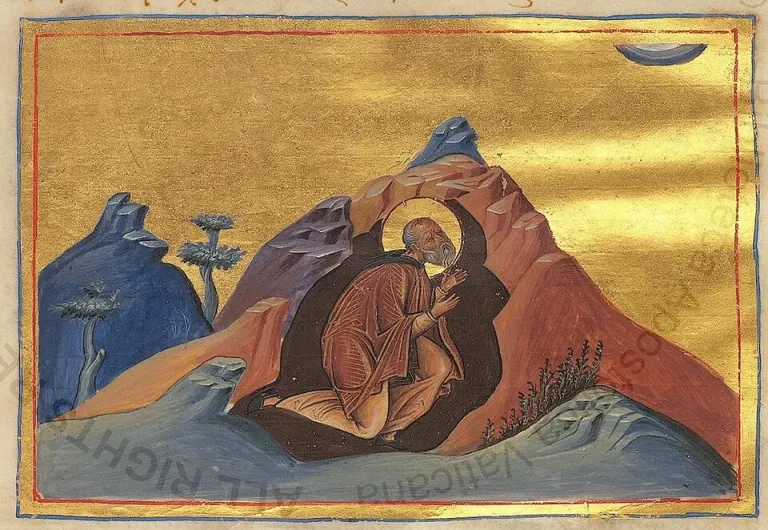
Biography
Paul the Simple is remembered in the Egyptian desert tradition as a disciple of Anthony the Great. The account describes a married man who sought monastic life after discovering his wife's infidelity. Already about sixty, he met Anthony's initial judgment that he could not endure the demands of a hermit's life.
Paul reportedly remained outside Anthony's cell for three days rather than leave. Anthony then tested his resolve through hard work, fasting, nightly vigils, and psalmody. Only after this formation did he establish Paul in a separate cell. The narrative presents a late vocation requiring sustained apprenticeship.
Stories of discernment and deliverance from evil became central to his memory. One account describes Anthony sending an afflicted young man to Paul, whose prayer brought relief. Such episodes express the desert tradition's understanding of spiritual authority; they are religious testimony rather than an independently verified record of miracles.
His nickname refers to gentleness and simplicity of heart, not an assessment of intelligence. John Climacus later cited him as an example of that virtue. The Orthodox Church in America commemorates him on March 7 and also records October 4. A complete chronology of his fourth-century life cannot be reconstructed from these traditions.
Context & contribution
When the teacher recognizes another person’s gift
In the desert account, Anthony eventually directs an afflicted visitor to Paul rather than claiming that only he can help. The episode reverses the relationship established at their first meeting, when Anthony doubted the older newcomer’s capacity for monastic life. The narrative uses this reversal to distinguish spiritual maturity from seniority or reputation.
Read as religious testimony, it gives Paul’s simplicity an active meaning: humility can make someone receptive rather than insignificant. It does not provide grounds for diagnosing illness as possession today. Its contribution to the desert tradition is the recognition that a respected teacher can acknowledge a disciple’s gifts.
Explore the sources for this section
AI-assisted source comparison updated 2026-09-26. Editorial approach
From the Saint Discovery blog
Keep exploring your faith
Practical guides to prayer, the saints, and living the Catholic faith.
What Is the Domestic Church? John Paul II on Faith at Home
What Catholics mean by the domestic church, how John Paul II explained family life, and practical ways to begin with prayer, forgiveness and welcome.
Bring reflection into prayerRead the article Prayer & reflectionHow to Make a Spiritual Communion When You Cannot Receive
Learn how to make a spiritual communion, with a short original prayer and clear guidance on Mass, Confession, and times when you cannot receive.
Bring reflection into prayerRead the articleFrom reading to reflection
What will you carry with you?
After reading about St. Paul the Simple, take a moment to consider:
- What changes between Anthony’s first refusal of Paul and his later decision to send someone to him?
These are reflection prompts from Saint Discovery, not quotations from the saint.
Sources and further reading
Biography source comparison recorded on . This is an AI-assisted comparison, not independent human or ecclesiastical approval.
What the recorded review covers
AI-assisted expansion using the linked historical and ecclesiastical sources; devotional traditions distinguished from documented history.
A source list helps you check an account; it does not establish that every claim is certain. Follow the biography’s qualifications about historical evidence, traditions and feast calendars.
Suggest a correction to this biography
How we research these pages and handle corrections · Directory corrections log
More lives to explore
Suggestions based on the site’s quiz themes, not a historical relationship or a measure of holiness.