Catholic saint biography
St. Paschal Baylón
- Commemoration:
- May 17
- Patron Saint of:
- Eucharistic congresses and associations
- Lived:
- 1540–1592 — Aragon and Valencia, Spain
Why dates and liturgical observances can differ
Read the sources for this biography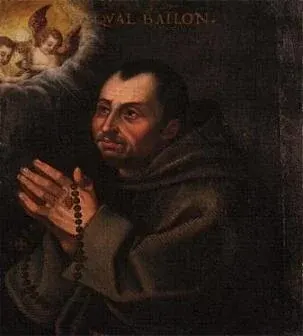
Biography
Paschal Baylón worked as a shepherd before entering the reformed Franciscans as a lay brother. His life in the friary emphasized ordinary service, poverty, and prayer. Although he had little formal education, people sought his counsel, and his devotion to the Eucharist became the most distinctive feature of his reputation.
Born in Aragon in 1540, he spent much of his youth tending sheep before joining the Alcantarine reform of the Franciscans. He remained a brother rather than pursuing ordination. His reputation thus grew from community life and personal example rather than ecclesiastical office.
A traditional account of a journey through France describes him defending Eucharistic belief amid religious hostility. His later patronage makes that devotion especially visible: images commonly show him adoring the Eucharist, connecting his ordinary religious duties with the prayer for which he became known.
Accounts describe courtesy toward visitors and generosity to people who were poor or afflicted. He died in 1592 and was canonized in 1690. Leo XIII later designated him a patron of Eucharistic congresses and associations, reflecting the lasting influence of his spirituality. His feast is celebrated on May 17, and Christian art commonly depicts him in Eucharistic adoration.
Context & contribution
Why a lay brother became a model for public devotion
Paschal’s later association with Eucharistic congresses connects a largely local religious life with much larger gatherings. The choice of a lay brother as their patron directs attention beyond prominent speakers and ecclesiastical office. His remembered courtesy and care for people in need belong beside the image of him at prayer.
This helps explain how a patron saint can contribute to a community long after death. Patronage does not mean that Paschal organized modern congresses himself. It proposes his manner of life as a standard by which the conduct of their participants might be judged, including how visitors and vulnerable people are welcomed.
Explore the sources for this section
AI-assisted source comparison updated 2026-09-26. Editorial approach
From the Saint Discovery blog
Keep exploring your faith
Practical guides to prayer, the saints, and living the Catholic faith.
What Is the Domestic Church? John Paul II on Faith at Home
What Catholics mean by the domestic church, how John Paul II explained family life, and practical ways to begin with prayer, forgiveness and welcome.
Bring reflection into prayerRead the article Prayer & reflectionHow to Make a Spiritual Communion When You Cannot Receive
Learn how to make a spiritual communion, with a short original prayer and clear guidance on Mass, Confession, and times when you cannot receive.
Bring reflection into prayerRead the articleFrom reading to reflection
What will you carry with you?
After reading about St. Paschal Baylón, take a moment to consider:
- If a Eucharistic gathering chose Paschal as its model, what should change in the way its volunteers welcome people?
These are reflection prompts from Saint Discovery, not quotations from the saint.
Sources and further reading
Biography source comparison recorded on . This is an AI-assisted comparison, not independent human or ecclesiastical approval.
What the recorded review covers
AI-assisted expansion using the linked historical and ecclesiastical sources; devotional traditions distinguished from documented history.
A source list helps you check an account; it does not establish that every claim is certain. Follow the biography’s qualifications about historical evidence, traditions and feast calendars.
Suggest a correction to this biography
How we research these pages and handle corrections · Directory corrections log
More lives to explore
Suggestions based on the site’s quiz themes, not a historical relationship or a measure of holiness.