Catholic saint biography
St. Leander of Seville
- Lived:
- Died about 600 — Seville, Spain; Constantinople
No approved calendar and jurisdiction were independently checked for this entry. A date mentioned in a biography or daily saint listing is not assigned as a universally applicable feast.
Read the sources for this biography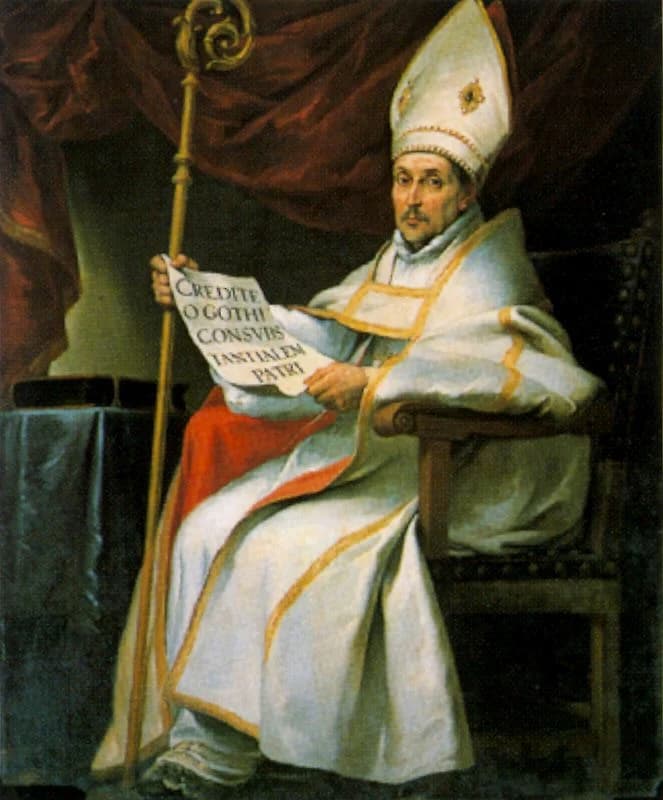
Biography
Leander of Seville worked in the religious world of Visigothic Spain and formed a lasting friendship with Gregory the Great during a visit to Constantinople. As bishop of Seville he promoted ecclesiastical education and worked for unity in a region divided by disputes over the divinity of Christ.
He helped the Visigoths move from Arian belief to Catholic Christianity under King Reccared. His family included Isidore, Fulgentius and Florentina, whose religious work continued within the same wider setting. He died around 600. His episcopal leadership combined preaching, education and attention to worship during a significant transition in the religious life of the kingdom.
From the Saint Discovery blog
Keep exploring your faith
Practical guides to prayer, the saints, and living the Catholic faith.
Why Do Catholics Pray to Saints? Intercession Explained
Why do Catholics pray to saints? Learn how intercession differs from worship, how it relates to Jesus, and a simple way to ask a saint to pray for you.
A next step with your saintRead the article Living the seasonsHow to Celebrate Your Patron Saint's Feast Day at Home
Celebrate your patron saint's feast day with prayer, a short biography, and an act of kindness. A practical plan for families, sponsors, and individuals.
A next step with your saintRead the articleFrom reading to reflection
What will you carry with you?
After reading about St. Leander of Seville, take a moment to consider:
- Which event or decision in this life stood out to you?
- What virtue would you like to understand or practice more deeply?
- What small action could you take today in response?
These are reflection prompts from Saint Discovery, not quotations from the saint.
Sources and further reading
Biography source comparison recorded on . This is an AI-assisted comparison, not independent human or ecclesiastical approval.
What the recorded review covers
Individual Catholic institutional source review; original concise factual summary. AI-assisted comparison of the individual institutional biography, recognition notice, all 685 archived and canonical baseline identities, source identity keys and alternate names. Individually identified person; distinct from group observances and related people. Original English prose; no qualified human review or ecclesiastical approval is claimed.
A source list helps you check an account; it does not establish that every claim is certain. Follow the biography’s qualifications about historical evidence, traditions and feast calendars.
Suggest a correction to this biography
How we research these pages and handle corrections · Directory corrections log