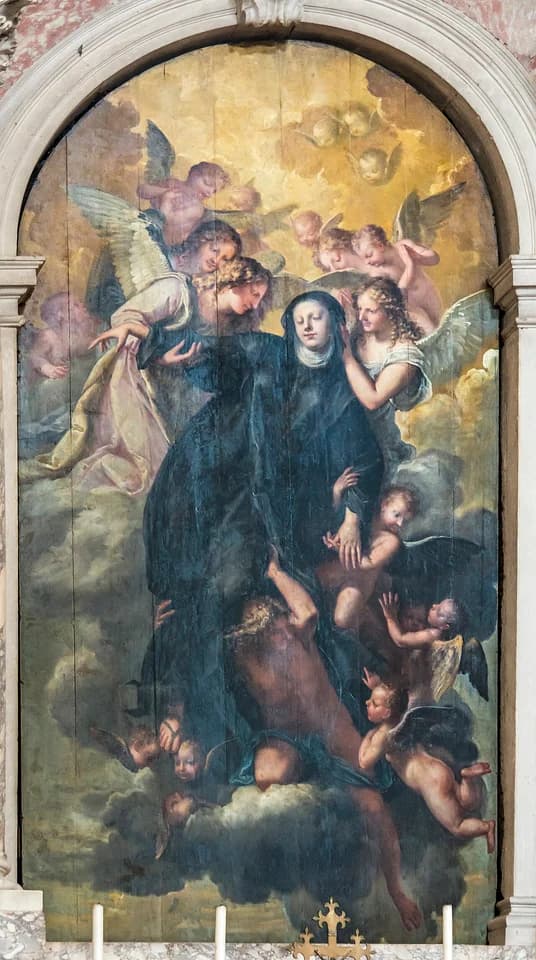
01 · Read · A life to discover
St. Gertrude the Great
Gertrude the Great was a medieval mystic and writer formed in the women's monastery of Helfta. Her work joined strong literary education with biblical study, liturgical prayer, and devotion to Christ's humanity.
She entered Helfta as a child in 1261. The community included gifted teachers and writers, among them Mechthild of Hackeborn. Gertrude studied literature, music, Scripture, and the Church's worship within this environment. She was not the abbess Gertrude who governed the house.
A deepening religious conversion redirected her learning toward prayer and theological writing. Her descriptions of Christ's heart and personal love developed within the rhythms of communal worship rather than apart from them.
Works associated with her include Spiritual Exercises and the Herald of Divine Love. The latter also preserves contributions from women of her community, making it important to distinguish her own voice from the wider testimony surrounding her. Her legacy is therefore both individual and communal. Honored on November 16, she remains an influential witness to the intellectual and spiritual life of medieval religious women, not a founder or abbess whose administrative career can be reconstructed.
This saint is included on this recurring date in the U.S. Roman Rite calendar published by the USCCB. This reading guide gives U.S. calendar saints priority; the Mass celebrated on a particular year’s date can differ because of Sundays, seasons or higher-ranking celebrations.
Explore the biography & sources ↗