02 · Reflect
A question to sit with
What have you received that you can share? Consider a gift of time, skill, encouragement, or material help.
What detail in St. Albert the Great’s story invites you to think differently about your own day?
Choose your language
Automatic translation by Google. Wording may be imperfect. Email forms stay on the English site.
Opens this public page in Google Translate. About translation ↗
A little time for faith, every day
Read a life. Make space for prayer. Carry one good thing into your day.
November 15From the feast-day calendar
01 · Read · A life to discover
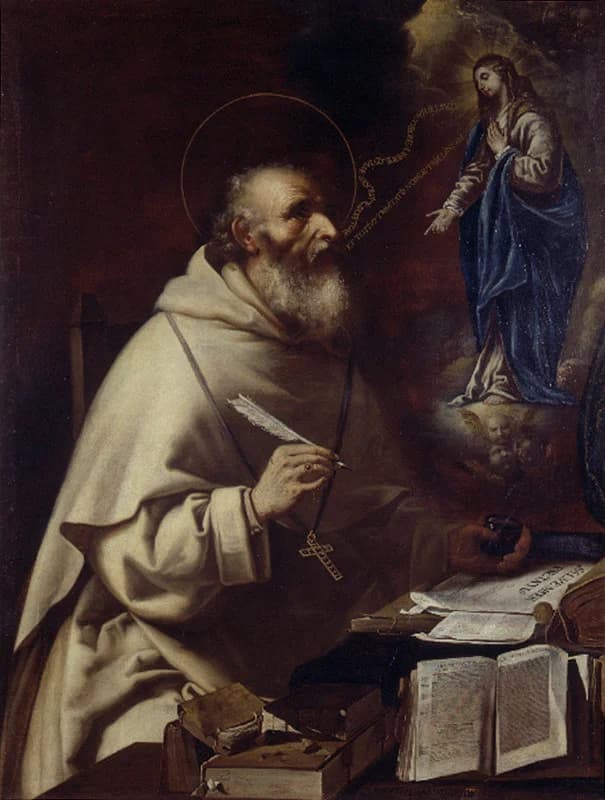
Albert the Great, or Albertus Magnus, was a Dominican scholar, teacher, and bishop whose interests extended from theology to the natural world. His work helped medieval Latin Christians engage with Aristotle, and his students included Thomas Aquinas.
Albert was born in the region of Lauingen and entered the Dominicans in the thirteenth century. His studies and teaching took him to major intellectual centers, including Paris and Cologne. He treated the observation of nature as a serious part of learning, alongside scriptural interpretation and philosophical argument.
His responsibilities were not confined to the classroom. He served as a Dominican provincial and briefly as bishop of Regensburg. These appointments required leadership and administration, although teaching and scholarship remained central to his life's work. His broad range of subjects explains the title Magnus, meaning the Great.
Albert died in Cologne on November 15, 1280. In 1931 Pius XI canonized him and declared him a Doctor of the Church. That title recognizes the lasting importance of his teaching within Catholic tradition. Albert the Great and Albertus Magnus are two names for this same scholar, not different saints with separate biographies or feast days.
This saint is included on this recurring date in the U.S. Roman Rite calendar published by the USCCB. This reading guide gives U.S. calendar saints priority; the Mass celebrated on a particular year’s date can differ because of Sundays, seasons or higher-ranking celebrations.
Explore the biography & sourcesWhen several saints share a date, this guide first favors saints on the USCCB’s U.S. calendar, then other documented Catholic commemorations. Dates can vary by place and tradition. This is a discovery guide, not the official liturgical calendar for your parish; the liturgical banner follows the celebration for the year. The date browser includes February 29 for leap years.
Bring it into your day
Original reflections and prayer prompts from Saint Discovery, not words attributed to St. Albert the Great.
02 · Reflect
What have you received that you can share? Consider a gift of time, skill, encouragement, or material help.
What detail in St. Albert the Great’s story invites you to think differently about your own day?
03 · Pray
God of all goodness, thank you for the gifts I receive. Open my hands and my heart so that I may share them freely. Amen.
Take a moment to add your own intention.
04 · Act
Thank someone specifically, then find one practical way to help another person.
Optional check-in for this visit. Nothing is saved or sent.
0 of 4 moments completed
Let this become a small habit
Bookmark this daily page to return. Or keep exploring a saint whose life speaks to yours.