01 · Read · A life to discover
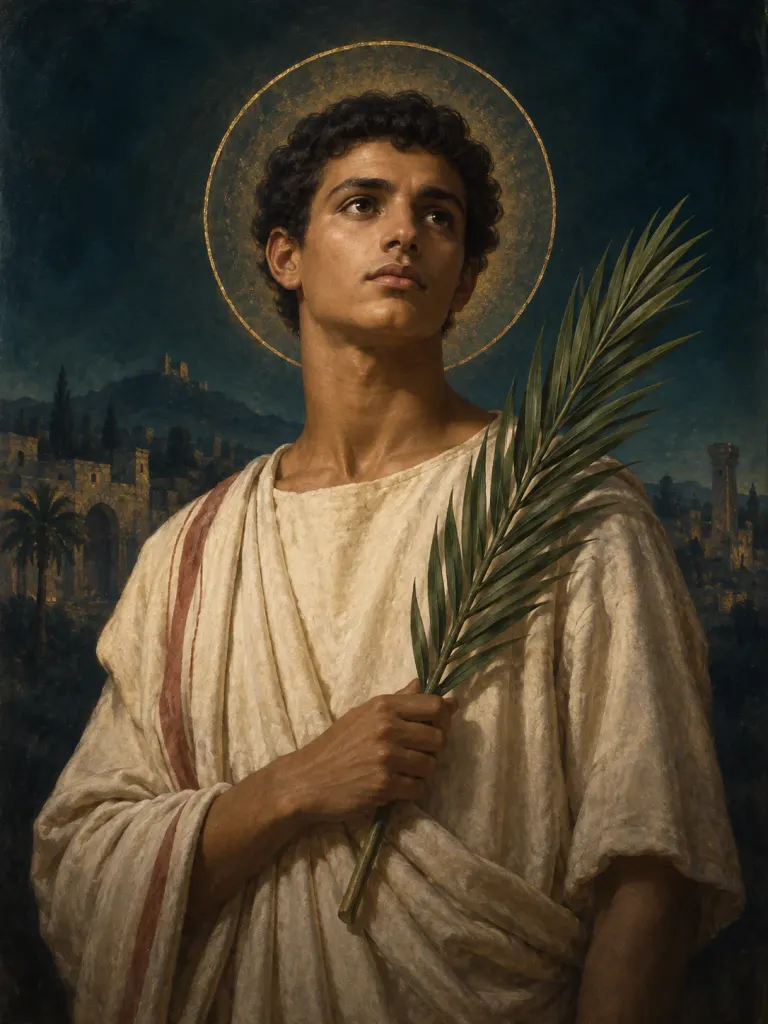
St. Maximilian of Tebessa
Maximilian was a young North African Christian brought before a Roman official for military enrollment. The account of his trial describes his refusal to accept the military sign and oath because he understood his Christian allegiance to exclude that service. His father was connected with military recruitment.
The dispute turns on enrollment and the sign of military service. In the trial tradition, an official demand and a Christian refusal are placed directly against one another. The account is unusually focused; it does not provide a full childhood or an extended public ministry before the confrontation.
He maintained his refusal despite the threat of execution and was put to death by the sword in 295, at about twenty-one years of age. His story is often discussed in relation to Christian conscience and military duty, but his personal stance should not be generalized into a claim about every early Christian. The Roman Martyrology commemorates him on March 12.
His remembrance raises a historical question about Christian participation in Roman institutions. Different Christians responded differently to military obligations, so his testimony should retain its particular character. He is also distinct from the modern Franciscan Maximilian Kolbe: their names are shared, but the circumstances and centuries of their martyrdoms differ.
Explore the biography & sources ↗