Catholics use holy water to recall Baptism, ask for God's blessing, and bring prayer into ordinary actions. It is water blessed for sacred use, often encountered in a small font at a church entrance. Making the Sign of the Cross with it can turn the moment of arrival into a brief act of faith.
Holy water is a sacramental. Its meaning belongs to the Church's prayer and to our response to God's grace. You do not need an elaborate routine to begin using it thoughtfully, but understanding the gesture helps keep it from becoming either an empty habit or a source of anxiety.
What is holy water?
Holy water is blessed water used in Christian prayer and blessings. The Catechism's explanation of sacramentals, paragraphs 1667–1670, describes sacred signs through which the Church prays for spiritual effects and prepares people to receive grace.
Paragraph 1668 specifically connects the sprinkling of holy water with the remembrance of Baptism. Paragraph 1670 also makes a distinction: sacramentals do not confer grace in the same way that the sacraments do.
That distinction matters. Blessing yourself at the door of a church is not another Baptism. It is a way of remembering and responding to the life in Christ that Baptism begins.
The blessing is also why a bottle of ordinary water and a bottle of holy water are not interchangeable simply because they look alike. If you want holy water for home use, ask your parish where it is available.
Why is it used when entering a church?
In his May 2, 2018 audience on Baptism, Pope Francis invites Catholics who touch blessed water and make the Sign of the Cross to remember their Baptism with gratitude.
This gives the gesture a clear direction. You are entering a place of prayer as someone called to live in relationship with God. The water recalls Baptism; the cross directs attention to Christ; the familiar prayer names the Father, Son, and Holy Spirit.
If you are beginning, touch the water lightly with your fingertips and make the Sign of the Cross reverently. Our guide to the Sign of the Cross explains the gesture and its words.
You can then pause before finding your seat. Bring the conversation, worry, or distraction you carried through the door into prayer. There is no need to manufacture a special feeling or watch whether everyone around you makes exactly the same movement.
Can Catholics use holy water at home?
Yes. The Diocese of Austin's guide to sacramentals in the Catholic home describes blessing yourself and your children with holy water and explains that you can obtain it from a parish or ask a priest to bless some.
Contact the parish office or ask after Mass where to collect it. Bring a clean, suitable container if requested, and use the supply designated for that purpose. Do not assume the small font by the door or the baptismal font is the place to fill a bottle.
At home, choose somewhere the water can be kept respectfully and used easily. A small, clearly identified container near your prayer space may be enough. A decorative wall font is optional; the aim is prayer, not buying a particular object.
For an original suggested practice, use a little holy water before beginning evening prayer or before leaving home. Give thanks for one gift and ask for help with one responsibility. Keep the practice simple enough to remember what you are doing.
How can I explain it to children?
Start with something they can see: the water, the cross, and the action of praying. Explain that holy water helps us remember Baptism and turn toward God. Show the gesture slowly, then allow questions.
If your child has been baptized, a family photograph or baptismal candle can help connect the action with a real event in the child's life. You might talk about the people who gathered, the parish where it happened, and the promises the adults made.
The following is an original conversation prompt: after blessing yourselves, name one way to show love today. A child might choose sharing a toy, telling the truth, or helping someone who feels left out.
Keep the explanation warm. The point is to connect a visible sign with prayer and daily conduct, rather than make children nervous about a missed gesture or an imperfect movement.
Does holy water work like a charm?
No. Catholics may use it while asking God for protection and help, as the Diocese of Austin's guide describes. This is prayerful trust in God, not control over a spiritual force.
The Catechism, paragraph 2111, warns against attributing the effectiveness of prayer or sacred signs to external performance alone, separated from the interior dispositions they require.
The practical question is therefore about faith and response: am I turning toward God, or treating this action as a guaranteed way to prevent trouble? Holy water does not promise an accident-free journey, an easy day, or an immediate answer to a request.
Our article on wearing a saint medal explores a related distinction. A devotional object or gesture should support a life of prayer and charity. It does not remove the need to act responsibly.
What does the cover painting show?
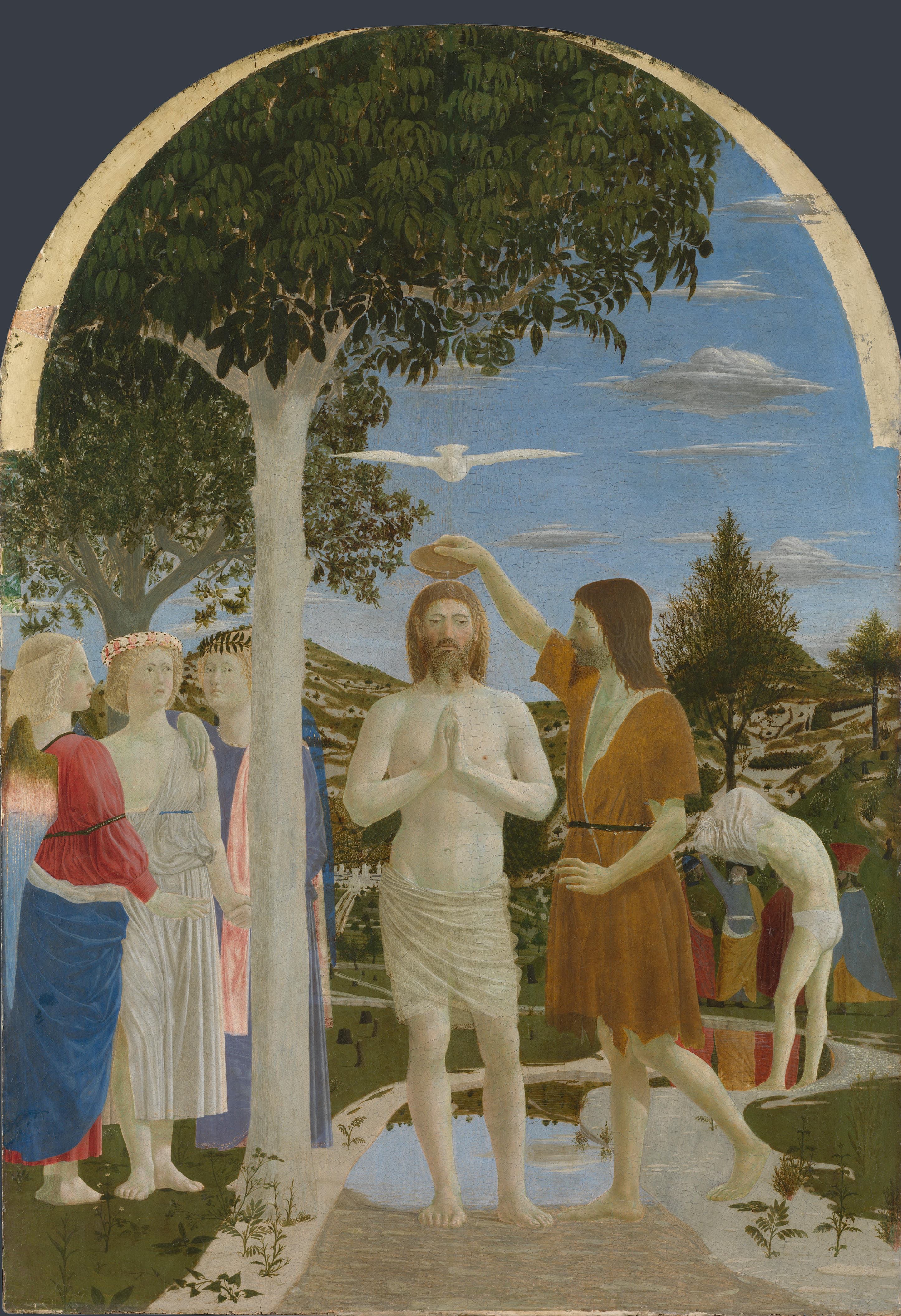
Piero della Francesca's The Baptism of Christ depicts John the Baptist pouring water over Jesus, with a dove above and angels nearby. The National Gallery's catalogue identifies the fifteenth-century painting and its setting. Our Saint John the Baptist biography introduces the saint shown beside Jesus.
This is a later artistic interpretation of Christ's Baptism, not a picture of the modern practice of blessing yourself at a church entrance. Its connection to this article is the baptismal meaning that holy water recalls.
The cover reproduction is marked public domain on its Wikimedia Commons file page. When you next encounter holy water, let the familiar action become a moment to remember, give thanks, and begin praying with attention.
