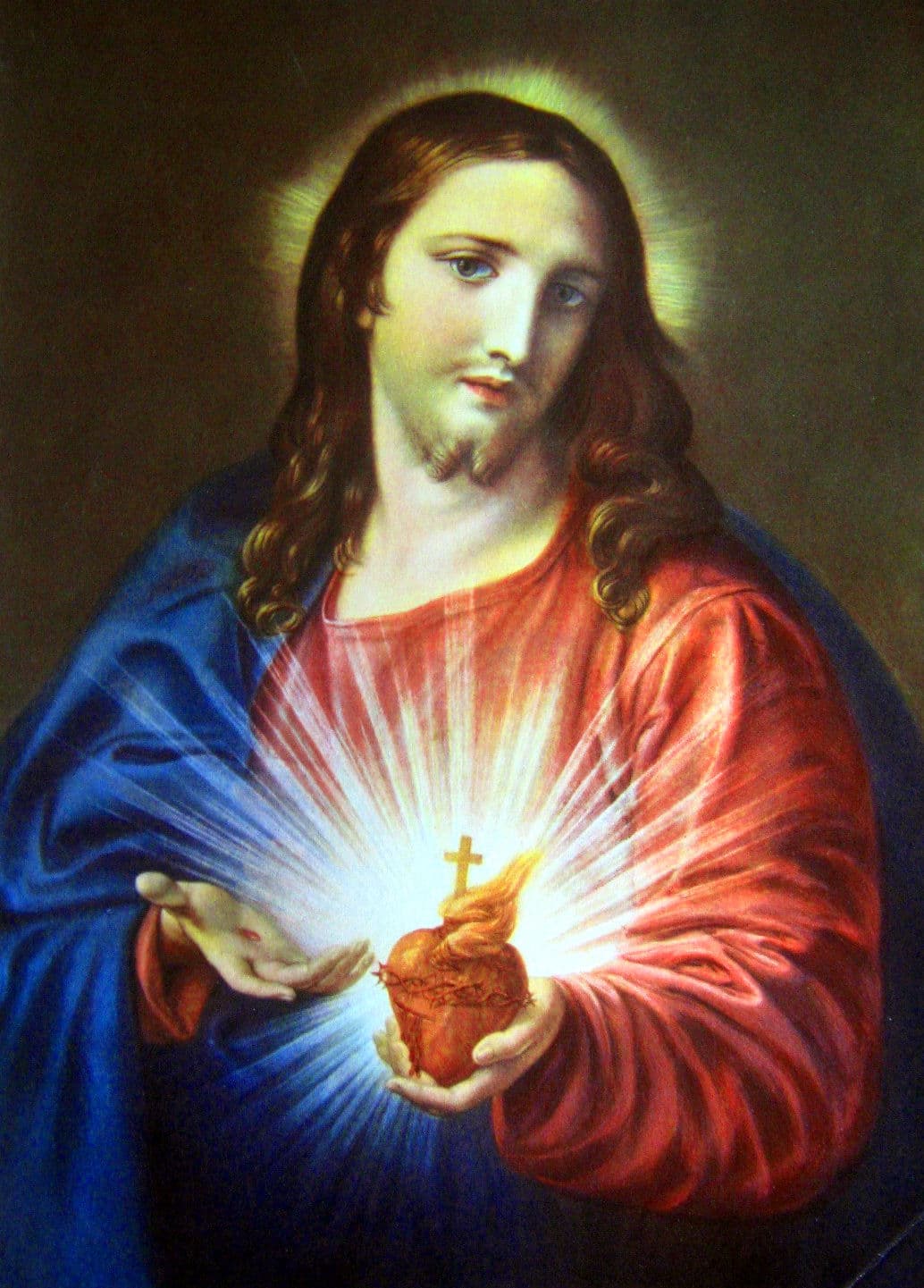
Devotion to the Sacred Heart is a way of honoring Jesus Christ and responding to his love through prayer, trust, and charity. The heart points to the person of Jesus, who loves us with both divine love and a real human heart. The Catechism of the Catholic Church, paragraph 478, places that love at the center of the devotion.
If you have seen a picture of Jesus holding a heart surrounded by light, the image can seem unfamiliar at first. You do not need to understand every devotional custom before beginning. Start with the question the image raises: how can I receive Christ's love and carry it into the way I treat others?
What does the Sacred Heart image mean?
Sacred Heart artwork often includes a heart, flames, a cross, a wound, and a crown of thorns. These signs bring together Christ's love and his suffering for humanity. In Dilexit nos, paragraphs 54–57 and 151, Pope Francis explains that the image leads us toward the living Christ; the picture itself is not the object of worship.
Look at the cover painting slowly. Jesus faces the viewer, extends one hand, and holds a radiant heart in the other. You might begin by noticing his face rather than trying to decode every detail. Then let the heart become a prompt for gratitude. Name one person or situation you want to bring into prayer.
An image can give you somewhere to rest your attention. If this particular style of art does not help you pray, you can begin with a crucifix or quiet reflection instead. The purpose of the moment is to turn toward Jesus.
How is Saint Margaret Mary Alacoque connected?
Saint Margaret Mary Alacoque helped spread Sacred Heart devotion through the experiences she reported at Paray-le-Monial in the seventeenth century. Dilexit nos, paragraphs 119–125, discusses those accounts and Saint Claude de la Colombière's support for her. Her story is one important chapter in a devotion with deeper roots in Christian contemplation of Christ.
There is a helpful distinction here. The Catechism, paragraph 67, explains that private revelations do not add to or complete Christ's definitive revelation. Reading a saint's experiences can encourage faith without turning every detail into something all Catholics must accept as an article of faith.
The USCCB identifies October 16 as Saint Margaret Mary's optional memorial. This is distinct from the Solemnity of the Sacred Heart itself. For more about the person behind the devotion, visit our Saint Margaret Mary Alacoque biography.
What are First Fridays?
First Friday devotion centers on receiving Holy Communion on the first Friday of the month, with a spirit of love and reparation. The Church's Directory on Popular Piety and the Liturgy, paragraph 171, connects the practice with renewed participation in Penance and the Eucharist.
The same guidance warns against reducing it to credulity or treating it apart from a life shaped by the Gospel. Sunday Mass retains its primary place. A date on the calendar does not turn Communion into a transaction or replace the call to conversion.
If you want to begin, check your parish's weekday Mass schedule and ask a priest about preparing to receive Communion. You can also ask whether the parish offers Confession, adoration, or a communal Sacred Heart prayer. Parish arrangements vary, so use the actual local schedule rather than assuming every church has a special First Friday service.
What does reparation mean in everyday life?
Reparation responds to sin and the harm it causes with repentance, prayer, and love. Dilexit nos, paragraphs 182–189 and 201, connects it with making amends and serving others, while affirming that Christ alone redeems us. Our response participates in his love.
For example, think of a conversation in which you embarrassed someone. A practical response could include acknowledging what you did, apologizing without excuses, and correcting the story if you repeated it to others. Prayer can accompany those actions.
Or consider someone you regularly overlook: a neighbor living alone, a colleague who struggles to join a conversation, or a family member whose needs have become easy to dismiss. Choose one concrete act of attention. Our guide to the corporal works of mercy offers more possibilities.
These examples are invitations for reflection. You cannot control another person's response or force reconciliation. You can take responsibility for your own conduct and ask for help in changing it.
A simple way to begin this week
Choose five quiet minutes at home or in church. Set aside your phone, look at an image of Christ if it helps, and recall one reason for gratitude. Bring one worry honestly into prayer. Then consider one person you can love more patiently today.
If you prefer a shared practice, ask your parish about the Litany of the Sacred Heart or a time of adoration. The Directory, paragraph 171, also recognizes personal and family consecration among the devotion's established forms. A parish priest can help you choose a suitable text and understand what the commitment means.
For a first visit before the Blessed Sacrament, our beginner's guide to Eucharistic adoration explains what to expect. You can start with a brief visit that fits your circumstances.
Afterward, choose a small action you can remember: listen without interrupting, repair an unkind remark, or make time for someone who needs company. Return to prayer the next day without grading the intensity of your feelings. Let your attention to Christ become a steady invitation to love.
Cover artwork: Pompeo Batoni, Sacred Heart of Jesus, 1767, Church of the Gesù, Rome. Photograph by Lloydbaltazar, released under CC0; artwork source and license.
