01 · Read · A life to discover
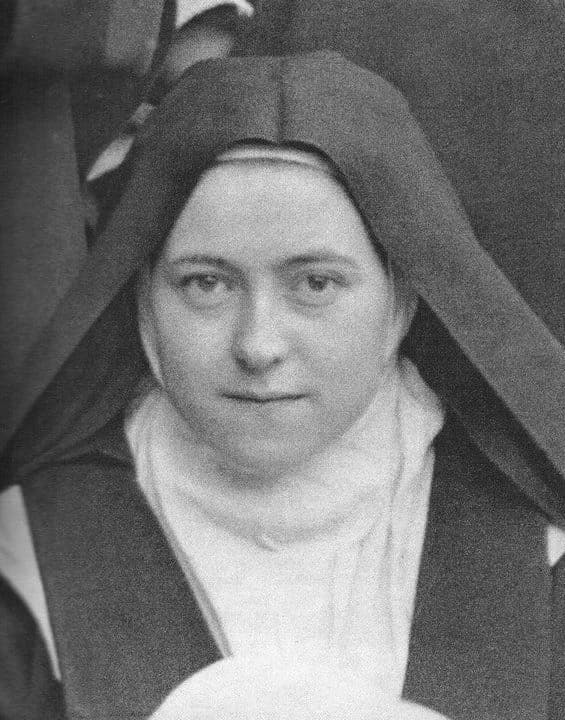
St. Thérèse of Lisieux
Thérèse of Lisieux (1873–1897) was a French Carmelite whose teaching centers on confidence in God’s merciful love. Her short life was largely spent within a family and a religious community, yet her writings reached readers far beyond them. Her spiritual childhood, often called the little way, concerns how to love when personal strength feels small.
Born Thérèse Martin in Alençon, she lost her mother, Zélie, at four. Her family then moved to Lisieux. During a pilgrimage to Rome in 1887, she asked Leo XIII for permission to enter Carmel while still young. She entered in April 1888 at fifteen and made her religious profession in 1890. Her years in Carmel included community duties, assistance with novices, prayer for missionaries, and correspondence. Illness and a severe trial of faith marked her final period. She died on September 30, 1897, aged twenty-four.
The little way is not a promise that faith removes difficulty. In C’est la confiance, Pope Francis explains her emphasis on receiving God’s grace rather than relying on a record of impressive achievements. Her image of being raised in Jesus’ arms expresses that dependence. Confidence and daily love belong together: she does not propose indifference to one’s responsibilities. Her final struggle with faith also complicates sentimental pictures of her life. Trust could remain a choice when consolation was absent.
The texts collected as Story of a Soul arose from requests made within her community. They belong to a wider body of writing that includes letters, poems, prayers, and religious plays. In declaring her a Doctor of the Church in 1997, John Paul II drew attention to this teaching and its roots in Scripture. Her insight was not the result of extensive academic study. Her reading of the Gospel, life of prayer, and reflection on love gave her a way to speak about Christian holiness that others could understand.
Her missionary concern did not depend on traveling abroad. She prayed and corresponded with missionaries while remaining in Carmel. The Church named her a patron of missions, alongside Francis Xavier, in 1927. For readers discerning how to serve, her life raises a useful question: what support can be offered from the responsibilities and relationships one already has? Her example makes hidden service worth considering without requiring everyone to adopt her vocation or circumstances.
This saint is included on this recurring date in the U.S. Roman Rite calendar published by the USCCB. This reading guide gives U.S. calendar saints priority; the Mass celebrated on a particular year’s date can differ because of Sundays, seasons or higher-ranking celebrations.
Explore the biography & sources ↗