01 · Read · A life to discover
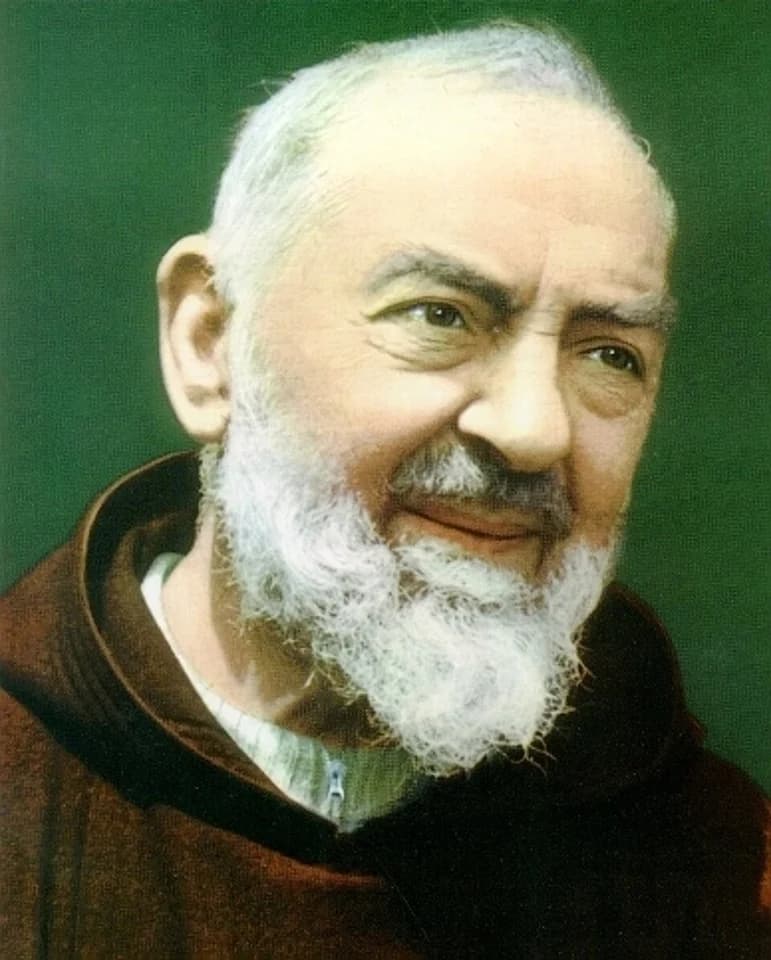
St. Pio of Pietrelcina
Pio of Pietrelcina was born Francesco Forgione and entered the Capuchin Franciscans. As a priest at San Giovanni Rotondo, he became known for celebrating Mass, hearing confessions, and offering spiritual counsel to large numbers of visitors. Reports of the stigmata and other extraordinary phenomena brought intense attention and ecclesiastical investigation.
Born in 1887, Francesco took the name Pio upon entering the Capuchin novitiate in 1903. He was ordained in 1910. Poor health initially kept him near his family; in 1916 he moved to the friary that became the center of his lifelong ministry.
The hospital opened in 1956, giving institutional form to his concern for suffering families. His confession ministry and spiritual direction likewise involved sustained personal attention. These documented commitments provide a firmer understanding of his vocation than treating extraordinary reports as the whole of his life.
At his canonization, John Paul II placed particular emphasis on the confessional. He recalled having personally encountered Pio’s availability to penitents and described the crowds drawn to San Giovanni Rotondo. This testimony locates his influence in a demanding form of pastoral work: listening, spiritual direction, and the sacrament of reconciliation. It also helps explain why people traveled to meet him beyond curiosity about the extraordinary reports surrounding his life.
The same homily linked the prayer groups associated with him to the hospital’s charitable purpose. Together they carried his influence beyond individual meetings at the friary, giving people ways to continue prayer and care in community. His legacy is therefore both spiritual and institutional. Attention to the suffering Christ led, in this account, toward concern for actual patients and families, bringing devotion into contact with the practical needs of those seeking help.
His work also included support for the hospital known as the Home for the Relief of Suffering, linking prayer with practical care for patients. He died in 1968 and was canonized by John Paul II in 2002. His biography should distinguish documented ministry and charitable institutions from individual miraculous claims. The Church celebrates him on September 23.
This saint is included on this recurring date in the U.S. Roman Rite calendar published by the USCCB. This reading guide gives U.S. calendar saints priority; the Mass celebrated on a particular year’s date can differ because of Sundays, seasons or higher-ranking celebrations.
Explore the biography & sources ↗