01 · Read · A life to discover
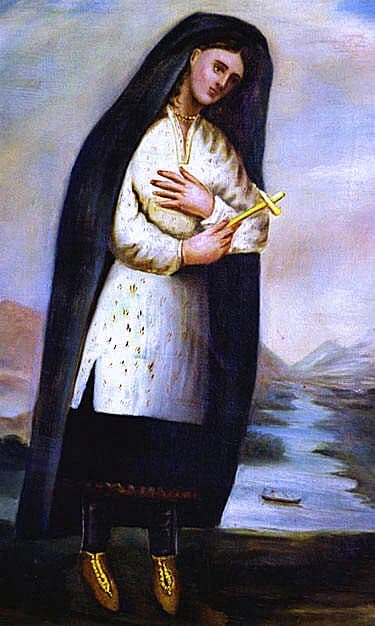
St. Kateri Tekakwitha
Kateri Tekakwitha was born to a Mohawk father and an Algonquin Christian mother. Smallpox killed her parents and brother and left her with impaired sight and facial scarring. Raised by relatives, she learned the practical skills of her community. She chose Christian baptism and resisted expectations that she marry, decisions that brought considerable tension within her surroundings.
The skills she learned included preparing food, making clothing, basketry, and agricultural work. Her Christian life grew within those daily responsibilities. At the settlement near Montreal, Indigenous Christian women played an important role in her formation; the community should not be described as though only European missionaries supported her.
In 1677 she moved to a Christian Indigenous settlement near Montreal. There she received guidance from other Native Christian women and pursued prayer, service, and a commitment to celibacy. Her short life should be understood within Indigenous history rather than as a rejection of Indigenous identity. She died in 1680; Catholic devotion remembers both her determined faith and the suffering she endured.
Her refusal of marriage and eventual commitment to celibacy made a particular personal vocation, not a judgment against family life. Accounts of extraordinary changes after her death belong to her devotional tradition. Her importance can be explained without relying on those reports: illness, displacement, community, and deliberate religious choices already define a distinctive life.
This saint is included on this recurring date in the U.S. Roman Rite calendar published by the USCCB. This reading guide gives U.S. calendar saints priority; the Mass celebrated on a particular year’s date can differ because of Sundays, seasons or higher-ranking celebrations.
Explore the biography & sources ↗