01 · Read · A life to discover
St. Lidwina of Schiedam
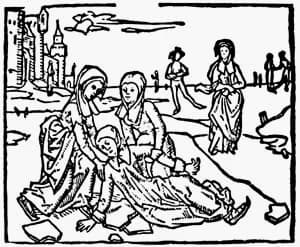
Lidwina, also spelled Lydwine, lived in Schiedam and became severely ill after a skating accident in adolescence. Accounts of her life describe prolonged pain and increasing disability. With spiritual guidance, she developed a life centered on prayer and the Eucharist, while visitors sought her counsel and asked her to pray for them.
The illness restricted her movement but did not isolate her completely from religious and civic relationships. Visitors, clergy, and spiritual writers contributed to the accounts through which she became known. Her story therefore includes networks of care and interpretation, not only a solitary individual enduring pain.
Her early biographies also recount extraordinary visions, fasting, and other mystical phenomena. These belong to the religious testimony surrounding her and should not be converted into verified medical facts or a confident retrospective diagnosis. Her enduring local veneration received official recognition from Leo XIII in 1890. Remembering her responsibly means recognizing a person who continued to exercise spiritual agency amid suffering, without implying that illness itself must be welcomed.
Her grave became a pilgrimage place soon after her death in 1433. Later movements of her relics and their return to Schiedam show the persistence of local attachment. Official recognition of her cult confirmed a long-standing devotion; it should not be confused with a modern medical assessment of the symptoms described in medieval biographies.
June 14 is Lidwina of Schiedam’s local calendar date, confirmed by the Diocese of Rotterdam; her Roman Martyrology date is April 14.
Explore the biography & sources ↗